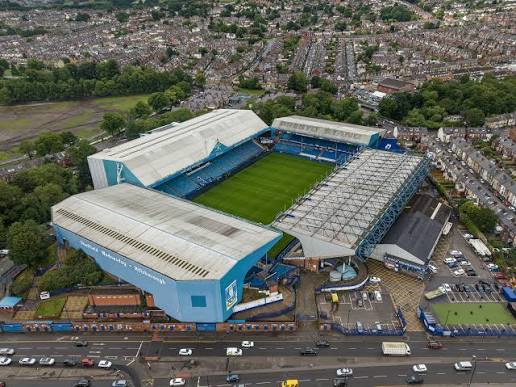
Sheffield Wednesday finished seventh three times in the Premier League and reached two domestic cup finals in 1993
Sheffield Wednesday entered the Premier League era as one of England's strongest teams, having won the League Cup, returned to the top division and qualified for Europe. They finished seventh three times, reached two cup finals in 1993, and were relegated in 2000. This is their complete Premier League timeline.
- Founded: 1867, among the oldest professional clubs in England
- Major honours: Four league championships, three FA Cups and one League Cup
- Premier League best finish: Seventh (1992/93, 1993/94, 1996/97)
- Last Premier League season: 1999/2000, relegated
- Cup finals: League Cup and FA Cup in 1993, both lost to Arsenal
- Lowest point: Administration, points deductions and relegation to the third tier
Before the Premier League: Champions, cup winners and a return to the top
Sheffield Wednesday were formed in 1867 and are among the oldest professional clubs in England. Their history includes four league championships, three FA Cups and one League Cup. Wednesday won consecutive league titles in 1928/29 and 1929/30, while their most recent FA Cup success arrived in 1935.
The years immediately before the creation of the Premier League brought another successful period. Ron Atkinson led Wednesday to promotion from the Second Division in 1990/91. In the same season, the Owls defeated Manchester United 1-0 in the League Cup final at Wembley. John Sheridan scored the only goal with a long-range shot that went in off the post. The victory gave Wednesday their first major trophy for 56 years.
Atkinson left for Aston Villa after the season and was replaced by Trevor Francis, who had been part of the promotion-winning squad as a player. Wednesday finished third in the final First Division season of 1991/92. Only champions Leeds United and Manchester United finished above them. That third-place finish secured UEFA Cup qualification and established Wednesday as one of the strongest founder members of the new Premier League.
1992/93: Seventh place and two cup finals
Sheffield Wednesday began the inaugural Premier League campaign with a squad capable of challenging on several fronts. Chris Woods was the first-choice goalkeeper, while Roland Nilsson, Nigel Pearson, Viv Anderson and Phil King supplied experience in defence. John Sheridan controlled midfield, with Chris Waddle and Irish international John Harkes providing creativity. David Hirst led the attack alongside Mark Bright and Paul Warhurst.
Wednesday opened their Premier League season with a 1-1 draw against Everton at Hillsborough. Hirst scored the club's first goal in the competition. The Owls finished seventh with 59 points from 42 matches. They won 15 games, drew 14 and lost 13, scoring 55 goals and conceding 51. The league campaign included a 5-2 victory over Southampton and a 4-1 away win at Middlesbrough. Hirst finished as Wednesday's leading Premier League scorer with nine goals despite injuries limiting his availability.
The season was defined by the cup competitions. Wednesday reached the League Cup final after overcoming Blackburn Rovers in the semi-finals. Arsenal were the opponents at Wembley. Harkes gave Wednesday the lead, but Paul Merson equalised before Steve Morrow scored the winner for Arsenal. Wednesday lost 2-1.
The clubs met again in the FA Cup final. The first match finished 1-1 after extra time, with Ian Wright scoring for Arsenal before Bright equalised. Five days later, the replay also went to extra time. Wright put Arsenal ahead again, but Waddle levelled. With penalties approaching, Andy Linighan headed Arsenal's winner in the final minute of extra time. Wednesday had played 240 minutes of cup-final football against Arsenal and lost both trophies by a single goal.
Waddle was named the Football Writers' Association Footballer of the Year. His performances represented the high point of one of the greatest individual seasons in the club's modern history.
1993/94: Seventh again and established among the leading clubs
Wednesday matched the previous season's seventh-place finish. They collected 64 points, five more than in 1992/93, and recorded 16 victories. The Owls scored 76 league goals, one of the highest totals in the division. Bright was the leading league scorer with 19 goals. Hirst contributed when available, while Waddle remained the team's most influential creative player.
The season included three separate five-goal victories at Hillsborough. Wednesday beat West Ham United 5-0, Everton 5-1 and Ipswich Town 5-0. They also defeated Southampton 5-2 away from home. Their five-goal victories over West Ham and Ipswich remain the club's largest winning margins in the Premier League. Despite the attacking quality, Wednesday conceded 54 goals. Their matches frequently became open contests, with the team capable of overwhelming opponents but less effective at controlling games defensively. The seventh-place finish confirmed that the club's early Premier League success was not an isolated achievement.
After two seasons, Wednesday had recorded consecutive top-seven finishes, reached two major finals and remained one of the division's most entertaining teams.
1994/95: A season of extremes
Wednesday finished 13th with 51 points in 1994/95. The campaign contained impressive victories, heavy defeats and growing signs that the squad required renewal. The Owls won 4-3 at Blackburn Rovers, who went on to become champions. They also defeated Arsenal 3-1 at Hillsborough and completed a league double over local rivals Manchester City.
However, the defensive problems became more serious. Nottingham Forest won 7-1 at Hillsborough in April. It remains Wednesday's heaviest home defeat of the Premier League era. The loss was particularly shocking because Wednesday were still competing with many of the same senior players who had challenged near the top of the league two years earlier. Bright finished as the leading scorer with 13 league goals. Hirst and Waddle continued to contribute, but age and injuries were beginning to change the balance of the squad.
Francis was dismissed at the end of the season. His four-year spell had produced a third-place top-flight finish, European qualification, two seventh-place Premier League finishes and appearances in both domestic cup finals. The club's decision to move on began a period of managerial and tactical uncertainty.
1995/96: David Pleat stabilises the team
David Pleat was appointed as Francis' successor. Wednesday started poorly and spent part of the early season near the relegation places. A run of improved results over the winter eventually moved them clear of danger. The Owls finished 15th with 40 points, four above the relegation zone. They won 10 of their 38 matches, drew 10 and lost 18.
The outstanding result was a 6-2 victory over Leeds United at Hillsborough in December. Wednesday scored three times in each half. Guy Whittingham, Hirst, Harkes, Bright and Richie Humphreys were among the scorers. The 6-2 win remains the club's highest-scoring Premier League victory. Wednesday also beat Coventry City 4-3 on another dramatic afternoon at Hillsborough. Bright finished as the leading league scorer with 13 goals. His reliable output remained important as Hirst continued to experience fitness problems.
Although survival was secured, the final position represented another decline. Wednesday had moved from third in the final pre-Premier League season to seventh, seventh, 13th and then 15th.
1996/97: A third seventh-place finish
Wednesday responded with their strongest league campaign under Pleat. They finished seventh, matching the finishes of 1992/93 and 1993/94. The season included a 3-1 win over Manchester United at Hillsborough and a 1-0 victory at Anfield. Those results underlined the team's ability to compete with the best, even as the squad evolved.
The numbers
- 1992/93: 7th, 59 points, 15 wins, 14 draws, 13 losses, 55 goals scored, 51 conceded
- 1993/94: 7th, 64 points, 16 wins, 76 goals scored, 54 conceded
- 1994/95: 13th, 51 points
- 1995/96: 15th, 40 points, 10 wins, 10 draws, 18 losses
- 1996/97: 7th
- Highest-scoring PL win: 6-2 v Leeds United (1995/96)
- Heaviest home PL defeat: 1-7 v Nottingham Forest (1994/95)
- Largest PL winning margins: 5-0 v West Ham United and Ipswich Town (1993/94)
Why Sheffield Wednesday's Premier League story unravelled
Sheffield Wednesday's early Premier League success was built on a squad that combined experience and creativity. Chris Waddle was the creative hub, David Hirst the attacking focal point, and Mark Bright the reliable goalscorer. But the defence was always porous: 51 goals conceded in 1992/93, 54 in 1993/94, and a 7-1 home defeat by Nottingham Forest in 1994/95 exposed the fragility.
Trevor Francis was dismissed after that season, and although David Pleat stabilised the team, the decline was gradual. Poor recruitment and managerial instability followed. The Owls finished 15th in 1995/96, recovered to seventh in 1996/97, but then slid towards relegation. Financial pressure grew, and in 2000 they dropped out of the Premier League.
The years after relegation brought further pain: relegations to the third tier, promotions at Cardiff and Wembley, several failed attempts to return, and repeated off-field problems. The club came within one match of returning in 2016 but later suffered points deductions, another relegation and administration.
Talking points
- Was the 1993 FA Cup final defeat the moment Wednesday's upward trajectory stalled? They lost both finals to Arsenal by a single goal.
- Should Trevor Francis have been given more time after four years of progress? His dismissal began a cycle of managerial instability.
- Was the 7-1 home defeat by Nottingham Forest a warning sign that was ignored? The defence was never properly rebuilt.
- Could the 2016 play-off final have changed everything? Wednesday came within one match of returning to the Premier League.
What happens next
Sheffield Wednesday remain outside the Premier League, and their last top-flight season was 1999/2000. The club's immediate focus is on stability and a return to the second tier, with the memory of those seventh-place finishes and two cup finals a reminder of what was once possible at Hillsborough.
Frequently asked questions
When was Sheffield Wednesday last in the Premier League?
Sheffield Wednesday were relegated from the Premier League in 2000 and have not played in the competition since.
What was Sheffield Wednesday's best Premier League finish?
They finished seventh three times: in 1992/93, 1993/94 and 1996/97.
Who did Sheffield Wednesday play in the 1993 cup finals?
They faced Arsenal in both the League Cup and FA Cup finals in 1993, losing both.
Related Articles
Filed under: Club News | LA Premier League Home