World Cup Late Winners: Moments That Defined Nations
There is no drama in football quite like a late winner at the World Cup. A goal in the closing moments of a FIFA World Cup match does more than change a scoreline. It flips a nation from despair to euphoria, etching itself into football folklore forever.
From last-gasp headers to stunning strikes in stoppage time, these moments have defined tournaments and careers. This article revisits the most unforgettable late winners in World Cup history, celebrating the players who delivered when it mattered most.
The Anatomy of a Late Winner
Late winners are not merely goals—they are psychological turning points. Tactically, they often stem from heightened pressing, set-piece routines, or individual brilliance when defenders tire. Statistically, goals after the 85th minute account for a significant share of decisive moments in knockout football.
For example, in the 2014 tournament, Germany's Mario Götze scored in the 113th minute of the final—a late winner that sealed a fourth star for Die Mannschaft. While not technically a last-gasp goal in stoppage time, its timing in extra time was equally dramatic.
Historical Precedent: Iconic Late Winners
One of the earliest famous late winners came in 1938 when Italy's Silvio Piola struck in extra time to beat Brazil. More recently, in 2018, England's Harry Maguire scored a 90th-minute header against Sweden to secure a semi-final berth. Maguire's goal showcased the value of set-piece routines under pressure.
In 2022, Saudi Arabia's Salem Al-Dawsari scored a stunning 53rd-minute winner against Argentina—technically not a late goal, but its second-half timing proved decisive in one of the biggest upsets in tournament history.
Perhaps the most famous late winner in a final occurred in 1998 when France's Zinedine Zidane headed home twice in the first half, but it was Emmanuel Petit's 90th-minute strike that sealed a 3-0 victory over Brazil. Petit's goal remains one of the most celebrated late finishes in a World Cup final.
Impact on Teams and Tournaments
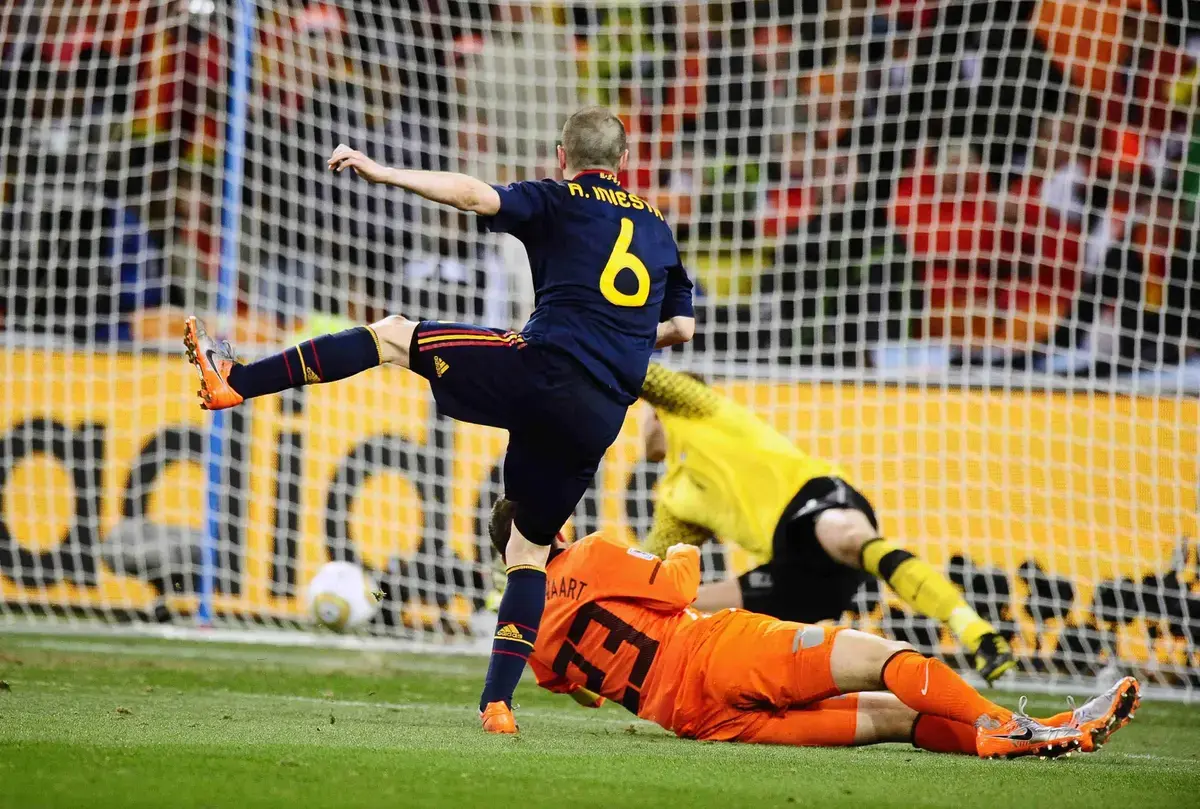
Late winners have profound effects beyond the scoreline. They can alter a team's momentum, boost morale, and even change the trajectory of a nation's footballing identity. For instance, Spain's 2010 final win over the Netherlands came via Andrés Iniesta's 116th-minute strike—a goal that capped Spain's golden era and triggered years of dominance.
From a statistical standpoint, teams that score late winners tend to carry that momentum into subsequent matches. A study of World Cup winners since 1990 shows that finalists often have a late-goal win in their knockout-phase run.
What Makes a Late Winner Memorable?
Several factors contribute to the enduring legacy of a late winner:
- The timing—goals in stoppage time or extra time are inherently more dramatic.
- The context—a knockout game or final magnifies the stakes.
- The nature of the goal—a long-range rocket or a scrambling tap-in can be equally iconic.
- The aftermath—how the goal changes the tournament for the winning nation.
Looking Ahead to Future Tournaments
As the 2026 World Cup in North America approaches, fans will inevitably hope for more last-gasp drama. The expanded format, with 48 teams, may produce even more tight contests where late winners become crucial. Players capable of delivering in high-pressure moments will be invaluable to their nations.
The beauty of a World Cup late winner lies in its unpredictability. No amount of tactical planning can fully account for the moment a player seizes an opportunity in the dying seconds. Those moments remain the purest spectacle in sport.
Related Articles
Filed under: Latest News | LA Premier League Home