
Bournemouth's Midfield Is a Trap: Why Christie's New Deal Hides a Systemic Flaw
Andoni Iraola has built something real on the south coast: a high-energy, vertical team that terrifies possession-based sides. But look closer at the engine room and you'll find a structural imbalance that, if left unaddressed, will keep Bournemouth marooned in mid-table mediocrity regardless of Ryan Christie's new contract until 2029.
The Christie Paradox: Workhorse With a Glass Ceiling
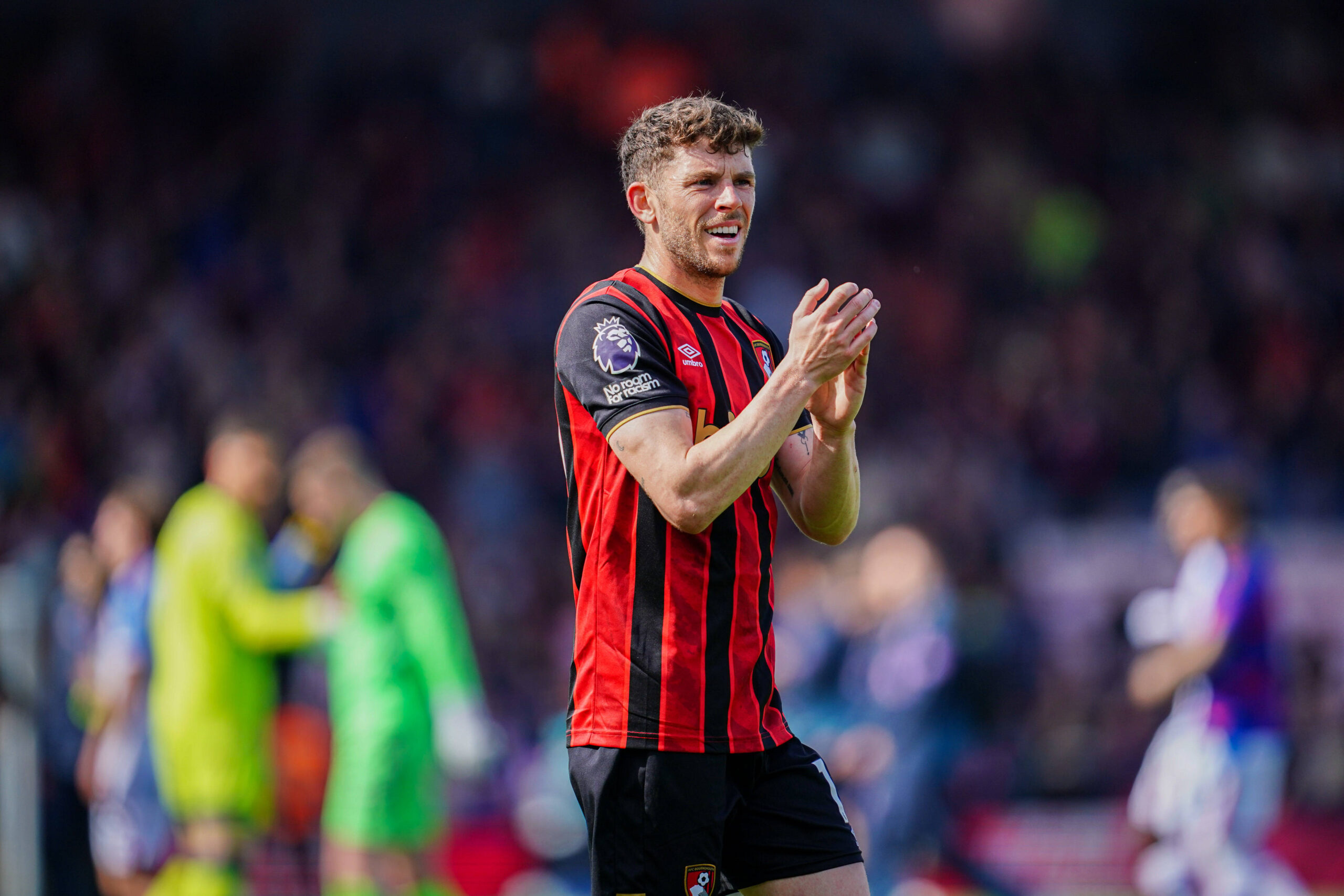
Christie's extension is deserved in a vacuum. The 30-year-old Scot has been integral to Bournemouth's pressing identity, ranking in the top 10% of Premier League midfielders for pressures per 90. He covers ground like a caffeinated terrier and provides tactical discipline out of possession. But there's a reason he spent his prime years at mid-table Celtic and a briefly-promising Bournemouth side that almost went down.
Christie's creative output is simply not elite. Over the past two seasons, he averages 0.09 expected assists per 90 — the 15th percentile among midfielders. His progressive passes per 90 (3.4) are similarly pedestrian. Against a low block, he offers little incision. Bournemouth's system relies on verticality from the full-backs and wingers; the central midfielders are largely recyclers. Christie is the ultimate safe option, not a difference-maker.
The Data That Damns Him
A deeper dive into the numbers reveals why Iraola's midfield is a tactical ceiling. Compare Christie's output to midfielders from clubs Bournemouth aspire to catch — Brighton's Pascal Groß, Villa's John McGinn, even Brentford's Mathias Jensen.
- Chance creation: Christie creates 0.9 chances per 90 vs. Groß's 2.2. Against top-six sides, that drops to 0.6. He rarely beats defenders one-on-one or plays line-breaking passes.
- Progressive carries: Christie averages 1.9 per 90, compared to 3.4 for McGinn. He does not drive through centre-backs or threaten the box with the ball at his feet.
- Shot volume: 0.8 shots per 90, mostly from range. His goalscoring is a bonus, not a weapon. Over 34 appearances last season, he scored once.
This isn't to say Christie is a bad player. He's a functional piece in a well-drilled machine. But when Bournemouth need a goal or control against a parked bus, he offers no solution. Iraola's tactical flexibility is undermined by a midfielder who is, by design, a supporting actor.
The Counter-Argument: System Before Individuals
Iraola's defence would be that Christie's role is not to create but to enable others. His work rate allows the full-backs — Milos Kerkez and Adam Smith — to push high. His positioning provides cover for the defensive midfielder, Lewis Cook. In a system built on collective intensity, individuality is secondary. The 4-2-3-1 setup has produced impressive results against Arsenal, Manchester United, and Newcastle.
But that reasoning fails against the evidence of repeated frustrating draws. Bournemouth have dropped 12 points from winning positions this season — the most in the league. When opponents sit deep, the team lacks the central guile to break them down. Christie's replacement — often Philip Billing, a box-crasher — is no better at orchestrating. The result is a team that can disrupt but cannot control. Compare that to, say, Brighton, whose midfielders interchange and create numerical overloads. The ceiling is real.
Verdict: A Contract That Secures the Present, Not the Future
By 2028, Bournemouth will regret Christie's extension if they do not also address the creative midfield void. My prediction: by the end of the 2025-26 season, Bournemouth will finish 14th or lower, having failed to progress beyond their current plateau. Iraola will be forced to either change his system — injecting a purely attacking midfielder — or watch his side stagnate. Ryan Christie's work rate will be applauded, but Bournemouth's midfield trap will prove that loyalty isn't always the smartest policy.
Related Articles
Filed under: Tactical Analysis | LA Premier League Home