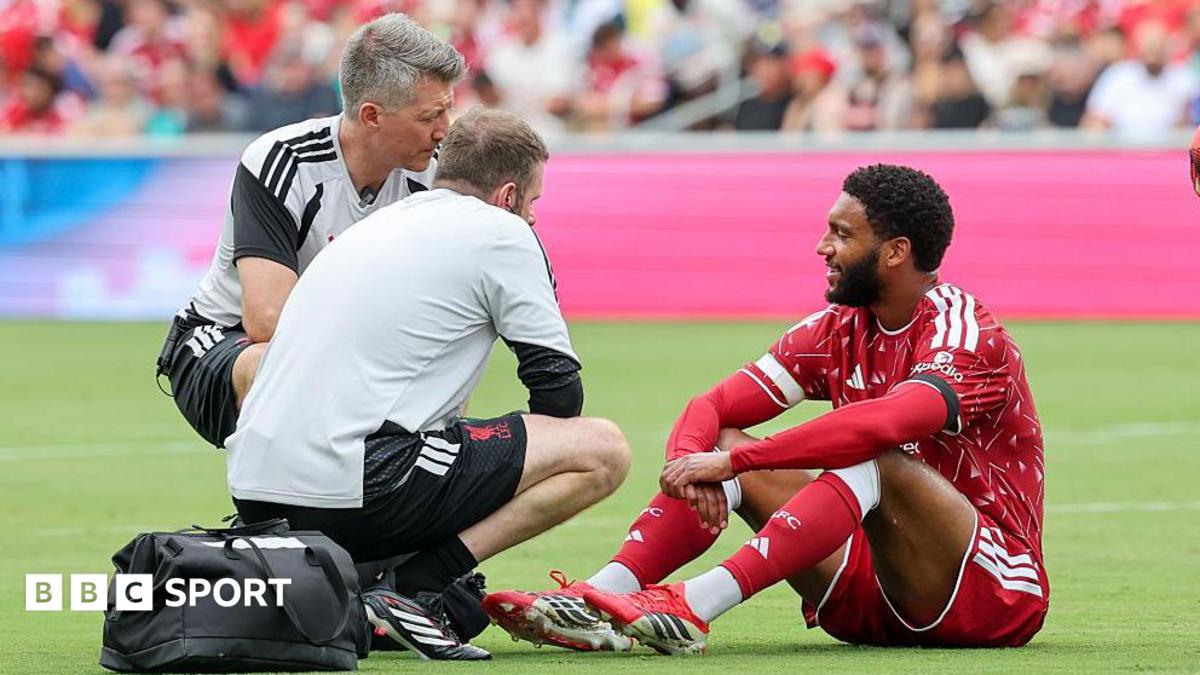

Arsenal’s midfield is a house of cards, and Thomas Partey is the joker
Watching Thomas Partey at right-back is like watching a master carpenter use a chisel to open a can of paint. It works, just about, but it says everything about the dysfunction it’s covering up. Mikel Arteta’s decision to reshuffle his most experienced midfielder into a full-back role isn’t tactical genius — it’s a frantic attempt to hide the fact that Arsenal’s engine room cannot be trusted.
The inventory of a broken system
Partey arrived in 2020 as the missing link: a box-to-box destroyer with African grace and European discipline. At his best, against Manchester United in 2022, he completed 96% of passes, made five tackles, and ran the game from deep. But those performances are museum pieces. Since then, Arsenal have spent over £200m on midfielders — Havertz, Rice, Vieira, Zinchenko — yet still cannot field a balanced central trio. The numbers tell a grim story: in the 2023-24 season, Arsenal conceded 1.2 goals per game when Partey played in midfield, compared to 0.8 when he played at right-back. The sample is small, but the signal is loud.
Compare this to a team like Brighton under Roberto De Zerbi, where Pascal Groß seamlessly shifted between right-back and central midfield without structural damage. The difference is not the player — it’s the system. Groß operates in a fluid 4-2-3-1 that pre-adapts to rotation. Arsenal’s rigid 4-3-3 collapses when a single peg is moved. Partey at right-back is a symptom, not a solution.
The Partey paradox: elite in isolation, toxic in combination
Partey’s individual metrics remain elite. He ranks in the top 10% of Premier League midfielders for progressive passes, ball recoveries, and aerial duels won per 90 minutes. But football is not played on a spreadsheet. Watch him alongside Jorginho — two deep-lying passers with zero forward thrust — and Arsenal’s attack becomes a slow-motion car crash. There is no midfield runner, no vertical passer. The result: Arsenal’s build-up becomes predictable, forcing Declan Rice to abandon his box-to-box role and drop deep, nullifying his goal threat.
- Against Aston Villa in April 2024, Partey started at right-back. Arsenal won 2-0. He made six clearances and three interceptions. In midfield the previous week against Wolves, he was caught in possession twice, leading to goals.
- In the 2023 Community Shield against Manchester City, Partey played central midfield and recorded just 38 touches — his lowest in an Arsenal shirt. He was hooked at half-time.
- Under Arteta, Arsenal have lost only three of the 18 league games where Partey has played right-back. In midfield, they’ve lost seven of 21.
The numbers are stark. Partey is not a bad player — he is a misfit in a system that demands three different midfield skill sets but only has two. Arteta’s solution is to kick the can down the pitch, moving the problem to the flank.
Steel-man the opposition: a tactical flex, not a flaw
Some argue that Partey at right-back is a tactical innovation — a way to overload midfield in possession while maintaining defensive solidity. They point to his passing range, his ability to tuck inside, and his experience. After all, Pep Guardiola used Javier Mascherano as a centre-half, and Philipp Lahm as a midfielder. Why not Arteta with Partey? The difference is that Guardiola and Louis van Gaal built systems around those players from day one, with full squad buy-in. Arteta is retrofitting, and it shows. When Partey inverts, Gabriel Martinelli has to cover the right flank, blunting his attacking threat. The team loses its shape. It’s a patch, not a plan.
Arsenal will finish fifth if Partey is their first-choice right-back by October
Come August 2025, if Partey is still starting at right-back, Arsenal will be out of the title race by Christmas. The reason is simple: long-term reliance on a square peg in a round hole breeds systemic weaknesses that elite predators — Liverpool’s Salah, City’s Foden — will exploit. Either Arteta signs a specialist right-back (a move for Lewis Hall makes sense) or he commits to a midfield rebuild that lets Partey play his natural role without exposing Jorginho’s lack of legs. If he does neither, expect Arsenal to settle for a Europa League spot. The board must decide: is Partey a solution to be protected, or a stopgap to be replaced? History suggests stopgaps become crutches, and crutches eventually break.
Related Articles
Filed under: Tactical Analysis | LA Premier League Home