
The Endrick Mirage: Why Real Madrid's Starlet Won't Fix Manchester United's Broken Puzzle
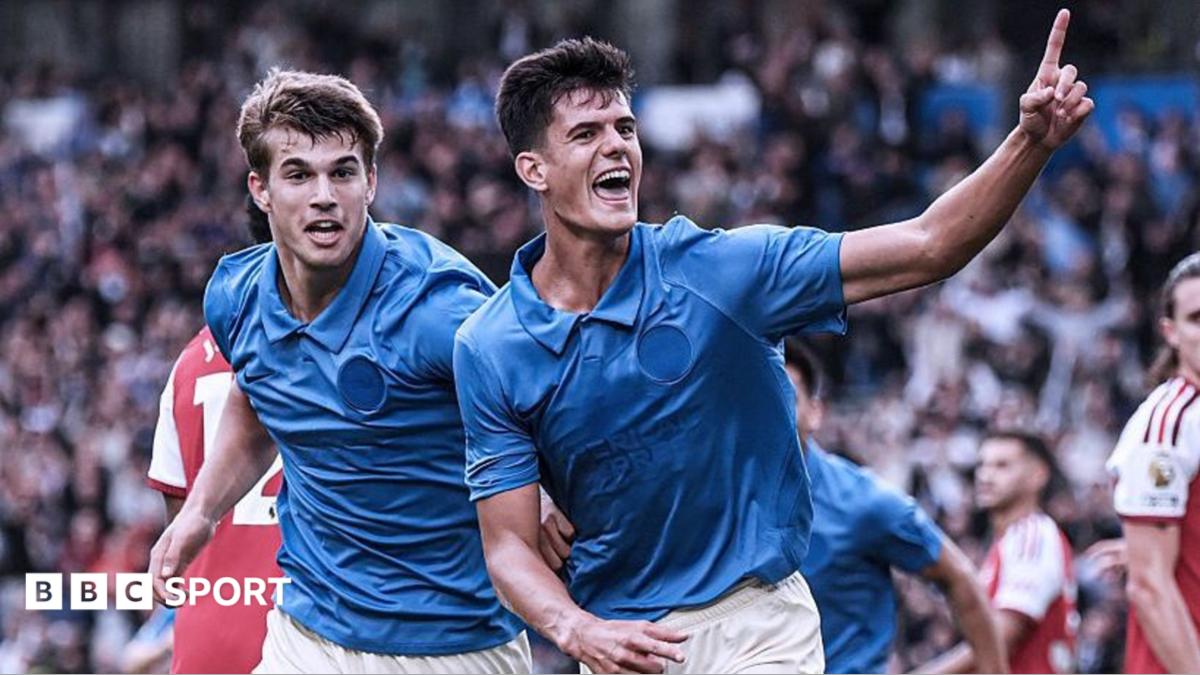
Manchester United's interest in Endrick is a fantasy that reveals their institutional decay. They chase a teenage Brazilian when their midfield resembles a sieve and their tactical identity is a ghost. Buying Endrick would be like adding a Rolex to a sinking ship — a gleaming distraction from the hull's gaping hole.
Historical Precedents: When Big Names Mask Rot
United have a rich history of grand signings that papered over cracks. Juan Sebastián Verón arrived in 2001 to elevate a title-winning side; he was a wonderful player but never fit the template, and United regressed. More recently, the £89m return of Paul Pogba in 2016 was meant to herald a new era, but it merely underscored the club's lack of a coherent plan—Pogba's brilliance was episodic, the structure absent.
Contrast with Liverpool's data-led rebuild under Jürgen Klopp. They identified Andrew Robertson and Georginio Wijnaldum, not glamour names, and forged them into a relentless machine. Or Arsenal's patient growth with Bukayo Saka and Emile Smith Rowe. United, by contrast, have lurched from one star to another, funding the habit with commercial might rather than footballing logic.
The Structural Rot at Carrington
United's problems are not a missing centre-forward. They are systemic: a recruitment department that has signed too many high-wage, low-return assets (Casemiro, Antony, Jadon Sancho); a coaching set-up that has churned through four permanent managers in a decade; and a playing style that oscillates between cautious pragmatism and chaotic adventure. Adding Endrick—a player who needs time, patience, and a defined role—would demand a luxury that neither the coaching staff nor the hierarchy can afford.
- Casemiro: arrived as a fast-declining 30-year-old, his legs gone, yet paid as a world-beater.
- Antony: a £85m winger with one trick; his output has been poor, but he was bought because he was a 'name'.
- Lisandro Martínez: a shining exception, but his impact is blunted by constant tactical flux.
These are symptoms of a club that buys talents, not systems. Endrick, for all his precocious finishing, would be another jewel in a broken crown.
The Counter-Argument: The Galáctico Effect
Detractors will point to Real Madrid's success with Vinícius Júnior and Rodrygo—young Brazilians bought young, developed, and turned into Ballon d'Or contenders. They'll argue United need a spark, a statement signing to galvanise the fanbase. That is precisely the delusion. Madrid bought Vinícius in 2018 when they had the best structure in world football: a clear pathway, elite senior pros to learn from, and a tactical framework under Zinedine Zidane that prioritised adaptation. United have none of that. Their pathway is clogged with overpaid duds, their senior pros are a fading Casemiro and an injured Mason Mount, and their tactical framework changes with every incoming coach.
The proof? Look at how United have failed with young Brazilian talent before: the once-bright prospect of Andreas Pereira was torched by inconsistent chances and lack of support. Endrick would walk into a dressing room that lacks the character to nurture him.
Verdict: A Faux Fix That Will Fail
If United sign Endrick, they will finish outside the top four again. The money would be better spent on two midfielders and a right-back who can actually defend. But the allure of a star's face on a shirt is too strong for the Glazer-era boardroom. My prediction: United will bid, fail, and then pivot to a panic loan of a 29-year-old striker from a mid-table club. That is the Manchester United way in 2025. It is a tragedy, but it is also a choice.
Related Articles
Filed under: Tactical Analysis | LA Premier League Home