The Most Radical Act in Football Is Not Screaming
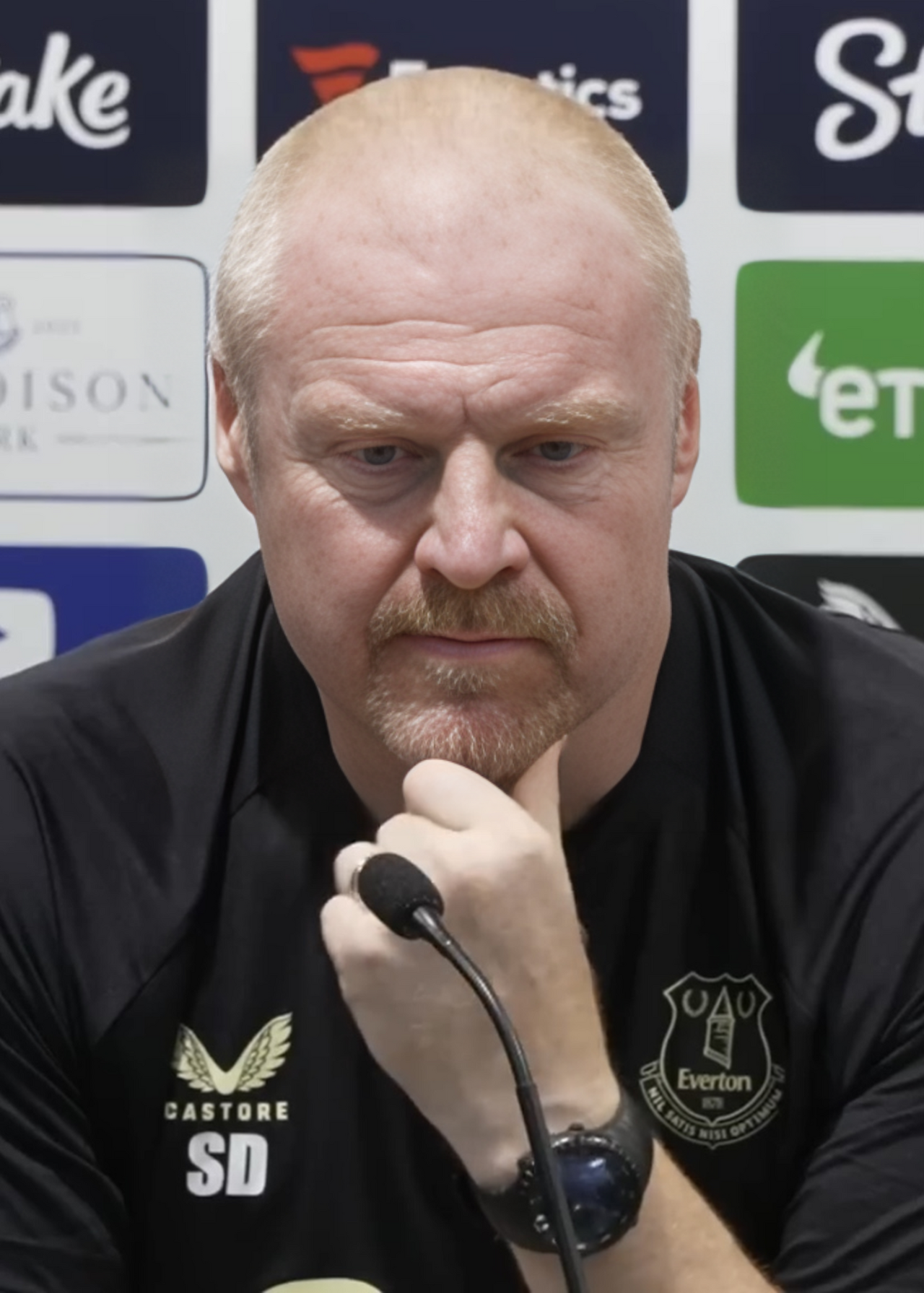
While the Premier League drowns in tactical novelties and data-driven hysteria, Sean Dyche has spent a decade perfecting the unforgivable: defending. His Everton sides are not a throwback; they are a deliberate insult to an industry obsessed with pressing triggers and inverted full-backs. Every drilled clearance is a manifesto.
From Burnley's Homely Bastion to Everton's Crisis-Hit Fortress
When Burnley rose from the Championship in 2016, the obituaries were already drafted. Dyche's team would be relegated by Christmas, they chorused — too honest, too direct, too working-class for the modern game. Instead, they finished 16th, then 7th, qualifying for Europe with a budget that would not cover one of Manchester City's reserve full-backs. The mark of his genius was the invisibility of it: no viral clips, no tactical breakdowns on YouTube. Just organisation, repetition, and a collective willingness to sprint backwards faster than the opposition could sprint forwards.
Fast-forward to a rain-sodden evening at Goodison Park, and here is Dyche again — not as a rustic survivor but as a crisis manager for an Everton club in perpetual self-sabotage. Points deductions, ownership sagas, and a mediocre squad have made his task Herculean. Yet his team remain stubbornly competitive, conceding fewer goals than their league position suggests while facing more shots than a pub team in a testimonial. This is not luck. It is architectural defiance.
What Dyche Understands That the Data Age Forgot
The analytics revolution has given us anorexic wingers and midfielders who pass sideways with the precision of a metronome. Dyche, fundamentally, does not care for it. He understands football as a game of errors, not possession. Where others chase high lines to suffocate opposition, he defends deep to invite mistakes. His Everton are masters of the 'ugly goal' — set-pieces and second balls converted into points. It is a philosophy built on three uneasy truths:
- Possession without penetration is self-deception; his teams average under 45% possession yet create as many clear-cut chances as their opponents.
- Set-pieces are the great equaliser in an unequal league; no manager has drilled corner routines with more OCD precision since Sam Allardyce.
- Mental resilience beats tactical flexibility when your season hinges on a battle against relegation; his squads routinely outperform their aggregate wage bill.
This is not anti-football. It is a counter-punch to the entire economic logic of English football, where £40m defenders are disposable assets and coaches are sacked after three defeats. Dyche's mantra is survival — not just of a club, but of a coaching philosophy that refuses to be flattened by the inevitability of financial doping.
The Patronising Critique — and Why It Misses the Point
The detractors will claim Dyche is a relic of 'Route One', that his football is boring, and that any mid-table manager with a European budget could replicate his results. Yet when Brighton's Graham Potter or Brentford's Thomas Frank experiment with similar pragmatic structures, they are lauded for 'bravery'. Dyche gets no such honour. He is patronised as a clogged-drain specialist, a man to parachute in when the refined gentry have run out of ideas.
But let us examine the evidence. Since taking over an Everton side that had conceded 18 goals in 14 games under Frank Lampard, Dyche's team shipped only 19 in the remaining 24. That is not a honeymoon patch; it is a structural overhaul. When he left Burnley in 2022, the club had transformed from perennial yo-yos into an established top-flight member, only to collapse without him. Correlation? Causation? Dyche is the common denominator.
Moreover, his promotions of youth — from Dwight McNeil at Burnley to Jarrad Branthwaite at Everton — show he is not stuck in a time warp. He merely filters talent through a sieve of defensive discipline. Branthwaite's emergence as one of Europe's most promising centre-backs is not despite Dyche; it is because of him.
Let History Judge Him Correctly
By the end of this season, Everton may still find themselves in a relegation scrap — the Premier League's financial reality makes that unavoidable without investment. But do not mistake the table for the truth. Dyche has performed a minor miracle with a squad assembled by a recruitment team that shopped at the discounter while pretending to shop at Harrods. If he keeps them up, it will be his third such rescue in five years.
And here is my prediction, one that can be easily falsified: Everton will finish above the three promoted clubs (Ipswich, Southampton, Leicester). More significantly, Dyche will still be in charge by the end of the 2025/26 season — not because the board is loyal, but because they will recognise that replacing him with a 'progressive' coach would be an act of self-harm. He is the unsung genius whose reward is not acclaim but the constant threat of the sack — a fate that says more about football's broken culture than any possession statistic.
When the history of this era is written, the names will be Guardiola, Klopp, and Arteta. But spare a thought for the man who reminds us that the beautiful game can also be brutally effective. Sean Dyche does not play tiki-taka. He plays reality. And that, in the age of virtual football, is the most rebellious act of all.
Related Articles
Filed under: Opinion | LA Premier League Home