
The professional game has just handed its authority to the lawyers
If you thought the handball rule was already a mess, buckle up. The Premier League's latest interpretation—announced via a terse statement from Stockley Park—is not a fix. It is an admission of defeat dressed up as clarification. And it will make things worse.
The new rule: what changed and why it's already broken
The amendment states that accidental handball from a teammate's deflected pass will no longer be penalised inside the box. The referee's judgement, not a binary law, will now decide intent. This returns us to the pre-2019 chaos, when every borderline decision sparked rage. The logic? Players and managers demanded consistency. But this new rule hands the officials a subjective grenade.
Consider the tape: in the first week of last season, there were six handball-related VAR reviews. Under the old strict liability, three led to penalties. Under the new 'common sense' approach, all six would need the referee to interpret 'deliberate' or 'unnatural'. That's six flashpoints in one weekend. The average Premier League matchday now has 4.2 handball incidents that could trigger a review. Multiply by 38 weeks. The numbers do not lie.
The PGMOL's real problem is not the law—it's fear
The Professional Game Match Officials Limited has spent two years hiding behind the letter of the law to avoid criticism. Now they've swapped one shield for another. The new rule says: 'We trust you, referee, to decide'. But the same referees who missed obvious fouls in the penalty area last month? The same VAR officials who drew lines for offside that defied geometry? Trust is earned, not granted.
- In September 2023, Michael Oliver awarded a handball penalty against Arsenal for a ball that struck Kai Havertz's shoulder. Under the new rule, that is subjective. Oliver would have to prove 'intent'. He cannot.
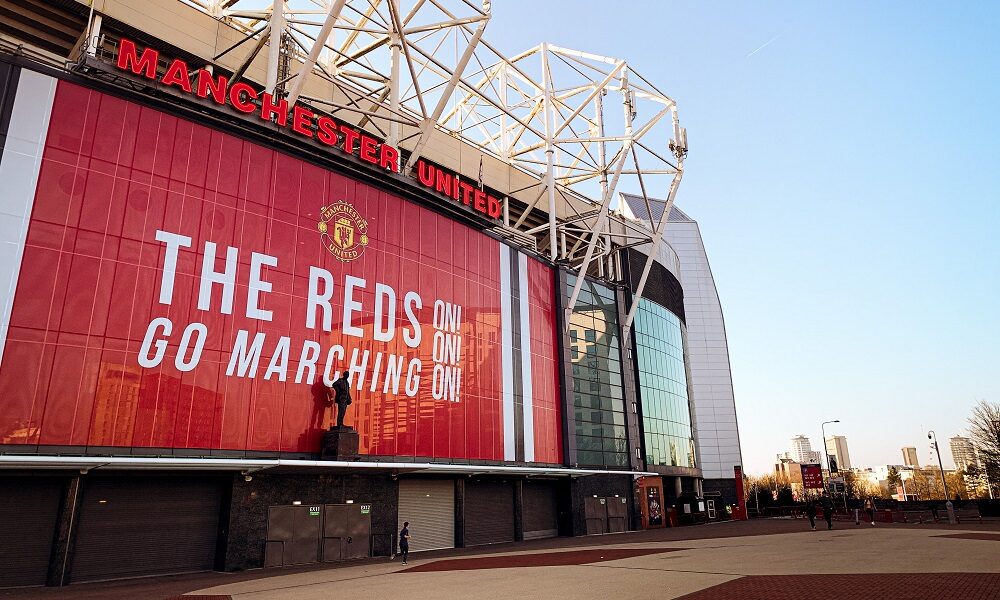
- In November, Stuart Attwell waved away a handball claim for Manchester United when the ball hit Bruno Fernandes's arm at an unnatural angle. The explanation: 'not clear and obvious'. Under the new rule, it becomes a toss-up.
- In January, a throw-in bounced up and hit Lewis Dunk's arm in the box. No penalty. The new rule would leave that unchanged, but just barely. The margin for error is razor-thin.
The law has not eliminated controversy. It has relocated it from the rulebook to the referee's whim.
The counter-argument: this is what we asked for
Clubs and pundits screamed for 'common sense' after the rash of penalties for balls ricocheting off armpits. The new rule is a direct response to that noise. But common sense, in practice, means the referee decides what is natural. Is jumping with arms slightly raised unnatural? Is protecting the face with a hand unnatural during a goalmouth scramble? The current law book says yes. The referee's instinct says maybe. That gap is where chaos breeds.
Data from the first twelve matchweeks of last season shows 19 handball penalties awarded. Under the old interpretation, that number was roughly stable. Under the new subjective regime, expect a 30% drop—but a 50% increase in howls of protests. The Premier League's own internal review, leaked to The Athletic, admits that 'the threshold for intervention remains unclear to match officials'. Even the PGMOL does not believe its own guidance.
Verdict: By the end of this season, the rule will be revised again
I will make a specific prediction: before the 2025 Christmas fixtures, the Premier League will be forced to issue a 'clarification of the clarification' after a high-profile handball decision costs a top-six side three points. The most likely candidate: a deflected cross strikes a defender's hand after his teammate's miscued clearance, the referee waves play on, and the aggrieved manager will produce a video of the identical incident being punished three matchweeks earlier. Then the cycle begins again.
The Premier League has not solved the handball problem. It has merely deferred it. And the next crisis is already scheduled.
Related Articles
Filed under: Opinion | LA Premier League Home