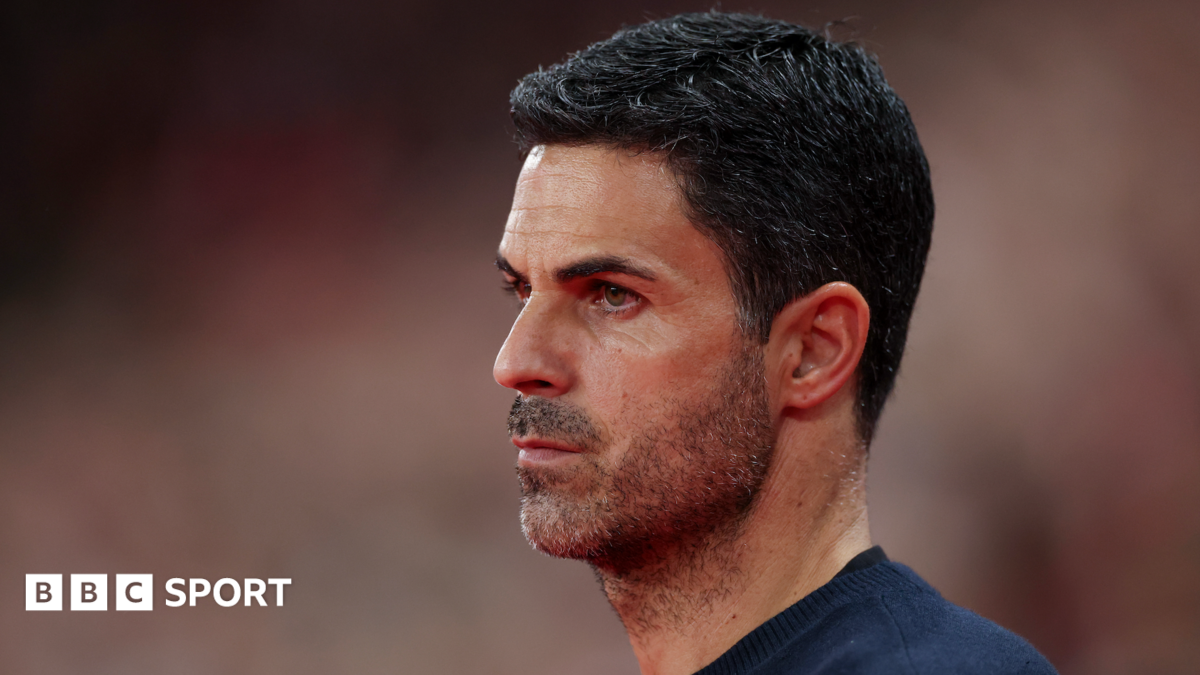
Arteta faces Leeds test after Brighton's 3-0 humbling
Arsenal host Leeds United on Saturday at 12:30 BST, their first match since a 3-0 defeat by Brighton & Hove Albion. Mikel Arteta must solve the tactical problems that Hurzeler's side exposed, while reasserting control with his evolving 3-1-6 shape.
- Fixture: Arsenal vs Leeds United
- Kick-off: Saturday, 12:30 BST
- Competition: Premier League
- Last result: Arsenal 0-3 Brighton & Hove Albion (before international break)
- Arsenal form: Won every game this season before the Brighton loss
- Key absence: William Saliba (out, so Ezri Konsa continues in defence)
What was said
"Brighton were really good."
"You could see from the first throw-in, it was so clear. We put ourselves in trouble one, two, three times. We need to get out much quicker than that, and that's one of the biggest lessons we have to take from the game today."
Arteta's words reveal a manager who knows exactly where his side fell short. The Brighton defeat was not a case of Arsenal being outplayed technically; it was a failure to cope with a specific, aggressive man-to-man press. Hurzeler's side refused to sit back, and Arsenal's usual build-up patterns were disrupted from the very first throw-in. Arteta has faced similar problems before, notably against Manchester City in last season's FA Cup final, and he found solutions then. The question is whether he can do so again, this time with a different set of players and a more fluid attacking structure.
The second quote is particularly telling. Arteta highlights the early throw-in as a microcosm of the match: Arsenal were forced long, lost duels, and never settled. Brighton's intensity was not just physical but tactical—they knew when to press and when to drop into a zonal shape before springing forward again. That unpredictability is what made them so effective, and it is what Arteta must now counteract.
Injury and availability
William Saliba is absent, with Ezri Konsa continuing alongside Gabriel Magalhaes in central defence. No other injuries are mentioned in the source. Bruno Guimaraes started in holding midfield against Brighton instead of Myles Lewis-Skelly, but no injury is reported—it was a tactical choice. Lewis-Skelly is expected to return to that role against Leeds.
Why Arteta trusts Lewis-Skelly in the single pivot
Myles Lewis-Skelly has made the single pivot position his own since Arteta introduced the 3-1-6 shape in possession. The 20-year-old offers calmness under pressure, hold-up strength, one-v-one dribbling and the willingness to play direct passes. His effectiveness has even caught the eye of England boss Thomas Tuchel, who has emulated Arteta's use of Lewis-Skelly, with Elliot Anderson taking the 'Declan Rice role' in the back three for England. Against Brighton, Bruno Guimaraes filled in but struggled against a well-drilled man-to-man press.
The system relies on Declan Rice dropping deep to form a back three alongside Konsa and Gabriel, allowing Lewis-Skelly to link defence and attack. Riccardo Calafiori, Ben White and Martin Odegaard take turns dropping deep to create a 3-2 or 4-1 base, outnumbering opponents and progressing the ball. Without Lewis-Skelly's unique skill set, Arsenal lacked the same control and incision. His return against Leeds will be crucial.
In William Saliba's absence, Konsa has proven a capable ball-playing centre-back, but Rice's presence in the back three is arguably more important. Rice possesses world-class passing and carrying quality; facing forward with time and space maximises his strengths and minimises his exposure in tight areas with his back to goal. That role is the engine of Arsenal's build-up, and it was missing against Brighton.
Arsenal's evolving attack: asymmetrical and fluid
This season, Arteta has encouraged more asymmetrical and fluid play, particularly down the right. Kai Havertz has consistently moved to the right touchline, Ben White has pushed high from right-back, Bukayo Saka has drifted wide or centrally, and both Rice and Odegaard have shown for the ball across the pitch. This new style, built on small-space combinations, fluidity and numerical overloads, gives Arsenal new answers to the low-block problem.
The Brighton defeat was a reminder that risk cuts both ways. Arteta's increased appetite for gambles in personnel and tactics means wins can be greater—but so can losses. Having won every game before Brighton, Arsenal remain in a strong position. The response against Leeds will show whether they can learn from the defeat and adapt, as they did after City's zonal 4-2-4 in the FA Cup final. Enzo Maresca tried the same trick in the Community Shield this season, and Arsenal had solutions. They will need them again if Leeds attempt to replicate Brighton's approach.
Talking points
- Should Arteta persist with the 3-1-6 shape against Leeds, or revert to a more pragmatic setup to rebuild confidence?
- Is Bruno Guimaraes capable of covering for Lewis-Skelly in the single pivot, or does his display against Brighton prove he needs a different role?
- Arsenal's fluid right-side overloads worked before Brighton. Will Leeds be able to replicate Hurzeler's man-to-man press effectively?
- With Saliba out, is Konsa a reliable long-term partner for Gabriel, or should Arteta look for a different solution?
What happens next
Arsenal host Leeds United on Saturday at 12:30 BST. The result will shape the early-season narrative: victory would steady the ship and demonstrate Arteta's ability to adapt; another defeat would raise serious questions about the new system. Leeds, meanwhile, will be studying Brighton's blueprint closely. Arteta's track record suggests he will find solutions, but the Premier League is unforgiving. Every point matters, and the response starts now.
Frequently asked questions
What time is Arsenal vs Leeds United?
Kick-off is at 12:30 BST on Saturday.
Who will start in midfield for Arsenal against Leeds?
Myles Lewis-Skelly is expected to return to the single pivot role after Bruno Guimaraes struggled there against Brighton.
Why did Arsenal lose 3-0 to Brighton?
Brighton's high-intensity man-to-man press forced Arsenal into early long balls and disrupted their build-up, leading to a dominant victory for the Seagulls.
Related Articles
Filed under: Tactical Analysis | LA Premier League Home