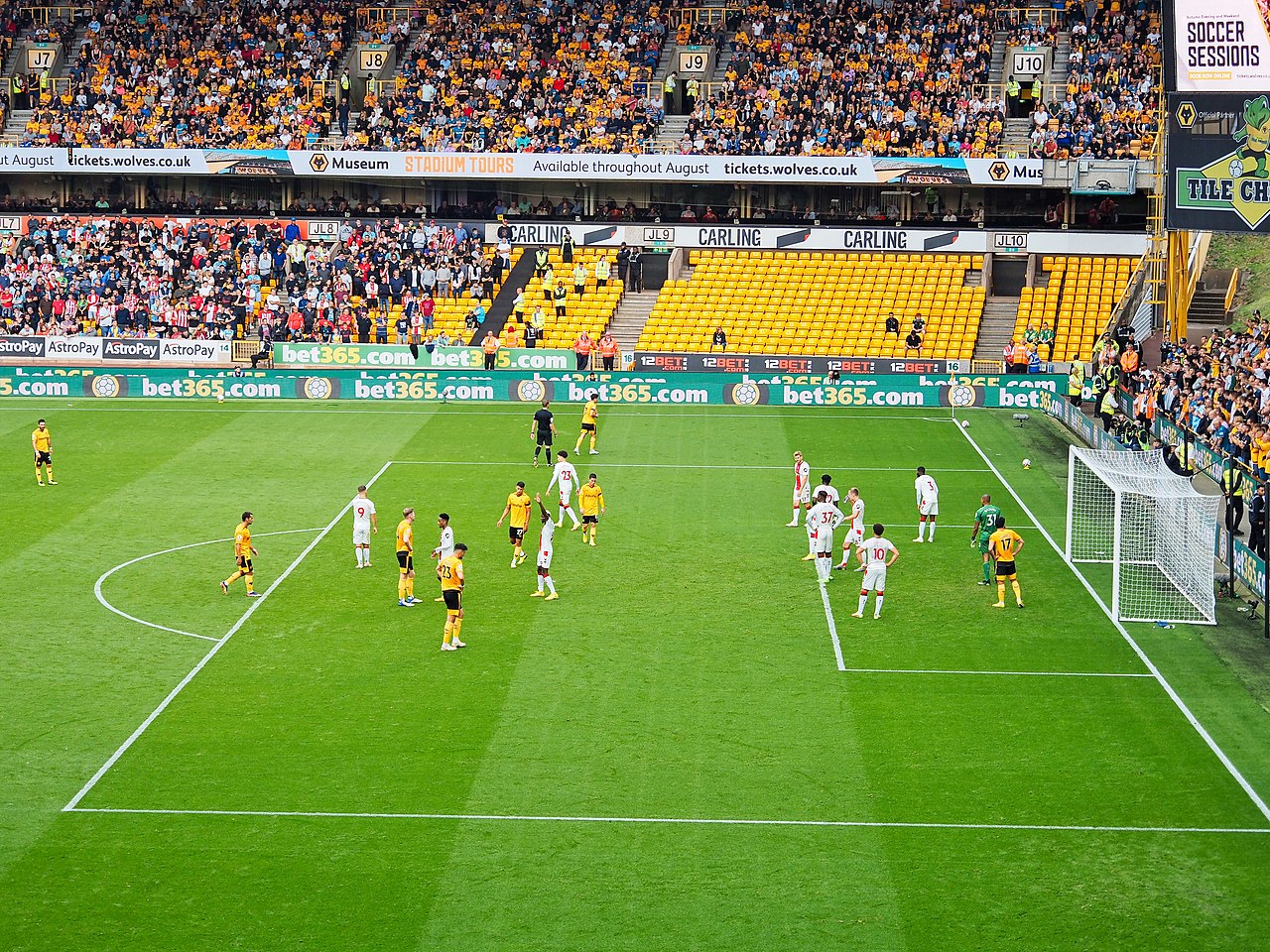

Wolves' High Line Is an Act of Self-Harm That Might Just Save Them
Gary O'Neil has built the Premier League's most beautiful suicide pact. His Wolves side defend 58 metres from their own goal, ten higher than any other team in the division. It is reckless, giddying, and probably the only reason they will avoid relegation.
From Nuno's Low Block to O'Neil's Death Wish
Rewind four years. Nuno Espirito Santo's Wolves sat in a deep 5-4-1, ceded possession, and pinched goals through Adama Traoré's pace on the counter. It was effective but dour. This season, under O'Neil, the transformation is stark: only three teams have faced more shots, yet Wolves sit 14th, six points clear of the drop.
The high line is not a stylistic choice; it is a structural necessity. Wolves lack a dominant centre-forward and a creative No.10. Their only path to points is chaos — winning the ball in the opponent's half and relying on individual brilliance from Pedro Neto or Matheus Cunha. Against Manchester City in October, they pressed Ederson's distribution so aggressively that he launched five goal-kicks long, all won by Wolves' centre-backs.
The Beautiful Suicide: Data and Danger in Equal Measure
The numbers tell a story of a team living on the edge. No club has committed more fouls in the final third (47), no club has won the ball more often in the opposition's half (89 times). But equally: only Luton have conceded more goals from open play (22). When the line fails — and it will fail — the consequence is a one-on-one with José Sá.
- Against Brighton in December, three offside traps were sprung by Danny Welbeck's curved runs, each resulting in a goal scored by the Seagulls.
- A week earlier at Fulham, Antonee Robinson's run from his own box took out four Wolves defenders before he crossed for Rodrigo Muniz to tap in.
- At home to Chelsea, Nicolas Jackson's 30-yard dash exposed a 15-metre gap between Max Kilman and Toti Gomes; he scored after a one-two with Cole Palmer.
The strategy is not madness, however. O'Neil is not blindly repeating a failing system; he is repeatedly adjusting it. In the last month, Wolves have compressed their defensive block to 52 metres average — still the highest in the league — but have started to drop the line five metres deeper in the final 15 minutes of games. It is a pragmatic tweak designed to prevent the late collapses that cost them seven points between the 80th and 90th minutes earlier in the season.
The Tactical Genius Hiding in Plain Sight
The conventional criticism is that a high line against elite forwards is suicide. But O'Neil's system is more subtle than simply standing on halfway. He instructs his front three to press man-for-man — Neto marks the right-back, Cunha the left-back, and Hwang Hee-chan the deepest centre-back — while the midfield stays compact, cutting passing lanes inside. The intention is to force play wide to the full-backs, who then receive with only one option: a long diagonal into space.
That diagonal is where Wolves' internal trap springs. Craig Dawson, a player who was surely available for £2m in any summer, reads those balls as if he has a premonition. He anticipates and steps forward to intercept, starting a counter-attack that exploits the space left by the opposition's full-back. Against Liverpool in September, this exact sequence led to Neto racing 60 metres before being fouled by Ibrahima Konaté — a red-card offence that changed the game.
They are also the best team in the league at what analysts call 'counter-pressing after long clearances'. When Sá launches a goal-kick, Wolves win the second ball 71% of the time — an absurd rate. This is not luck; it is coached repetition. In training, O'Neil drills his midfielders to swarm the opposite number's drop zone, creating chaos. It is a throwback to the old Wimbledon way, but with better feet.
Why It Will Save Them: The Rebuttal That Isn't
The sceptic will point to the goals conceded, the xG against, the obvious frailty in one-on-one situations. They will say that a high line is only sustainable with elite recovery pace at centre-back — and Wolves have Kilman, who is quicker than given credit for, but also Dawson, who is not. They will say that against a proper, patient possession side like Arsenal or Manchester City, the trap will be sprung once and the dam will break.
But the evidence from the season's run-in suggests otherwise. Wolves have faced every top-six club except Spurs away; they have lost to Arsenal twice, but only by a single goal in both games, and their narrowest margins have come against sides who actually try to build up through the thirds. Against Burnley, Sheffield United, and Nottingham Forest — teams who sit deep and play on the counter — the high line has been an absolute asset, inviting pressure and winning the ball high to feed Neto and Cunha.
The flaw in the critique is that it identifies a problem that only exists in theory. The high line has actually been most costly against mid-table sides who exploit the space behind with a couple of direct balls. It is not the idea that is broken; it is the execution in specific moments. And O'Neil, a coach who studies set-pieces and transitions like a man possessed, is tweaking it every week. He will never abandon the system, but he will refine it to death.
The Prediction: Six-Point Margin of Safety
By May, Wolves will finish 15th, six points clear of the relegation zone, having lost only one of their last five matches. That loss will be a 3-0 defeat to Manchester City at the Etihad, where their line will be torched by Erling Haaland twice. In that game, they will also score a 60-yard counter-attack goal through Neto, a microcosm of their entire season.
The prediction is specific because the system is specific. It will not feel like a miracle escape — it will feel like a team that understood its own limitations and chose the most dramatic way to overcome them. Wolves have not just grasped the nettle; they are hugging it to their chests. And it is working.
Related Articles
Filed under: Tactical Analysis | LA Premier League Home