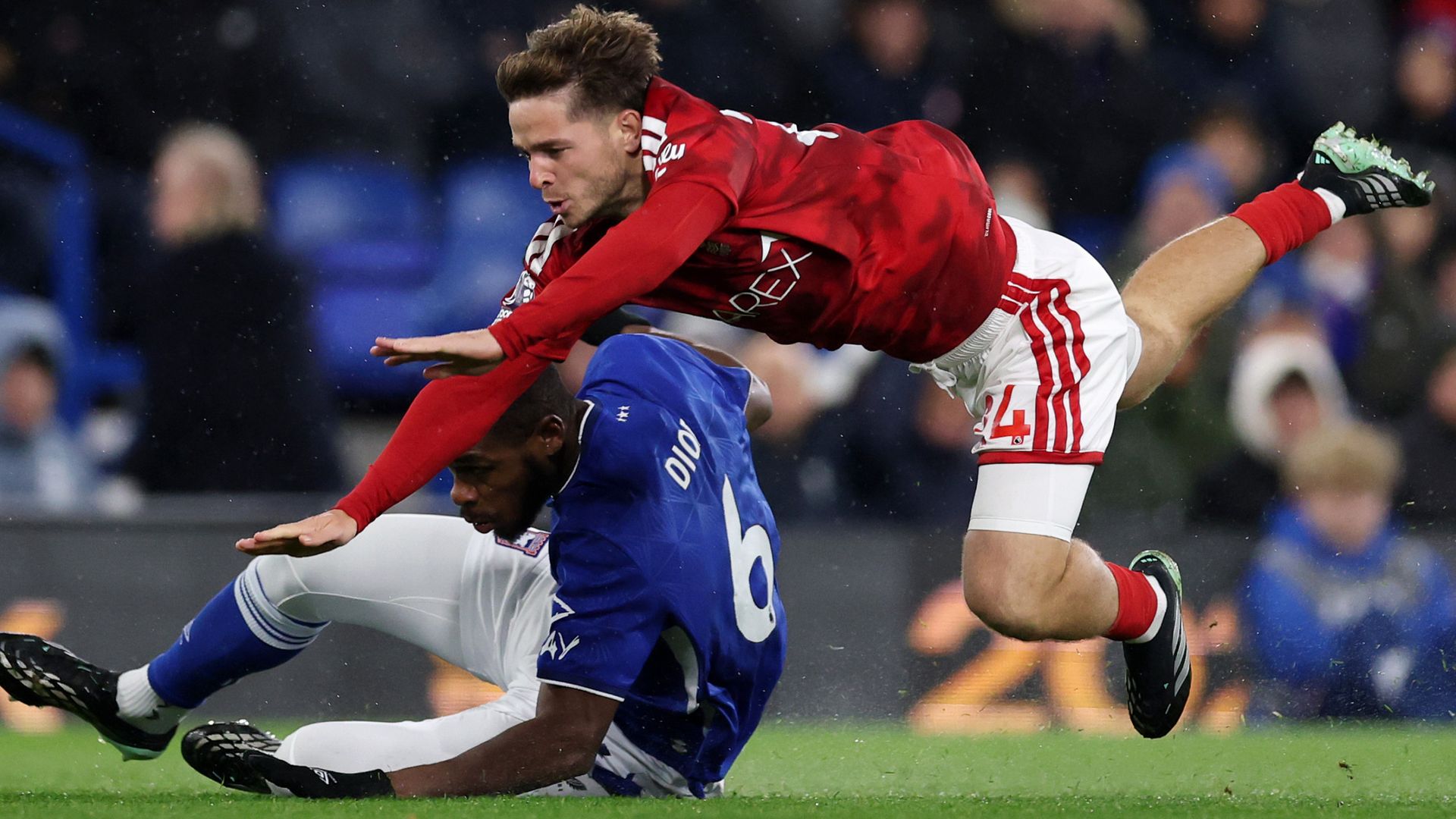

The yellow card for Issa Diop is not a mistake — it is the logical endpoint of VAR's cowardice
Thomas Bramall's decision to show Issa Diop only a yellow card for denying James McAtee a goalscoring opportunity is being framed as a subjective call. It is not. It is the predictable outcome of a system that has quietly rewritten the rules of football to protect referees from themselves.
When VAR intervened at Portman Road, it did not do so to correct a clear error. It did so to ratify one. The result was a Nottingham Forest side denied a red card and two points in a match they dominated. That is not justice; it is the appearance of justice.
From Collina to Bramall: how the deterrent became a formality
Pierluigi Collina once defined the denial of a goalscoring opportunity as a red card because the punishment had to fit the crime. The 2016 law change, which allowed a yellow card when a penalty was awarded, was meant to prevent triple punishment. It was a sensible reform. But it has been stretched into something else entirely.
Somewhere along the line, the principle of deterrence was abandoned. The KMI Panel, supposedly the guardian of consistency, has become a rubber stamp. Howard Webb’s apology culture has infected the process. Referees are no longer asked what the law says; they are asked whether a fellow official could be defended. That is not justice; it is institutional self-preservation.
The McAtee incident exposes the lie of “clear and obvious”
Diop’s challenge on McAtee was not a marginal call. McAtee was through on goal. Diop was the last man. The foul was deliberate. The only debate is whether the ball was moving away from goal — a debate that exists only because VAR has normalised the search for reasons not to intervene.
Bramall’s yellow card is not the problem. It is the symptom. The problem is a VAR protocol that treats a referee’s on-field decision as a sacred text, and a KMI Panel that treats consistency as a synonym for conservatism. The result is a league where denial of a goalscoring opportunity is punished with a yellow card if the referee feels like it, and a red card if he does not.
- In Ipswich vs Nottingham Forest, Issa Diop was only booked for denying James McAtee a goalscoring opportunity — a decision that VAR reviewed and upheld.
- Nottingham Forest dominated the match but drew 1-1, with wasteful finishing and the Diop decision costing them two points.
- The KMI Panel is supposed to ensure consistency, but its recent rulings have consistently favoured the referee’s original decision, even when the law is clear.
The counter-argument: let the referee decide
The steel-man case is simple: referees are best placed to judge intent and context, and VAR should only intervene for clear errors. On that reading, Bramall saw the incident, judged it a yellow card, and VAR had no business overruling him.
But that argument collapses under its own weight. VAR did not stay silent; it intervened. It reviewed the footage and decided the yellow card was correct. That is not a “clear and obvious error” threshold; that is a new trial of the incident, with the referee as judge and VAR as jury. The result is a system that pretends to correct mistakes while actually ratifying them.
The evidence is not just in this incident. It is in the pattern. Manchester City’s accounting trial, the Premier League’s profit rules, and the KMI Panel all share a common flaw: they are designed to protect institutions, not to deliver justice. The Diop decision is the refereeing equivalent of a financial settlement — it looks like a punishment but is actually a licence to continue.
Prediction: the Diop decision will be upheld, and that will be the point
The KMI Panel will review the Diop incident and, by a majority, uphold Bramall’s decision. They will cite “subjective judgment” and “clear and obvious error” and declare the matter closed. But the real consequence will be felt on the pitch: in the next three weeks, a Premier League referee will show a red card for a similar denial of a goalscoring opportunity, and the inconsistency will be undeniable.
That is not a prediction of chaos; it is a prediction of exposure. The Diop decision will not be remembered as a one-off. It will be remembered as the moment the Premier League admitted, in public, that denying a goalscoring opportunity is no longer a red card. And once that admission is made, the deterrent is gone.
The law is clear. The footage is clear. The only fog is the one created by a VAR culture that prizes self-justification over justice. Thomas Bramall did not make a mistake. He made a choice. And that choice will haunt the Premier League for the rest of the season.
Related Articles
Filed under: Opinion | LA Premier League Home