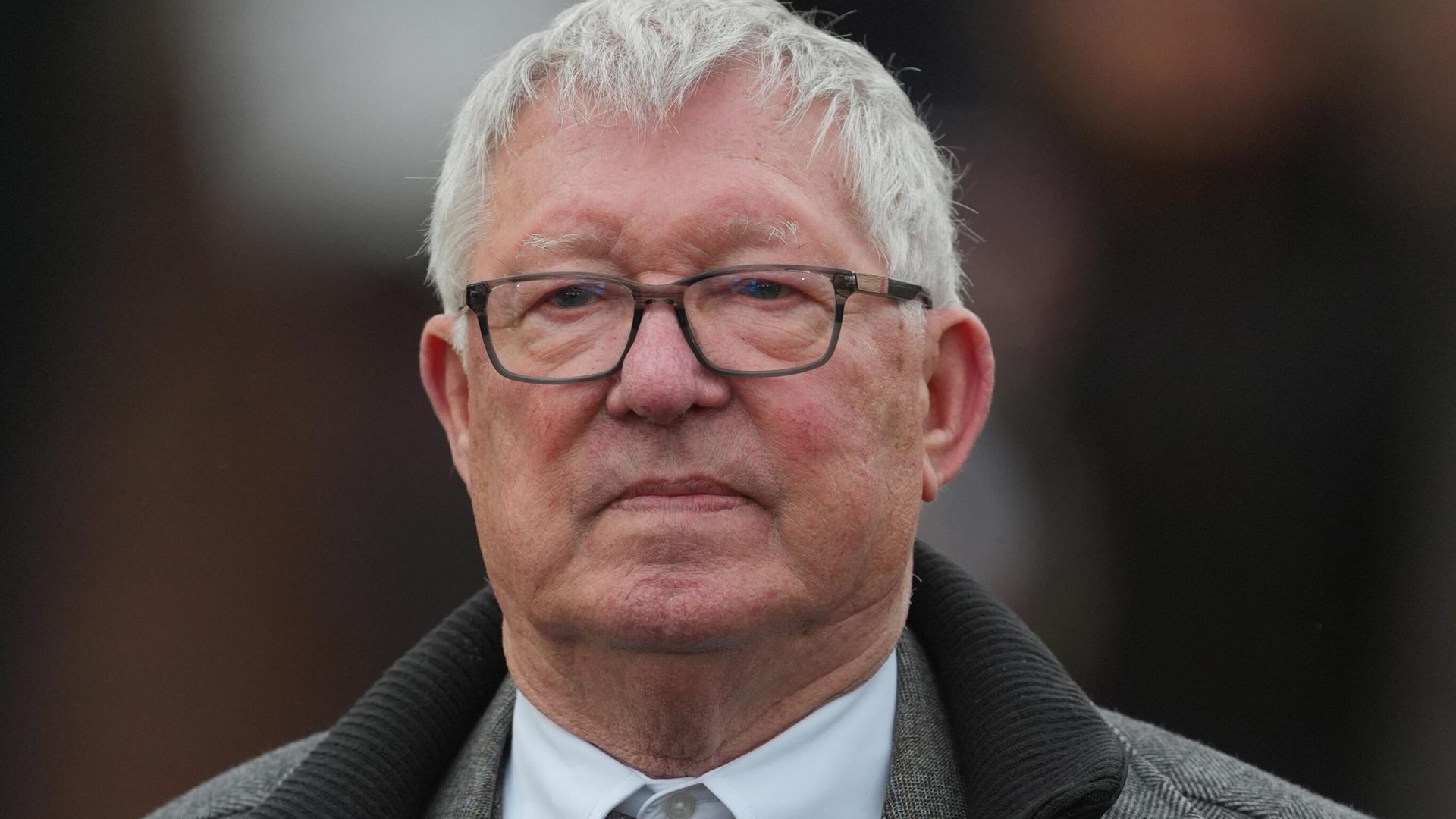
Sir Alex Ferguson: 'I was terrified' about Old Trafford return after brain haemorrhage
Sir Alex Ferguson has revealed he was "terrified" about returning to Old Trafford following his brain haemorrhage. The Manchester United legend underwent emergency surgery in May 2018 and spent time in intensive care at Salford Royal Hospital before attending United's 1-1 draw with Wolves less than four months later. He feared both the fans' reaction and losing his voice.
- Who: Sir Alex Ferguson, Manchester United's most decorated manager
- What: Said he was "terrified" about his return to Old Trafford after a brain haemorrhage
- When: Emergency surgery in May 2018; returned for United vs Wolves less than four months later
- Where: Old Trafford, Manchester
- Health: Underwent emergency surgery and was placed in intensive care at Salford Royal Hospital
- Current: Now 84, still a regular at Old Trafford and feeling "quite good despite small injuries"
What was said
"I was terrified. I wish I could say I was comfortable. I wasn't."
"I didn't know what the reaction was [going to be]. Then they make the announcement and then of course there was a loud applause."
"My wife was with me, and she was nearly crying. When we sat down, she said 'that's fantastic'."
"It's one of those things. That's the generosity of our support and recognising my time there."
"I'm feeling quite good despite small injuries. I had lost my voice; I couldn't speak. That was a frightening moment."
"I remember my grandsons coming to see me and I had lost my voice. Then they brought in a therapist and she started doing things like asking me to write down the names of birds, names of animals, names of rivers. That way my voice came back."
Ferguson's words strip away any veneer of invincibility. This is a man who once ruled English football with an iron will admitting he was scared — not of the opposition, but of a room full of people who adored him. The fear of losing his voice, of not being able to communicate, is a raw reminder of how fragile life can be, even for a titan. Yet the response he received shows the deep bond between Ferguson and the Manchester United support.
The detail about writing down the names of birds, animals, and rivers is particularly poignant. It shows a deliberate, clinical approach to recovery, mirroring the meticulous planning Ferguson applied to football matches. His voice came back because he worked at it — a testament to the resilience that defined his managerial career.
The numbers
- 2018: The year Ferguson suffered the brain haemorrhage and underwent emergency surgery
- May: The month he fell ill and was admitted to Salford Royal Hospital
- Four months: The time between leaving intensive care and returning to Old Trafford for the Wolves match
- 1-1: The score of the match Ferguson attended on his return
- 84: Ferguson's current age, as stated in the source
Why Ferguson's fear mattered – and what it reveals about football's human side
There is a tendency to treat managers and players as characters in a never-ending drama, their humanity obscured by tactics and transfer fees. Ferguson's admission shatters that. His terror was not about a defeat or a dropped points, but about whether the people who once sang his name would still embrace him. In an era where footballers are often reduced to data points, this is a reminder that the game is played by people with real fears and vulnerabilities.
For Manchester United supporters, this will deepen their affection for the man who delivered 13 Premier League titles. But it also raises a broader question: how do clubs care for their legends when the applause fades? Ferguson's return to the director's box, now a familiar sight, is a small beacon of that care — but his story highlights the long, unseen road back from a life-threatening illness.
His description of therapy — naming birds, animals, rivers — also underlines the importance of the speech and language support that many stroke and brain injury survivors rely on. Ferguson had access to the best care, but the principle of deliberate, repetitive practice to rebuild neural pathways is universal. It worked for him, just as it works for thousands of others. His willingness to speak about it helps normalise the struggle.
Talking points
- Ferguson's fear of the fans' reaction shows that even the most decorated manager doubts himself — should clubs do more to prepare returning legends for the emotional weight of a comeback?
- It's easy to forget Ferguson nearly lost his voice permanently. Should United have a permanent tribute to his recovery, or is his regular presence at Old Trafford enough?
- The fact he was terrified four months after a brain haemorrhage raises questions about the pressure on managers and players to return too quickly from serious illness.
- His recovery through naming birds and animals is a reminder that speech therapy is underfunded in football, where injuries below the neck are rarely discussed.
What happens next
Sir Alex Ferguson continues to attend Manchester United matches as a regular fixture at Old Trafford. With no further health updates provided in the source, United fans will simply cherish his presence at the Theatre of Dreams. The club's next home fixture will no doubt see the 84-year-old back in the director's box, a symbol of resilience and a reminder of the bond between a manager and his people.
Frequently asked questions
Why was Sir Alex Ferguson terrified about returning to Old Trafford?
Ferguson said he was "terrified" because he didn't know what the reaction from fans would be when he returned to Old Trafford after his brain haemorrhage in 2018.
When did Sir Alex Ferguson return to Old Trafford after his brain haemorrhage?
He returned for Manchester United's 1-1 draw with Wolves, less than four months after falling ill in May 2018 and being placed in intensive care at Salford Royal Hospital.
How did Sir Alex Ferguson get his voice back after losing it?
A therapist asked him to write down the names of birds, animals and rivers. Through these exercises, his voice gradually returned.
Related Articles
Filed under: Manager News | LA Premier League Home