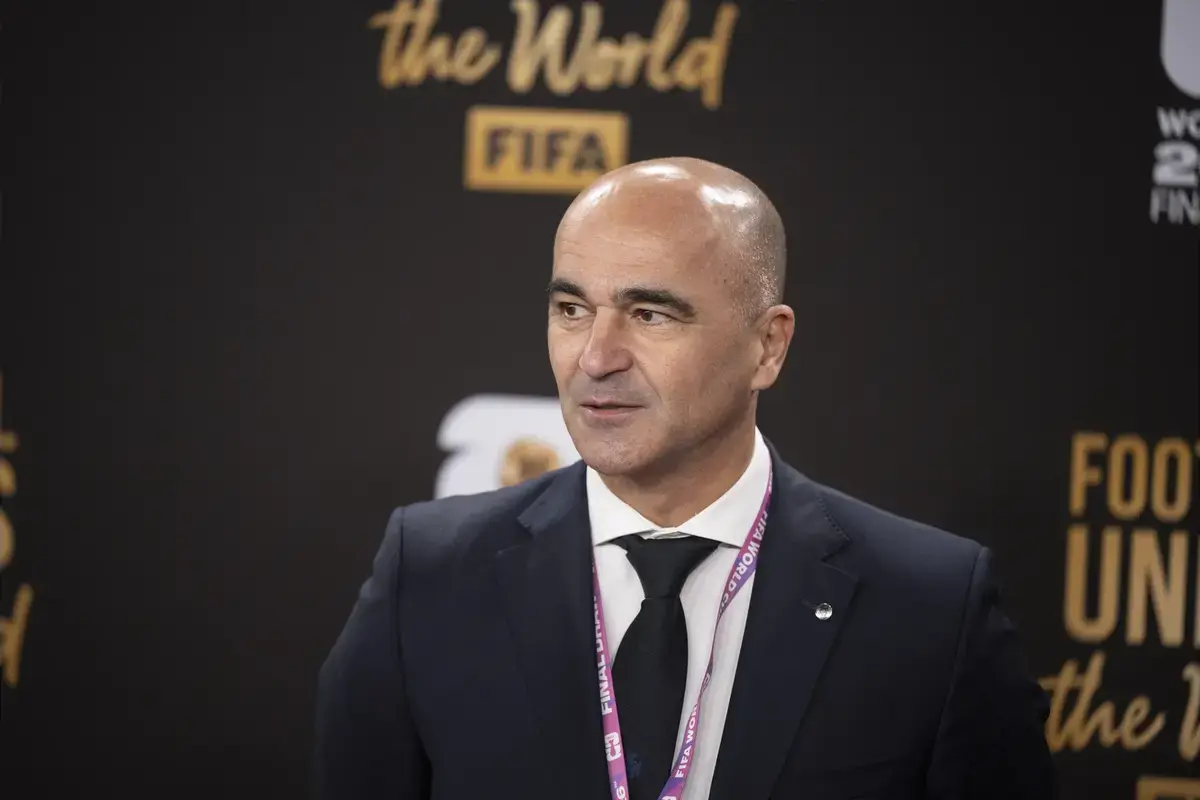
Roberto Martínez: From Premier League to Portugal’s World Cup Dream
Roberto Martínez has built one of modern football’s more unusual coaching careers. He did not arrive at the top through a superstar playing past or a fast-tracked managerial rise at elite clubs. Instead, his path has been defined by steady progression, tactical adaptability, and an ability to extract the best from talented squads.
Early Breakthrough at Swansea
Martínez began his managerial career at Swansea City in 2007, taking charge of a League One side. He implemented an attractive, possession-based style that earned promotion to the Championship in his first full season. His emphasis on technical ability and organised build-up play caught the attention of higher-tier clubs.
At Swansea, Martínez built a reputation for developing young talent and creating a distinct football identity. The Swans became known for their patient passing and positional discipline, principles that would follow him throughout his career.
Premier League Stints: Wigan Athletic and Everton
Martínez moved to Wigan Athletic in 2009, keeping them in the Premier League for three seasons before a dramatic FA Cup triumph in 2013. That victory, against Manchester City, remains one of the competition’s great upsets. However, Wigan were relegated that same season, highlighting the fine line between success and failure at the highest level.
His next challenge was at Everton, where he replaced David Moyes in 2013. Martínez led the Toffees to a fifth-place finish in his first season, earning a record Premier League points tally for the club. His attractive style won plaudits, but defensive inconsistencies plagued his tenure. He was dismissed in 2016 after a disappointing 11th-place finish.
International Success: Belgium and Now Portugal
Martínez took charge of the Belgian national team in 2016, inheriting a generation of exceptional talent. He guided Belgium to a third-place finish at the 2018 World Cup, their best ever result. However, subsequent tournaments brought disappointment — a quarter-final exit in Euro 2020 and a group-stage elimination at the 2022 World Cup.
After leaving Belgium, Martínez accepted the Portugal job in early 2023. He now leads a squad filled with world-class players, including Cristiano Ronaldo, Bruno Fernandes, and Bernardo Silva. His task is to harness their quality into a cohesive, winning unit capable of challenging for the World Cup.
Tactical Approach: Possession with a Purpose
Martínez’s teams typically employ a fluid 4-3-3 or 3-4-3 formation, prioritising control through the centre. His sides are known for high possession statistics, but they also aim to create overloads in wide areas. At Portugal, he has experimented with a back three to accommodate attacking full-backs.
Defensively, his teams press intelligently, often using a medium block to force turnovers. However, his sides have occasionally been vulnerable to fast transitions — a weakness that top teams will look to exploit.
Challenges Ahead: Balancing Talent and System
Portugal’s squad presents a unique mix of experience and youth. Integrating Ronaldo’s goalscoring instincts with the creative flair of younger players like João Félix and Rafael Leão is a delicate balance. Martínez must also decide on a settled defensive partnership, with options such as Rúben Dias and Gonçalo Inácio.
The 2026 World Cup will be staged across North America, and Portugal are expected to be among the favourites. Martínez’s track record suggests he can guide them deep into the tournament, but pressure will be immense. Failure to reach at least the semi-finals would likely be seen as a disappointment.
For now, Martínez continues to refine his methods, drawing on lessons from his Premier League years. His career remains one of the most intriguing in modern football, and Portugal’s World Cup dream rests on his shoulders.
Related Articles
Filed under: Manager News | LA Premier League Home