Hamstring injuries top the Premier League list as ACL ruptures cost up to a year
Hamstring strains typically sideline Premier League players for one to eight weeks, groin problems for two to eight, ankle sprains for two to twelve, knee ligament damage for four weeks to a year, and meniscus tears for four weeks to several months.
- Most common problem: Hamstring injuries — one to eight weeks depending on grade
- Most damaging problem: ACL rupture — six to twelve months, usually requiring reconstructive surgery
- Recurrence risk: Clubs often delay hamstring comebacks beyond the pain-free point because the muscle must tolerate explosive sprinting
- 2024/25 concern: More than 10 Premier League players suffered ACL injuries, far more than in the previous season
- Current long-term cases: Amadou Onana, Antoni Milambo, Eliot Matazo and Giovanni Leoni
Why injuries are unavoidable in the Premier League
Players sprint at high speeds, change direction under pressure, absorb heavy contact and complete increasingly crowded schedules. League matches are combined with domestic cups, European competitions and international football, leaving limited time for recovery.
Not all injuries carry the same consequences. A minor knock may keep someone out for only a few days, while an anterior cruciate ligament rupture can remove a player for most of a season. Even apparently straightforward muscle strains can become long-term problems if they recur.
Recovery periods vary considerably. The times below are typical estimates rather than guarantees. The severity of the injury, the player's medical history, the treatment selected and the physical demands of their position can all affect the final timetable.
Hamstring injuries: typical recovery time one to eight weeks
The hamstrings are a group of muscles running along the back of the thigh. They are especially important during sprinting, acceleration and rapid changes of pace, making them vulnerable in a competition built around high-intensity running.
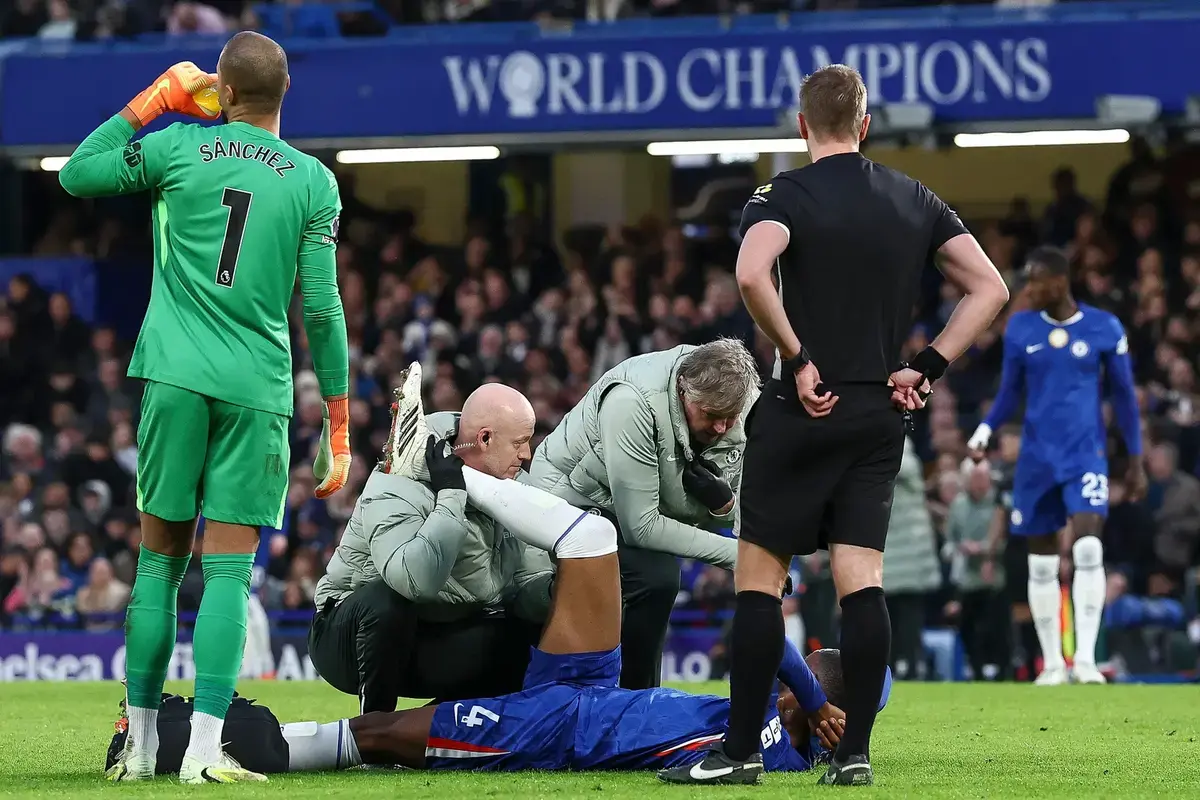
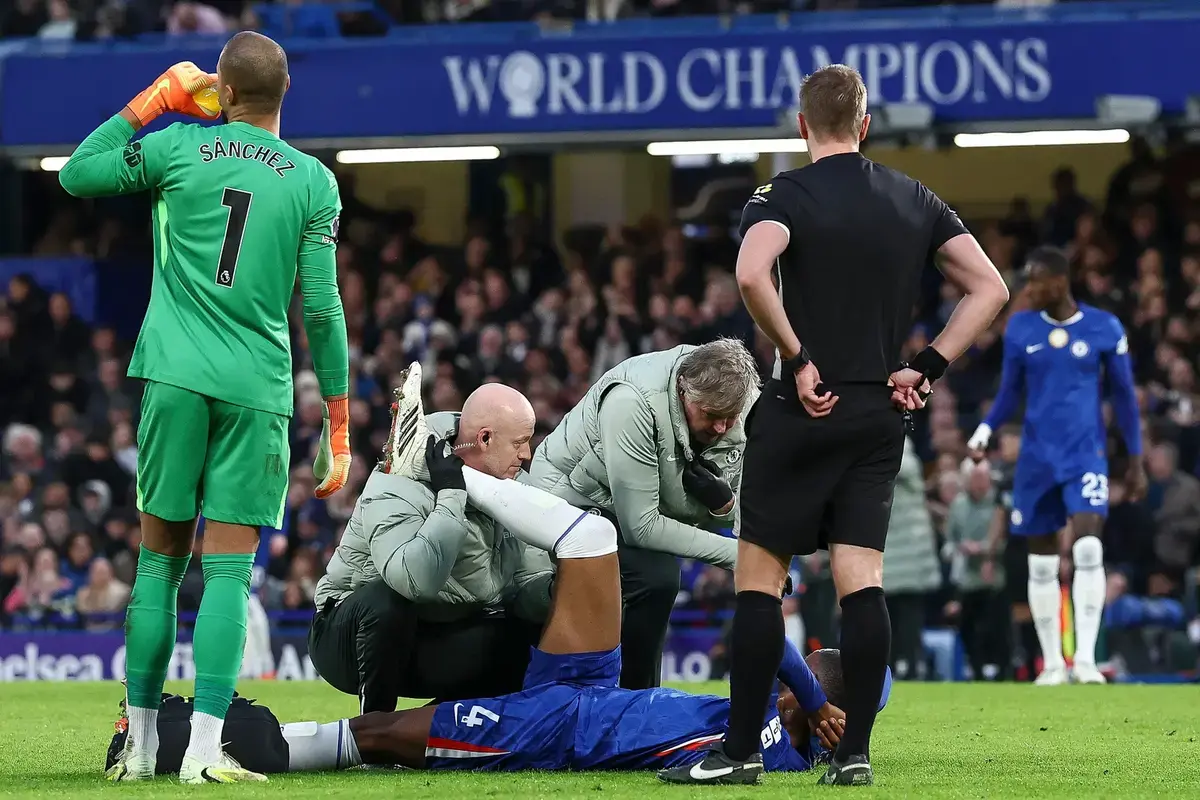
A player suffering a hamstring injury will often slow suddenly and reach towards the back of the thigh. The absence of contact can make the incident look relatively harmless, but the resulting damage can range from mild tightness to a complete muscle or tendon tear.
- Minor strain: one to three weeks
- Moderate strain: three to six weeks
- Severe strain or tendon involvement: six weeks to several months
Bukayo Saka provided a high-profile example when he suffered a significant hamstring problem for Arsenal in December 2024. The injury required surgery and kept him out for more than three months.
At the more severe end, Gabriel Magalhães suffered a hamstring injury in April 2025 that ended his season. His case demonstrated that hamstring problems are not always short-term absences.
Kai Havertz and Kaoru Mitoma are among the Premier League players dealing with hamstring-related issues during the early part of 2026/27.
The greatest concern is recurrence. Players can feel comfortable in training but remain vulnerable when they return to maximum-speed sprinting. Clubs often delay a comeback beyond the point at which the player becomes pain-free because the muscle must also recover its strength and ability to tolerate explosive movement.
Groin injuries: typical recovery time two to eight weeks
Groin injuries usually affect the muscles and tendons around the inner thigh, hip and pelvis. Footballers place considerable stress on this area when kicking, changing direction, stretching for the ball and moving laterally. The repeated twisting involved in passing and shooting can create additional strain.
A minor groin problem may settle within two weeks. More significant strains often require four to eight weeks, while chronic conditions can trouble a player for several months.
Ben White has experienced groin-related fitness problems at Arsenal. His recovery has involved a gradual return to training rather than an immediate reintroduction to matches.
Groin injuries can be difficult because players may remain capable of running in a straight line. The discomfort becomes more obvious when they change direction, strike the ball or defend against an opponent moving laterally.
Some players also develop persistent groin pain rather than one clear incident. This can require careful load management and, in more serious cases, surgery. Returning too quickly can turn a manageable strain into a recurring problem that affects the entire season.
Ankle sprains and ligament injuries: typical recovery time two to twelve weeks
Ankle injuries are common because players frequently land awkwardly, step on another player's foot or have the joint forced beyond its normal range during a challenge. A mild sprain may involve only stretching of the ligaments. A more severe injury can cause partial or complete ligament damage, swelling and instability.
- Minor sprain: one to three weeks
- Moderate ligament damage: three to six weeks
- Severe sprain: six to twelve weeks
- Fracture or surgery: three to six months or longer
Goalkeeper Guglielmo Vicario fractured his ankle while playing for Tottenham Hotspur against Manchester City in November 2024. Remarkably, he completed the match before the extent of the injury became clear. He required surgery and missed several months.
The example demonstrates why a player's ability to continue does not always reveal the seriousness of an injury. Adrenaline can temporarily reduce the sensation of pain, while some fractures allow limited movement immediately after the incident.
An attacker may regain the ability to jog before being comfortable twisting, shooting or absorbing contact. Goalkeepers face additional pressure because they must push powerfully from the injured ankle and land repeatedly after diving.
Knee ligament injuries: typical recovery time four weeks to twelve months
"Knee ligament injury" covers several different conditions. The knee contains four major ligaments: the anterior cruciate ligament (ACL), posterior cruciate ligament (PCL), medial collateral ligament (MCL) and lateral collateral ligament (LCL).
MCL injuries are often caused by contact to the outside of the knee. Mild damage may require only a few weeks, while a more severe tear can keep a player out for several months.
ACL injuries are far more serious. They usually require reconstructive surgery and between six and twelve months of rehabilitation.
Virgil van Dijk missed most of the 2020/21 season after suffering an ACL injury during Liverpool's match against Everton. He eventually returned to become one of the Premier League's leading defenders again.
Jurrien Timber ruptured his ACL on his Premier League debut for Arsenal in August 2023. He did not return to first-team action until the closing stages of the season.
Rodri suffered an ACL injury for Manchester City in September 2024, while Gabriel Jesus and Lisandro Martínez were among several Premier League players to sustain serious cruciate ligament injuries later in that campaign.
The number of ACL injuries during 2024/25 caused particular concern. More than 10 Premier League players were affected, compared with far fewer during the previous season. Current long-term cases include Amadou Onana, Antoni Milambo, Eliot Matazo and Giovanni Leoni.
An ACL injury is not among the most frequent problems in football, but it is one of the most damaging. A player must rebuild strength, stability, movement and confidence before returning to competition. Medical clearance is only one stage. Players can require additional months to regain their previous acceleration, coordination and trust in the knee.
Meniscus injuries: typical recovery time four weeks to several months
The meniscus is a piece of cartilage that helps cushion and stabilise the knee. Damage can occur through sudden twisting or develop gradually through repeated stress. Meniscus injuries sometimes accompany ACL ruptures, making the overall condition more complicated.
Treatment depends on the location and severity of the tear. A small injury managed without surgery may require four to eight weeks. Arthroscopic surgery can produce a relatively quick comeback if the damaged section is trimmed. A full repair usually requires a longer recovery because the cartilage needs time to heal.
- Minor tear without surgery: four to eight weeks
- Surgical trim: approximately four to eight weeks
- Meniscus repair: three to six months
- Combined ACL and meniscus damage: nine months or longer
Clubs generally prefer to repair the meniscus when possible because preserving cartilage can improve the long-term health of the knee.
Injury and availability
- Bukayo Saka (Arsenal): significant hamstring problem in December 2024, required surgery, out for more than three months.
- Gabriel Magalhães (Arsenal): hamstring injury in April 2025 that ended his season.
- Kai Havertz: dealing with a hamstring-related issue during the early part of 2026/27.
- Kaoru Mitoma: dealing with a hamstring-related issue during the early part of 2026/27.
- Ben White (Arsenal): groin-related fitness problems, managed with a gradual return to training.
- Guglielmo Vicario (Tottenham Hotspur): fractured ankle against Manchester City in November 2024, required surgery, missed several months.
- Virgil van Dijk (Liverpool): ACL injury against Everton, missed most of 2020/21.
- Jurrien Timber (Arsenal): ruptured ACL on Premier League debut in August 2023, returned in the closing stages of the season.
- Rodri (Manchester City): ACL injury in September 2024.
- Gabriel Jesus and Lisandro Martínez: serious cruciate ligament injuries later in the 2024/25 campaign.
- Amadou Onana, Antoni Milambo, Eliot Matazo and Giovanni Leoni: current long-term ACL cases.
What the recovery timelines tell us about squad planning and the title race
The hamstring data is the most instructive because it is the most common problem. A three-week absence is manageable; a tendon-involving strain that stretches into several months changes a club's season. Gabriel Magalhães losing the end of a campaign to a hamstring injury is the clearest recent proof.
The ACL picture is different. These are not frequent injuries, but when they cluster — as in 2024/25 with more than 10 Premier League cases — they can shape a table. Rodri's injury in September 2024 and the cruciate problems suffered by Gabriel Jesus and Lisandro Martínez later that season are the headline examples of how one diagnosis can remove a key player for the business end of a campaign.
The meniscus cases sit in the middle. A trim can return a player in roughly four to eight weeks, but a repair demands three to six months, and combined ACL and meniscus damage pushes past nine months. That is why clubs prefer to repair when the cartilage can be preserved. It is a long-term investment that costs short-term availability.
Talking points
- Should clubs accept longer hamstring absences to protect against recurrence, even if it costs points in the short term?
- More than 10 ACL injuries in 2024/25 is a trend. Is the schedule the cause, or is it simply bad luck?
- Goalkeepers like Guglielmo Vicario face unique ankle risks. Do clubs need specialist depth in that position?
- Meniscus repairs can cost half a season. Is trimming and returning faster ever the smarter choice?
What happens next
The early 2026/27 hamstring cases involving Kai Havertz and Kaoru Mitoma will be monitored week by week, with clubs typically holding players back beyond the pain-free stage. The current long-term ACL group — Amadou Onana, Antoni Milambo, Eliot Matazo and Giovanni Leoni — face months of rehabilitation before any return date is considered.
Frequently asked questions
How long does a hamstring injury keep a Premier League player out?
A minor strain typically means one to three weeks, a moderate strain three to six weeks, and a severe strain or tendon involvement six weeks to several months.
How long is an ACL injury recovery in the Premier League?
ACL injuries usually require reconstructive surgery and between six and twelve months of rehabilitation.
Which Premier League players are currently out with long-term ACL injuries?
Current long-term cases include Amadou Onana, Antoni Milambo, Eliot Matazo and Giovanni Leoni.
Related Articles
Filed under: Injury News | LA Premier League Home