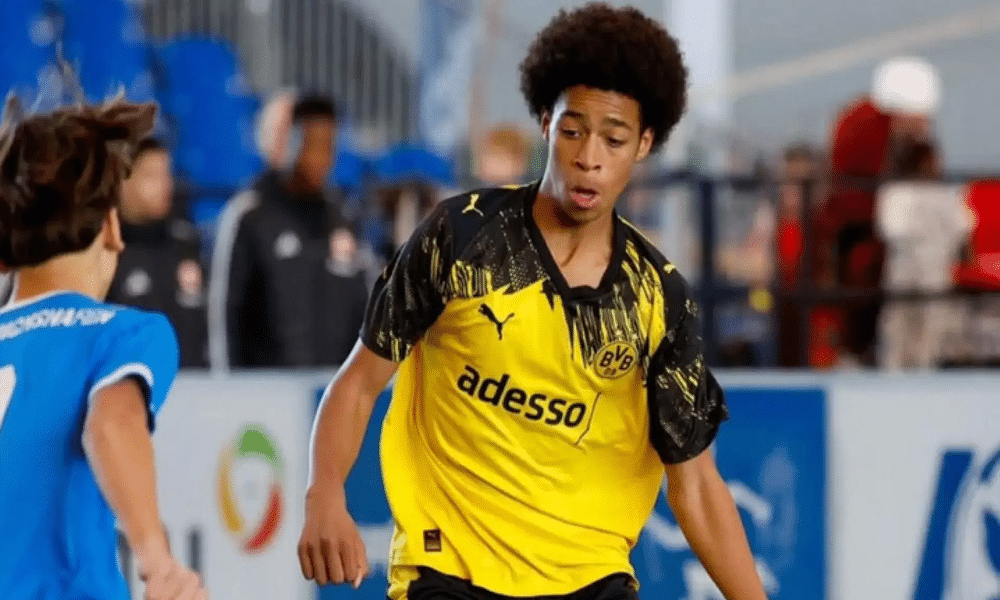

Arsenal captain Martin Odegaard asked Be Your Best to add a 120% speed setting to its VR scanning headset
Martin Odegaard, the Arsenal captain, requested a 120% speed setting on a virtual reality scanning tool after using it for the first time, as Premier League players adopt technology designed to sharpen decision-making before they receive the ball.
- Technology: A VR headset created by Be Your Best that trains scanning
- Key user: Arsenal captain Martin Odegaard requested a 120% speed setting
- Named users: Marc Guehi, Romeo Lavia and Aurelien Tchouameni
- Research basis: Professor Geir Jordet studied the 10 seconds before a player receives the ball
- Origin: Frank Lampard recalls his father shouting "pictures" from the sidelines as a boy
- Measured gains: A nine-week German youth programme saw scan rates improve by 28%
What was said
"It was mind-blowing to me how some players just seemed like they had eyes in the backs of their heads."
"When it came to that skill, I felt like I didn't have the vocabulary to understand or describe what it was. I just remember wishing I was as good as them at understanding where the opponent's pressure was coming from and where the next pass should go."
"Those 10 seconds are critical. It's all about making a decision before you get the ball. When you've already made that decision, you're not going to be surprised by what happens. All the pictures have been taken, so it's just about executing."
"He wasn't the fastest player on the pitch in his legs, but in his mind he was the fastest player, so he didn't need to be super quick."
"He made his decisions before he got the ball, and then the ball was gone. Or he turned left because he knew the pressure was coming from the right. Watch clips and you see it. He always covers the ball with his back because he knows where his opponent is."
"Arsene Wenger said we've solved all the physical aspects of football. We know how to get faster and we know how to get stronger. We are really clear about that."
"But in a world where football is becoming way more physical, we also have to pay attention to how fast the mind works. It's not enough to be the strongest and fastest on the pitch anymore."
"I was at Wembley, behind the goal where Italy were defending in the first half of the Euros semi-final against Spain in 2021. Literally, all they did in the first half is what I would describe as skipping and scanning. They never really sprinted, even up the pitch or to the side, they were just jogging."
"Normally, we tell a centre-back or a defender to know where their man is. But it was as if those two knew where every player on the pitch was, and it gave them a sense of calm."
"I always think the game is the best teacher, and the observation and feedback of a coach looking at the details. You can improve players by asking good, open questions. What did you see? Why didn't you turn? Where was the space?"
"It sounds very simple but it's not simple to do because, in our sport, we want everything instantly. We maybe rush to telling them, either in action, so they don't need to scan because we've made the decision for them, or by giving them the answer when we ask them because we don't have the patience for a longer dialogue."
"It's about spending time with a player and having a lens on individual actions. Also, I've seen players who just scan to please the coach. Are they actually observing their next move, or are they just thinking about how many times they move their heads?"
The quotes reveal a genuine tension. Olsen argues that physical preparation is essentially solved and the mind is the next edge to be mined, while Micciche warns that technology cannot replace a coach's patient questioning. Both agree scanning matters; they disagree on how it should be taught.
The most revealing line is Micciche's suspicion of players who scan simply to please a coach, because it strikes at the heart of whether Be Your Best's metrics measure genuine awareness or a performative head-turn. The company's answer is to measure timing and the quality of decisions, not just frequency.
The numbers
- 120% — the top speed setting Odegaard asked Be Your Best to add after his first session
- 80% — the speed at which the writer's first simulation attempt was set
- 100% — the setting described as replicating the speed of a top-level game
- 10 seconds — the period before a player receives the ball that Geir Jordet's research focused on
- 28% — the improvement in scan rates reported in a nine-week programme with Germany U16 and U17 players
- 80% — the proportion of those players whose coaches reported better positioning
Deal details
Chelsea midfielder Romeo Lavia has invested in Be Your Best, according to the source. No fee, stake size or shareholding has been disclosed.
Real Madrid's Aurelien Tchouameni used the headset in 2023 to familiarise himself with the centre-back position when he was told he would be drafted into the role during an injury crisis. After helping the side keep a clean sheet in a 4-0 win over Osasuna, the midfielder posted about using the headset on social media.
Injury and availability
Marc Guehi, the Manchester City centre-back, is a user of the technology. Real Madrid turned to the tool for Aurelien Tchouameni during an injury crisis in 2023, when he was asked to cover at centre-back. No current injuries are reported in the source.
Why scanning is becoming the Premier League's next arms race
The Premier League is getting faster, and the source makes clear what that means: Premier League tracking data shows players are sprinting much further per game, on average, than even a few years ago. As pressing spreads and intensity climbs, the time on the ball shrinks, which is precisely why the glances before receiving matter more than ever.
Martin Odegaard is the headline case. Asking for a setting beyond 100% tells you he already processes the game a step ahead and wants to be pushed further. Marc Guehi at Manchester City and Romeo Lavia at Chelsea give the technology a foothold at two of the strongest squads in the country; Lavia's investment is the strongest commercial signal of belief from a current Premier League player.
The sceptic's case, voiced by Dan Micciche, is that scanning is only useful when it feeds a decision, and that the best teaching tool remains a coach asking what a player saw and why he did not turn. Be Your Best's counter is measurement: timing of scans, frequency and the quality of the decision that follows. The next step is proof at senior Premier League level, not just in youth programmes or at Real Madrid in a one-off emergency.
Talking points
- If Odegaard is the benchmark, is scanning the most underrated transfer-market filter in the league?
- Should clubs publish scan data like sprints, or would that just encourage head-turning without purpose?
- Romeo Lavia investing in Be Your Best raises a question: can a player hold equity in a tool a club might buy?
- Micciche is right that scanning to please a coach is fake progress — but can any metric distinguish the two?
What happens next
The next test is whether senior Premier League players adopt the headset in numbers, and whether clubs follow the example of Germany's U16 and U17 programme with their own nine-week trials. Odegaard's 120% setting is now live for those who want it; the question is how many of his rivals are brave enough to try it.
Frequently asked questions
What is the Be Your Best headset and can Premier League players use it?
It is a virtual reality headset created by Be Your Best that trains scanning — the glances players make to gather information before receiving the ball. Premier League players including Manchester City's Marc Guehi and Chelsea's Romeo Lavia have used it, and Arsenal captain Martin Odegaard asked for a 120% speed setting.
Which Arsenal player asked for the 120% setting on the VR headset?
Martin Odegaard, the Arsenal captain, requested the 120% speed setting after using the headset for the first time, incorporating it above the 100% level that replicates the speed of a top-level game.
Which Premier League and European players use Be Your Best scanning technology?
Manchester City centre-back Marc Guehi is a user, Chelsea midfielder Romeo Lavia has invested in the company, and Real Madrid's Aurelien Tchouameni used the headset in 2023 to prepare to cover at centre-back during an injury crisis.
Related Articles
Filed under: Tactical Analysis | LA Premier League Home