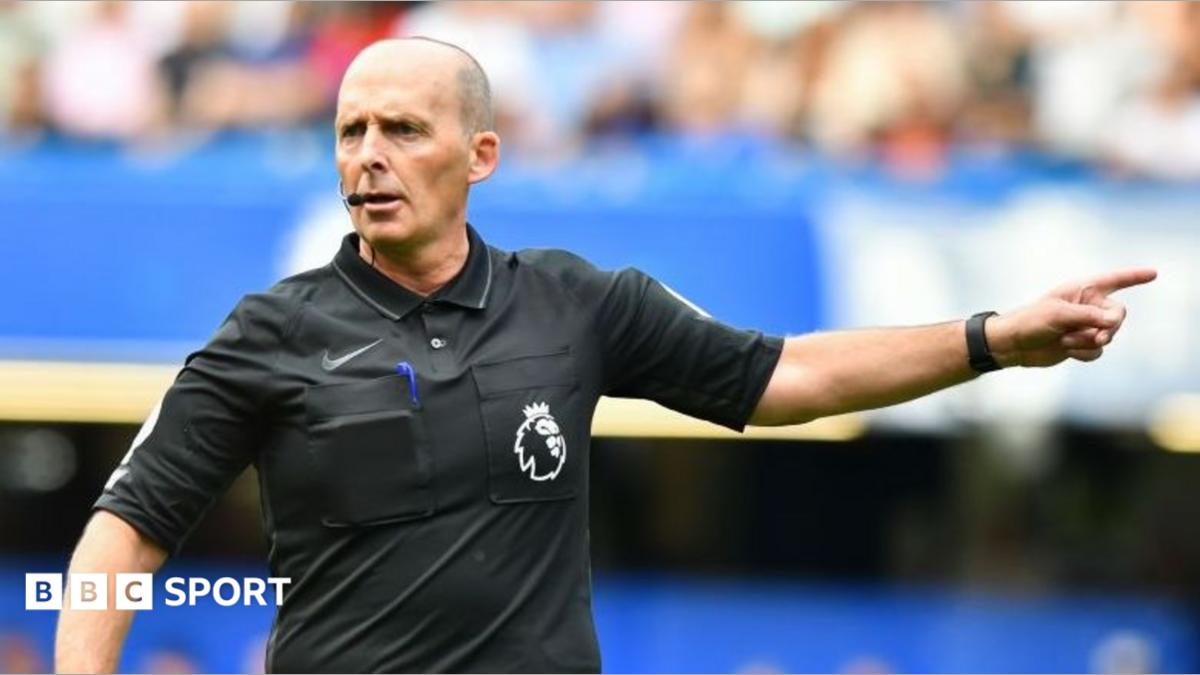
Mike Dean admits playing in-match games during Premier League career
Former Premier League referee Mike Dean has revealed that he would stay in the centre circle for as long as he could during a match, turning what should be a straightforward positional duty into a personal game. The admission offers a rare glimpse into the mindset of one of English football's most recognisable officials.
Dean, who officiated in the top flight for over two decades, made the comments in a recent interview, reflecting on his time on the pitch. His revelation is likely to spark debate among fans and pundits alike, raising questions about the professionalism of match officials.
Context and background
Dean's career spanned 553 Premier League matches, making him one of the most experienced referees in the competition's history. Known for his eccentric personality and occasional showmanship, he was often in the spotlight for his on-field decisions. This latest admission adds another layer to his complex relationship with the game.
In his interview, Dean explained that staying in the centre circle was a way to manage his energy and maintain focus. By remaining in that central position, he could observe the flow of the game without having to follow every attack deep into the opposition's half. This tactic, he said, allowed him to preserve his stamina for crucial moments.
Critics might argue that referees should always be within close proximity to play to ensure accurate decisions. However, Dean insists that modern refereeing has evolved, with fitness monitors and VAR providing additional support. He pointed out that referees are now required to pass stringent fitness tests, but positioning remains a matter of personal judgement.
Impact and analysis
For players and managers, Dean's comments will do little to change perceptions of him, but they do highlight a broader truth: referees, like players, develop habits and superstitions during matches. The centre circle, often viewed as neutral territory, can become a tactical vantage point.
- Game management: Dean's approach allowed him to stay out of the 'red zone' where tackles fly in, reducing the risk of injury and maintaining a clear view of play.
- Fitness efficiency: By not sprinting the entire length of the pitch on every attack, Dean conserved energy for late-game decision-making when fatigue set in.
- Psychological edge: His presence in the centre circle might have subconsciously signalled to players that the referee was in control, a subtle form of authority.
In the context of Premier League officiating, such admissions are rare. Referees are typically tight-lipped about their inner thoughts, adding to the mystique of their role. Dean's candidness is a departure from the conservative public image of officials.
Fantasy Premier League managers, who often scrutinise every detail of match performance, are unlikely to be affected, as referees hold no fantasy value. However, the admission does provide context for those analysing real-life refereeing performances.
What's next
As Dean enjoys retirement, his comments will likely be discussed by pundits and former players. The Professional Game Match Officials Limited (PGMOL) has not responded publicly, but this revelation may prompt them to review how referees are trained with regard to positioning.
For now, football's focus turns to the upcoming Premier League fixtures, where current referees will once again be under the microscope, with every decision analysed. Dean's legacy, already colourful, now includes the admission that he occasionally played his own private game.
Related Articles
Filed under: Player News | LA Premier League Home