Thousands protest against Man Utd ownership before Manchester derby
Thousands of Manchester United fans protested inside and outside Old Trafford against the club's ownership before Sunday's derby with Manchester City. The protests focused on the club's ticketing situation and the treatment of match-going supporters, with banners and songs directed at minority owner Sir Jim Ratcliffe and the Glazer family.
- Event: Manchester United vs Manchester City, Premier League derby
- Date: Sunday (5 minutes before publication)
- Venue: Old Trafford
- Protests: Organised by The 1958 Group and The Red Army
- Key issues: Ticketing, fan bans, ownership
- Financial results: Full year accounts to 30 June 2026 to be published 23 September
What was said
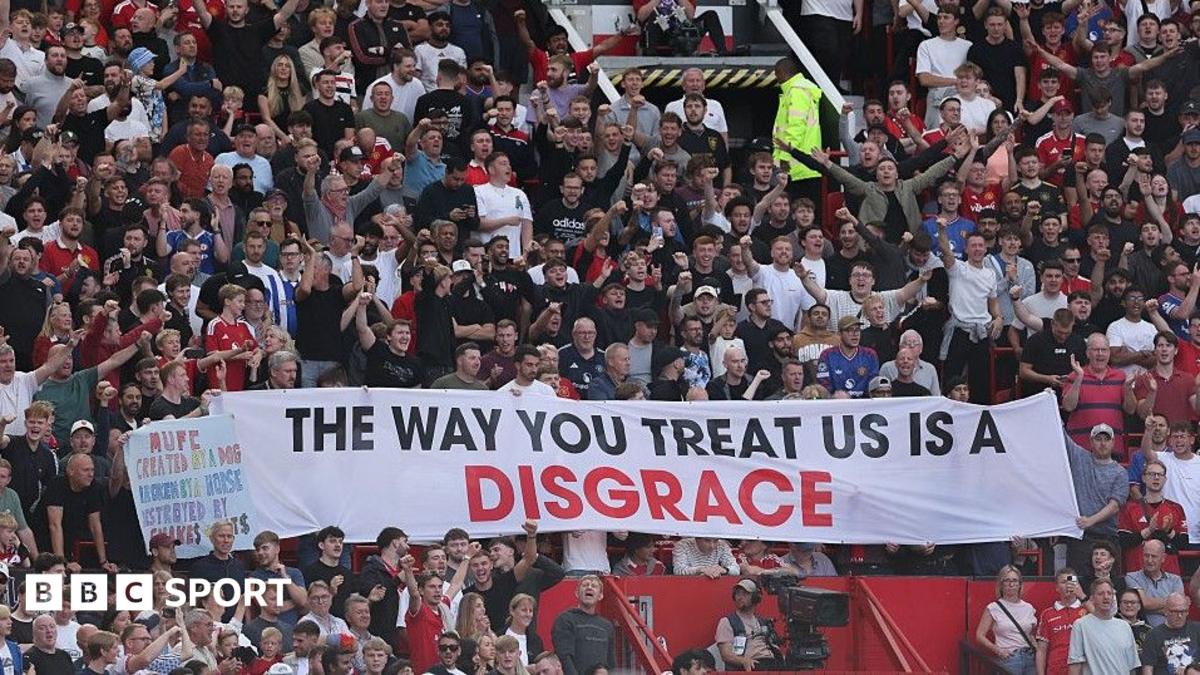
"The way you treat us is a disgrace."
"Unless our generational match-going support is given a real voice that is actually listened to, the little that remains of our fan culture will soon be gone forever."
"TRA aren't a protest group, we're an 'atmosphere' group but we've never shied away from making our position clear when we believe not doing so would be to the detriment of the interests of match-going supporters."
"We wanted the Glazers out and that will never change. Ratcliffe came in and gave us a glimmer, but his idea of putting Manchester back in Man United couldn't be any further from the truth."
"Today is all about the way lifelong match-going fans have been treated, with the season-ticket fiasco that's gone on and people getting banned, the absolute craziness."
"The club have made many statements, but one thing they haven't done is actually apologise to anyone. We've had hundreds of messages directly; this has affected people's health."
"These are regular Joes, working class people who are sent an email telling them their ticket's been suspended with no actual evidence. How do you defend something you don't know what you're defending against?"
The quotes reveal a deep frustration not just with the Glazer family, who have been blamed for loading debt onto the club since their leveraged buyout in 2005, but also with Sir Jim Ratcliffe. Many songs were sung in direct protest against Ratcliffe, indicating that supporters believe he bears as much responsibility for the current situation as the Glazers. The Red Army's decision to display a single banner rather than their usual array was a deliberate statement, leaving only the club's own banners in the stadium.
Steve Compton's comments highlight the human impact of the ticketing fiasco, with fans receiving ticket suspensions without clear evidence. The lack of an apology from the club has only intensified the feeling of betrayal among a support base that prides itself on loyalty.
The numbers
- Fan accounts banned: 685
- Further sanctioned or warned: 464
- Cases resolved after information provided: 468
- United's debt (including outstanding transfer fees): in excess of £1bn
- Expected cost of planned new stadium: in excess of £2bn
- Full year accounts to 30 June 2026 published: 23 September
Analysis: Why the protests matter beyond the derby
The protests before the Manchester derby are not an isolated event but the latest chapter in a long-running battle between Manchester United's supporters and the club's ownership. The Glazer family's leveraged buyout in 2005 saddled the club with debt, and that grievance has never faded. Sir Jim Ratcliffe's arrival as minority owner was initially met with cautious optimism, but the ticketing fiasco and the banning of 685 fan accounts have eroded that goodwill. The fact that songs were directed at Ratcliffe shows that fans now hold him equally responsible.
The Red Army's decision to display only one banner is significant. By opting not to bring their usual banners, they ensured that the only banners in the stadium were those put up by the club itself. This visual contrast underlined the strength of feeling and denied the club the chance to present a normal matchday atmosphere. The banner's message—"The way you treat us is a disgrace"—directly addressed the ticketing situation and the treatment of lifelong supporters.
With the club's full year accounts due on 23 September, and debt exceeding £1bn, the financial pressures are immense. The planned new stadium, expected to cost over £2bn, adds another layer of uncertainty. Fans are demanding a real voice in these decisions, warning that without it, the match-going culture that defines Manchester United could be lost forever. The protests are a clear signal that supporters will not be placated by statements alone; they want action and accountability.
Talking points
- Should Sir Jim Ratcliffe bear as much blame as the Glazers for the current ticketing situation? Fans seem to think so, but is that fair given his minority stake?
- The club banned 685 accounts but resolved 468 cases after fans provided information. Does this suggest the initial bans were heavy-handed?
- With debt over £1bn and a new stadium to pay for, can United afford to ignore fan unrest, or will they need to engage more meaningfully?
- The Red Army call themselves an 'atmosphere' group, yet they led a protest. Does this blur the line between support and activism?
What happens next
The club's full year accounts to 30 June 2026 will be published on 23 September, revealing the extent of the financial challenges. Before that, United must decide how to respond to the protests. Will they issue an apology or open a dialogue with fan groups? The next home match will be a test of whether the unrest continues or escalates. With the new stadium project looming, the ownership cannot afford a prolonged standoff with the supporters.
Frequently asked questions
Why did Manchester United fans protest before the Man City derby?
Fans protested against the club's ownership, specifically over the ticketing situation and the treatment of match-going supporters, including bans issued to 685 fan accounts.
What did the banner say in the Manchester derby protest?
The Red Army group displayed a single banner above the players' tunnel that read: "The way you treat us is a disgrace."
When will Manchester United publish their full year accounts?
The club will publish its full year accounts to 30 June 2026 on 23 September.
Related Articles
Filed under: Latest News | LA Premier League Home