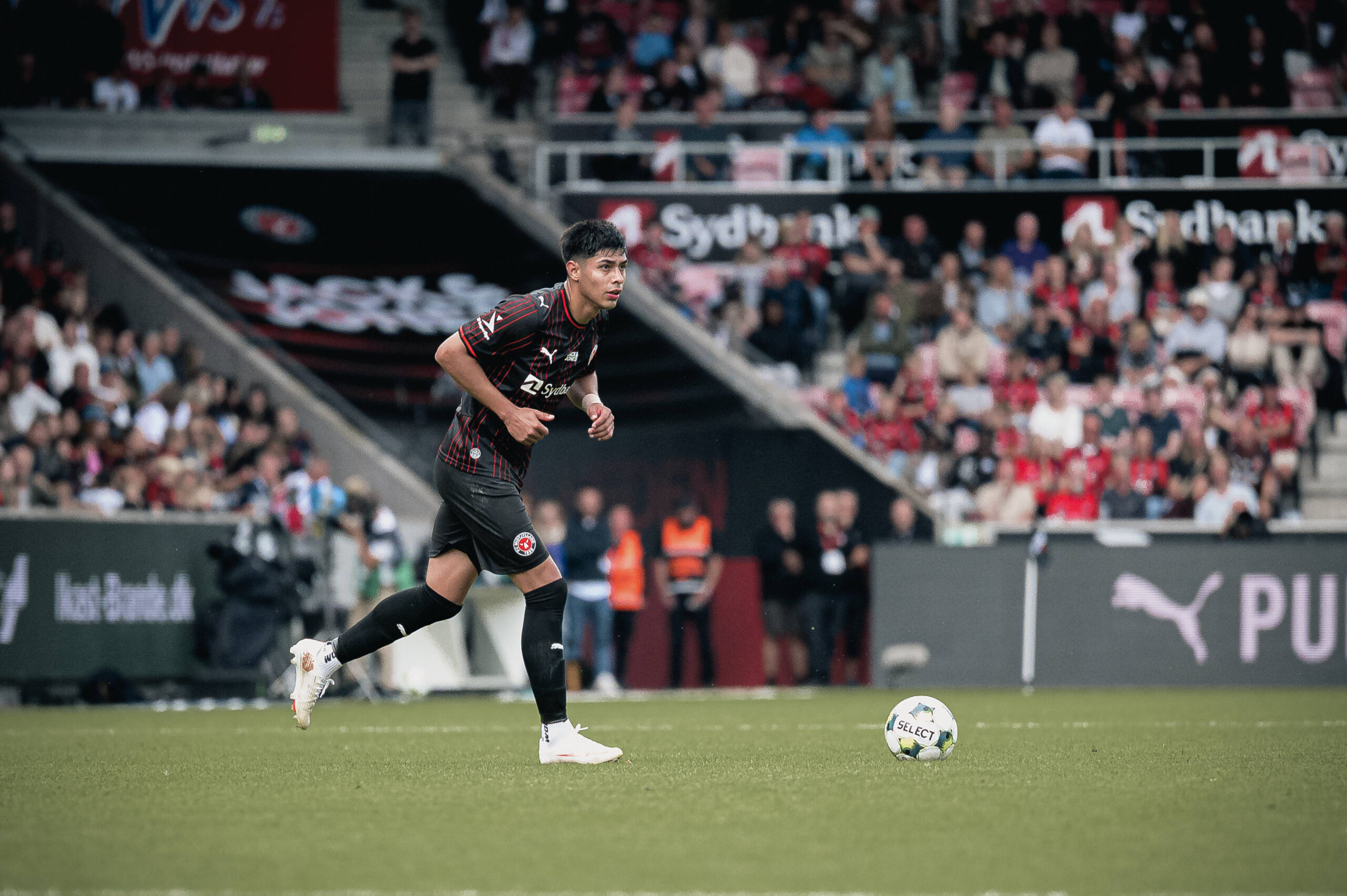

Joachim Andersen Does Not Score Goals, Yet He Is Palace's Most Indispensable Player
In an era obsessed with goal contributions, the Premier League has learned to ignore the defender who dictates games without touching the net. Crystal Palace's Joachim Andersen is that anomaly: a centre-back who controls matches through passing, positioning, and presence, yet remains invisible in mainstream praise.
The New Ball-Playing Centre-Back Template
Andersen arrived at Selhurst Park in 2021 from Fulham, initially on loan before making the move permanent. His style is not the flashy, attacking output of a Trent Alexander-Arnold or John Stones. Instead, he offers a more subtle form of influence: the line-breaking pass from deep, the calm under pressure when opponents press high, and the ability to switch play with 60-yard diagonals that shift the entire shape of an attack.
This season, Andersen ranks in the top 10% of Premier League centre-backs for progressive passes per 90 minutes. He averages over 80 touches per game and completes more than 88% of his passes. His role is to bypass midfield pressure and connect directly with wing-backs or forwards. In Oliver Glasner's 3-4-2-1, Andersen is the man who initiates attacks from the left side of the back three, freeing more advanced players to focus on chance creation.
Why Andersen's Contribution Is Overlooked
Mainstream pundits are hypnotised by numbers they can see on a scoresheet. Goals, assists, tackles, interceptions. Andersen does not excel in easily quotable categories. His defensive metrics are solid but not extraordinary: 2.1 clearances per game, 0.8 interceptions. But the real data lies in the defensive organisation he enforces. He is the voice at the back, repositioning teammates during transitions. Without him, Palace's shape routinely collapses.
- Set-piece threat: While not a prolific scorer, Andersen wins 65% of his aerial duels, making him a constant danger from corners and free-kicks, drawing defenders and creating space for others.
- Leadership under pressure: In matches against high-pressing teams like Brighton or Liverpool, Andersen's composure on the ball allows Palace to play out from the back, avoiding the frantic clearances that often lead to second-phase goals.
- Passing range: He completes more switches of play than any other Palace defender, enabling quick flips of the ball to the opposite flank against packed defences.
The Counter-Argument: 'He Is Just a Passer'
Critics argue that Andersen's lack of pace and occasional positional lapses make him a liability against fast, direct attackers. They point to games where he was caught out by runners in behind, notably against Manchester City's Erling Haaland or Arsenal's Gabriel Martinelli. Yet such assessments ignore the context. Palace's high line, instructed by Glasner, exposes defenders to space. Andersen's job is not to be a sprinter but a conductor. His positioning errors are often the result of covering for others. Compare his defensive record to peers: Palace's expected goals against (xGA) is 0.94 per game with Andersen on the pitch. Without him, it rises to 1.25. That is not coincidence; that is structural dependency.
Prediction: Andersen Will Be the First Palace Player Sold for Over £50 Million
By next summer, a top-six club will bid more than £50m for Joachim Andersen. Not because he has suddenly started scoring tap-ins, but because data analysts at elite clubs have recognised his value as a modern ball-playing centre-back. He is the prototype for a league that is increasingly demanding technical security from defenders. If Andersen leaves, Palace will struggle to replace his passing range and composure — a loss that will be felt in their results far more than any missing goalscorer.
Related Articles
Filed under: Opinion | LA Premier League Home