
The handball farce has reached its terminal phase
The Premier League has become a theatre of the absurd, where defenders now leap with their hands taped behind their backs like Victorian children at a church social. The latest VAR intervention – an infamous spot-kick awarded after the ball struck an arm that was tucked into the torso – was not a miscarriage of justice but a perfectly logical outcome of a rule that has lost its mind. We are no longer refereeing football; we are refereeing geometry.
A brief history of the rule's descent into absurdity
Once upon a time, handball was a simple proposition: deliberate handling, punished; accidental contact, let play continue. Then FIFA and the International Football Association Board decided to 'clarify' the law, and in doing so, they invented a new crime – the 'unnaturally bigger' silhouette. Since then, we've seen penalties awarded for balls striking hands at point-blank range, for arms moving as part of a natural jump, and for deflections off a player's own face cheekily bouncing onto a wrist.
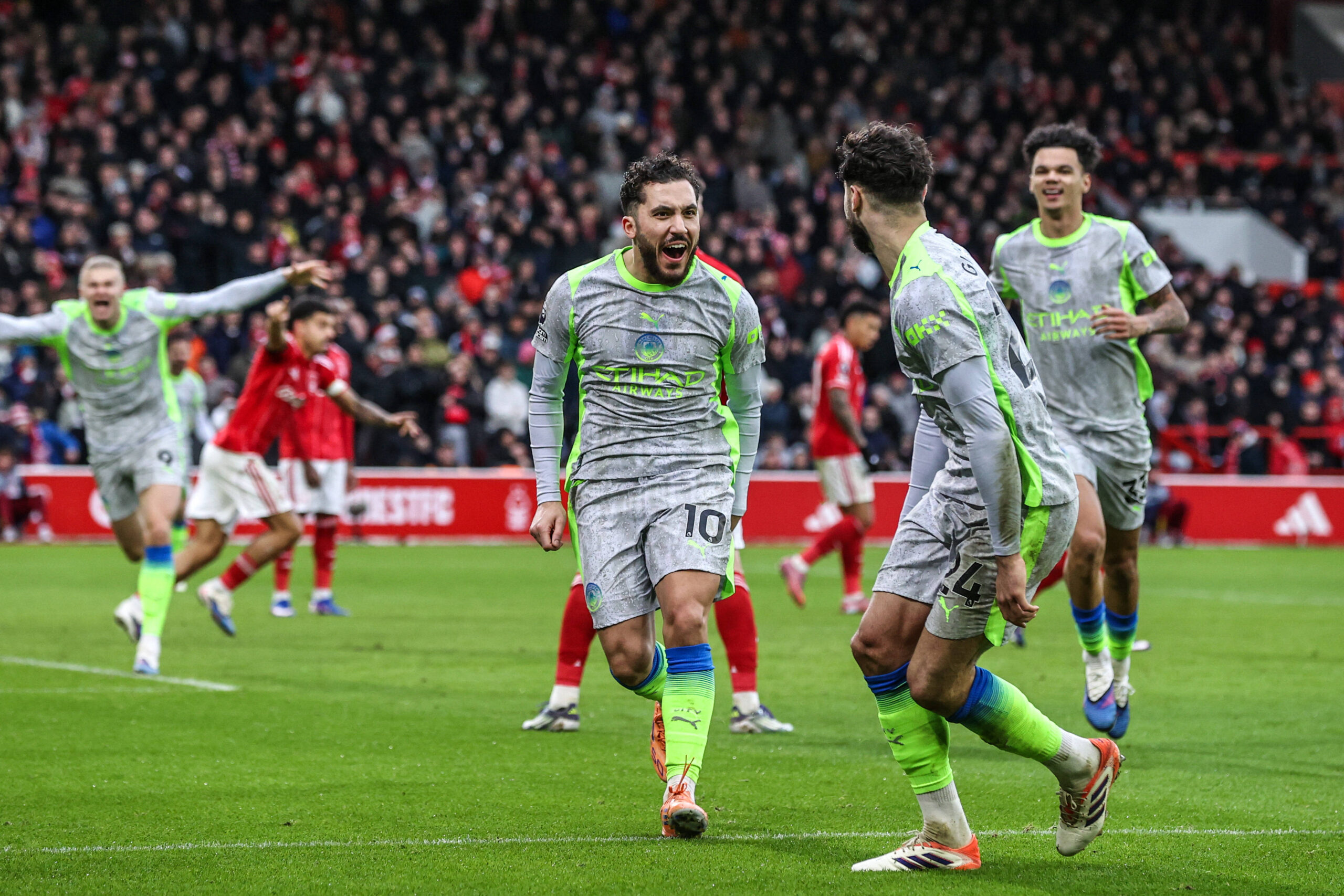
The nadir came when Manchester City's Joško Gvardiol, the league's most understated defender, was penalised for an arm that was, by any reasonable interpretation, in a natural running position. The VAR booth, armed with freeze-frames and 3D models, concluded that his limb was 'higher than his shoulder' – a measurement that would disqualify every human on Earth from ever playing football again. This is not officiating; it is a software bug wearing a referee's uniform.
The case against the 'letter of the law'
Every week, we are treated to the same ritual: a live referee waves away an appeal, a VAR official zooms in on a slow-motion replay that freezes the moment of impact, and then a catastrophic decision is delivered. The rule has created three pernicious effects that are undermining the sport:
- Defenders are now coached to keep arms pinned, which restricts their ability to spin, jump, and challenge – turning athletic, instinctive defenders into mannequins.
- Attacking players have learned to deliberately aim shots at defenders' hands, knowing that the 'silhouette test' will often render a favourable verdict. This is not skill; it's gamesmanship.
- The rule punishes the wrong thing. It ignores the fundamental principle of football – that the ball should be played with the feet – and instead punishes physiology, rewarding those who happen to be blessed with narrower frames or shorter arms.
Consider the recent controversy involving Aston Villa and Southampton, where Taylor Harwood-Bellis – a defender already unsettled by an £18m bid – was punished for a ball that ricocheted off his heel onto his hand. The decision was 'correct' by the letter of the law, but it was an obscenity that would have made the sport's forefathers weep. Where is the justice in punishing an action that a player had no time to avoid?
In defence of the rule – and why it fails
Proponents of the current law argue that it provides 'clarity' and 'consistency'. They claim that if we don't have a strict objective test, we will return to the wild west of subjective interpretations, where 'deliberate handling' was a lottery. There is some merit to this. But what we have gained in consistency – or so-called consistency – we have lost in justice. The law now produces a consistency of injustice, applied with the same robotic rigidity regardless of context.
Compare it to the offside rule, which has been similarly mangled by technological 'precision'. For years, the armpit offside decisions were rightly ridiculed until the 'daylight' rule was introduced. That was a step forward because it acknowledged that the human body is not a set of Lego bricks. The handball law needs a similar reboot. We need a rule that distinguishes between a desperate deflection and a deliberate slap, not one that measures the angle of an elbow to the nearest degree.
The verdict: a predicted correction
Something has to give. The Premier League's own managers, from Pep Guardiola to Mikel Arteta, have been publicly decrying the law for years. It is only a matter of time before the IFAB is forced to act, and I predict that by the end of the 2025-26 season, we will see a major amendment: a return to a 'deliberate handling' standard, with an exception for arms in a natural position relative to the body's movement. But here is the kicker – the Premier League will be the last major league to adopt it, after the Bundesliga and Serie A have already shown the way. It will take a scandal so egregious that even the most conservative rule-makers are embarrassed, and I can only hope that it doesn't cost a title race before that happens.
Related Articles
Filed under: Opinion | LA Premier League Home