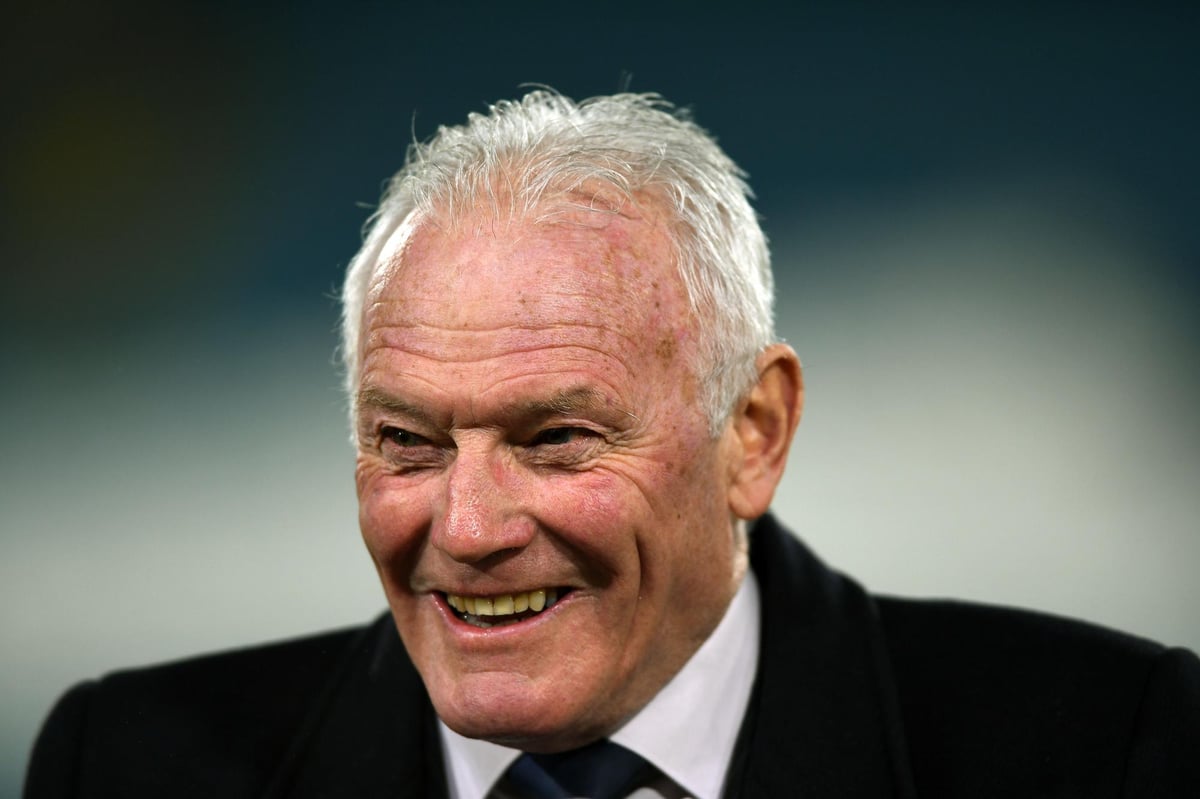
Eddie Gray on Don Revie, his footballing family, Dirty Leeds and why Leeds United are back
Leeds United legend Eddie Gray has spoken to the Yorkshire Post about his 18-year playing career, the influence of Don Revie, the 'Dirty Leeds' tag and why he believes the club is back among English football's elite. Gray, now a club ambassador, attends every game home and away.
- Who: Eddie Gray, Leeds United legend and club ambassador
- What: Interview with the Yorkshire Post
- Where: Guiseley Theatre on October 8, where Gray will talk about his life and career
- Key fact: Gray made 579 appearances for Leeds across 18 years, winning two First Division titles, an FA Cup, a League Cup, a Charity Shield and two Fairs Cups
- Key fact: Leeds are unbeaten in this season's Premier League and signed goalkeeper James Trafford for a British record fee
What was said
"People are talking about the football club now and it's big if you're trying to sign players. Players from abroad will know about Leeds United where a few years ago they might not."
"There's a pride and passion that might have disappeared for a couple of years. It's as good as it's ever been. It's very important there's a connection between the city, the fans and the football club. Daniel's brought that back a bit. You see that yellow shirt everywhere, it's a fashion icon."
"Daniel's done a great job and I think the majority of the fans are realising that now. I don't think you have to talk to people about what the club means. Leeds is very proud of its rugby teams, of the Yorkshire cricket team, but for the size of the city, it only has one professional football club. That's the problem at the moment – the ground's not big enough. I know they're enlarging but when I played we'd get 50,000 and they need that, the revenue coming in, to compete with the bigger clubs."
"Before I came to Leeds, I'd never heard of them. I knew about Don Revie's football history and being footballer of the year (in 1955). He told me he was going to try and build a team that could compete with any side. The club had never won anything. They were in the old Second Division. Don knew he had to impress upon people that you're wanted. He'd done it a year before with Peter Lorimer and Jim McCalliog. Everyone wanted them and Don got them because of how he treated people. That was one of Don's great strengths – persuading people to come to Leeds. I had no intention of signing, I was just coming down for a weekend from Glasgow. But when I got to Leeds station, Don was waiting for me. When I'd been to other clubs, it would be some representative. Don took me to the place I was staying, picked me up the next day and took me training with the first team. I was only 14, nearly 15. That sold the club to me."
"He told the chairman, Mr (Harry) Reynolds, he knew the club couldn't afford to spend big money, but he would try and sign all the best schoolboy players. I played when I was 17. Peter played his first game when he was 15. It let people know he was building something. The way Don brought us up, it's a funny thing to say, but it wasn't a surprise to me that I scored and played well on my debut (against Sheffield Wednesday on New Year's Day 1966). Don picked me because he thought I was ready."
"One of the greatest players I ever played with is Norman Hunter but Norman was nearly out the door. He was an inside-forward. Don made him a wing-half. Big Jack (Charlton) was a bit of a rebel and Don got a grip of Big Jack and told him he'd play for England if he knuckled down. Don told him he could become the best centre-half in the world, which he was for about five years. Jack was good in the air, very quick, a great defender. (England 1966 team-mate) Bobby Moore was a great reader of the game, a great footballer, but any balls over the top, Bobby knew Jack would retrieve. Sometimes I wonder what like Big Jack would have been if Don hadn't been manager. I could say that about most players."
"He was a very confident in how he was going to run the whole football club. What Don said was law. I remember Don leaving a couple of directors in London because they weren't on the bus at half five. If Don walked into a room people would take notice."
"Man City introduced the Revie Plan but Don copied that from (Nandor) Hideguti. Hideguti played when Hungary beat England, the first team to beat them at Wembley, 6-3 (in 1953). When I first came to Leeds United my brother was seven or eight. I said to Don, 'I've got a younger brother in Scotland who'll be a player.' He said, 'We know all about him.' He'd have made enquiries about the family and known Frank was playing under-10 or under-11 football when he was seven or eight."
"Nearly all the boys in the family can play football. I played, my brother played, my son Stuart played for Celtic. Archie plays, Harry plays, Jacob – Stuart's boy – is at the academy. Hopefully a few will be in a first-team strip at Elland Road. My dad, Edward, got wounded in the war, he couldn't play football any more, but they always said to me I'd never be as good as my dad. A couple of my mother's brothers played for Scotland as amateurs."
"I was disappointed, but I understood the club's position. He was the only player they could sell for 100 per cent profit. It just goes to show you what people at Spurs think about him – his knowledge of the game, how he conducts himself and that he has the respect of a lot of the older players – for him to captain the team at 20. Harry's young, he'll be wanting to push forward but hopefully he'll come through and be a player for our club. Hopefully! I would never give them any advice and my brother doesn't. That's up to the people for the club they work for. I wouldn't be want to say something that was completely different to how they've been coached. The only thing I would say is keep yourself fit enough. If you can't run, you can't play."
"We had the tag Dirty Leeds but all the teams were as bad. If they wanted to mix it, our team could. If they didn't want to mix it, we could play football. Within the game it gets the credit it deserves but outside of it I think there was a bit of jealousy because the club came from nowhere and turned into a powerhouse. Chopper Harris or Tommy Smith of Liverpool – every team had those players. Some of those clubs had great history in the game and our club didn't. The team I played for is regarded as one of the greatest teams to play."
The numbers
- 579 – appearances for Leeds United across 18 years
- 1969, 1974 – First Division titles
- 1986 – League Cup
- 1969 – Charity Shield
- 1972 – FA Cup
- 1968, 1971 – Fairs Cups
- 1975 – European Cup final
- 1982 – began managerial career as player-manager
- 1963 – joined Leeds United
- 1966 – debut against Sheffield Wednesday on New Year's Day
- 1973 – younger brother Frank's debut
- 1955 – Don Revie named footballer of the year
- 1953 – Hungary beat England 6-3 at Wembley
- 20 – age Archie captained Tottenham Hotspur
Gray's legacy and Leeds' revival
Eddie Gray's association with Leeds United spans more than six decades. From his arrival as a 14-year-old in 1963 to his current role as club ambassador, he has witnessed the club's transformation under Don Revie and now its resurgence under Daniel Farke. Gray believes the connection between the city, the fans and the club is as strong as it has ever been.
The family ties that began with younger brother Frank's debut in 1973 continue through grandchildren Archie, Harry and Xander. Archie now captains Tottenham Hotspur, Harry is on loan at Sheffield Wednesday, and Jacob, son of Eddie's son Stuart, is at the Leeds academy. Gray hopes a few will eventually wear the first-team strip at Elland Road.
Gray's pride in Leeds is evident as he discusses the current squad's unbeaten start to the Premier League season and the British record fee for goalkeeper James Trafford. He credits manager Daniel Farke with restoring the pride and passion that had disappeared for a couple of years. For Gray, the club's ability to attract top players is a sign that Leeds are back among the big guns.
Talking points
- Revie's influence: Gray credits Don Revie with persuading players to join Leeds and building a team that could compete with any side. Revie's personal touch, such as meeting Gray at Leeds station, proved decisive.
- Dirty Leeds tag: Gray insists the tag was unfair, arguing that all teams had physical players and that Leeds could play football when needed. He attributes the reputation to jealousy of the club's rise.
- Family dynasty: The Gray family's footballing lineage continues with Archie, Harry and Jacob. Eddie is proud but refrains from giving advice, emphasising fitness as the key to longevity.
What happens next
Eddie Gray will be talking about his life and career at Guiseley Theatre on October 8. Leeds United continue their Premier League campaign, aiming to maintain their unbeaten start.
Frequently asked questions
How many appearances did Eddie Gray make for Leeds United?
Eddie Gray made 579 appearances for Leeds United across 18 years.
What trophies did Eddie Gray win with Leeds United?
Gray won two First Division titles (1969, 1974), the League Cup (1986), the Charity Shield (1969), the FA Cup (1972) and two Fairs Cups (1968 and 1971). He was also a runner-up in the 1975 European Cup final.
Who are the Gray family members currently involved in football?
Eddie's grandchildren Archie (Tottenham Hotspur, captain), Harry (on loan at Sheffield Wednesday) and Jacob (Leeds academy) are all involved in football. His son Stuart played for Celtic.
Related Articles
Filed under: Club News | LA Premier League Home