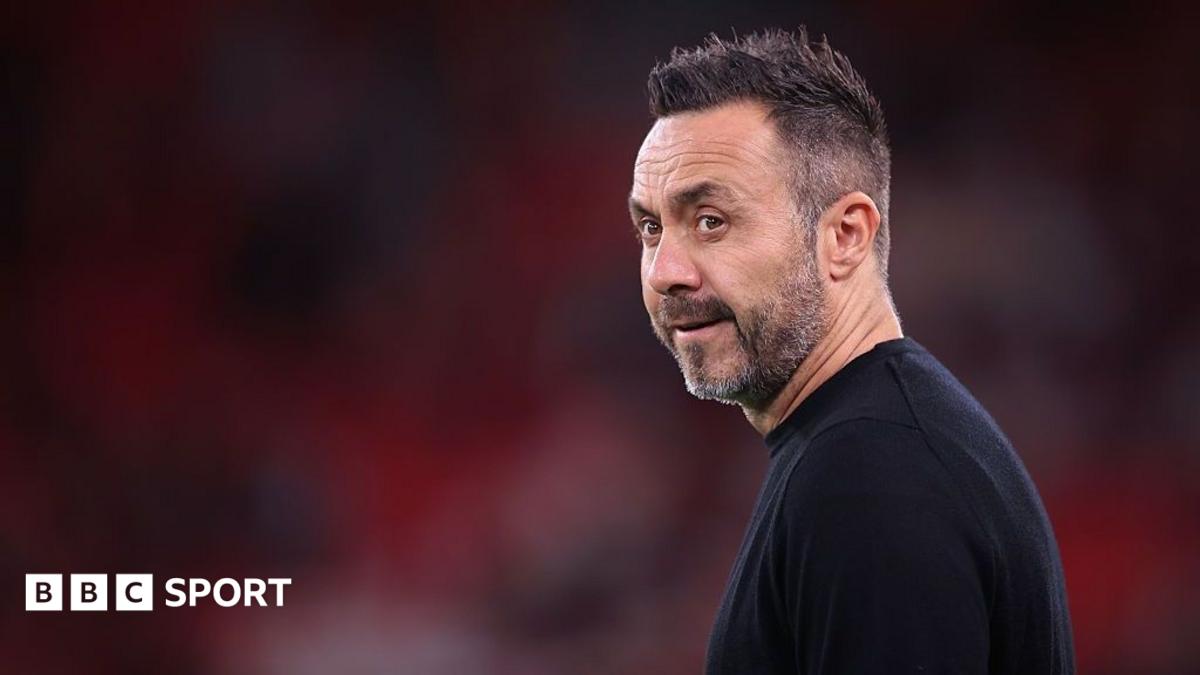
De Zerbi’s Tottenham still scoreless after four Premier League games
Tottenham Hotspur and Coventry City are the only Premier League sides yet to score this season after four games. Spurs have invested £320m in new talent, mostly in attack, but Roberto De Zerbi’s side are still searching for their first goal. Here’s why and how it might be fixed.
- Competition: Premier League
- Matchday: Four games played
- Teams without a goal: Tottenham Hotspur and Coventry City
- Spurs’ summer spending: £320m, mostly on attacking players
- Manager: Roberto De Zerbi
- Key issue: Failure to convert build-up possession into goals
Understanding De Zerbi’s philosophy
While the Premier League has changed since De Zerbi left Brighton in 2024, the Italian has adapted while keeping his core principles. His sides invite pressure by slowing play and passing backwards, then accelerate into the space behind pressing opponents with direct passes or powerful carries.
In a 2020 coaching seminar, De Zerbi explained: “The stronger the pressure of the opponent, the more vertical [our] action becomes. [The fewer opponents behind], the easier it becomes to go and score.” Spurs have already created such situations this season, but turning them into goals requires many parts to click.
How Spurs have set up so far
Spurs’ in-possession shape often looks like a 2-3-2-3. The holding midfielder, usually Rodrigo Bentancur, anchors in front of the two centre-backs, with this trio remaining fairly fixed. Rotation occurs between wingers, full-backs and central midfielders, with players swapping zones to maintain shape.
De Zerbi gives his sides additional principles. Much of what he implemented worked at Marseille from 2024 to 2026, where they averaged 2.3 goals per game. At Tottenham, it hasn’t clicked yet, but they may not be far off.
Glimpses of Spurs’ central play but work required
De Zerbi encourages central play, which draws opposing midfielders and forwards up, creating space between the lines for attacking midfielders. It also pulls the defending team infield, opening wide areas for direct wingers.
Against Everton, a narrow Spurs progressed the ball from their holding midfielder; Everton’s midfield stepped up but the defensive line didn’t follow, leaving space between the lines. Receiving under pressure is vital, and some players are better suited. Sandro Tonali, better in big space facing forwards, has rotated with Archie Gray, who starts at right-back. The 20-year-old has managed in tight spaces and understands the tactical demands. James Maddison, back from a shoulder injury in last Tuesday’s Carabao Cup tie at Liverpool, will provide a player more comfortable in those areas.
Internalising instructions takes time, and some squad members must unlearn habits from Thomas Frank’s tenure, when Spurs built primarily down the flanks, avoiding central risk. De Zerbi is coaching an unorthodox style that contradicts those previous instructions.
A reluctance to play riskier passes
Spurs’ build-up regularly gets them behind opposition midfields by attacking quickly after being pressed. However, converting these situations into goals is the biggest issue. Three elements matter: recognising the best pass, movement ahead of the ball, and execution. The main bottleneck has been players either failing to spot or opting not to play through balls in behind.
Attacking runs, particularly from Omar Marmoush, have been good, but passes haven’t always followed. Gray has attempted to feed passes down the line, though Spurs haven’t done this regularly more centrally. Pedro Porro, known for his chance creation, took a more central role for Spain this summer as they won the World Cup. His return may boost Spurs’ goalscoring chances.
Perfecting their off-the-ball movement
During De Zerbi’s time at Marseille, diagonal runs from wide attackers on the last line, found by willing vertical passers, produced goals. Igor Paixao’s goal in Marseille’s 2-2 draw with Toulouse last season exemplified this, showing good understanding of direct passing and well-timed off-ball movement.
Against Liverpool on Tuesday, Destiny Udogie got into good positions on the left flank. Although Andy Robertson has played well for Tottenham this season, Udogie’s physicality and timing helped exploit space when the game stretched, allowing Spurs to get into crossing positions against a disorganised Liverpool shape.
Why Spurs are not finishing moves
When an attacking side accelerates, defenders often drop back urgently to protect their goal. This opens space in front of the defensive line, but Spurs have not consistently exploited it. The final pass or finish has been missing, leaving De Zerbi’s side frustrated.
What was said
“The stronger the pressure of the opponent, the more vertical [our] action becomes. [The fewer opponents behind], the easier it becomes to go and score.”
This quote reveals De Zerbi’s core belief: pressure is an opportunity, not a threat. However, his Spurs side have not yet turned those opportunities into goals. The challenge is psychological as much as tactical, requiring players to be brave in congested areas and execute passes under stress.
The numbers
- Four Premier League games played by Spurs without a goal.
- £320m spent on new talent, mostly attacking reinforcements.
- Marseille averaged 2.3 goals per game under De Zerbi from 2024 to 2026.
Injury and availability
James Maddison returned from a shoulder injury in last Tuesday’s Carabao Cup tie at Liverpool. His availability boosts Spurs’ creativity in central areas. No other injuries are mentioned in the source.
Tactical fixes: How De Zerbi can get Spurs scoring
The most immediate fix is encouraging more through balls. Omar Marmoush’s runs have been well-timed, but midfielders and defenders must risk passes into the channels. Archie Gray has shown willingness but needs support centrally. Pedro Porro’s return adds a creative presence who naturally seeks central positions, and his tendency to play risky passes could unlock defences.
Another fix is refining off-ball movement. Destiny Udogie’s runs against Liverpool highlighted how Spurs can exploit stretched defences. But the coordination between passer and runner must improve. James Maddison’s return will help, as he thrives in tight spaces and can link play between the lines.
Finally, De Zerbi must continue coaching his players to unlearn old habits. The shift from Thomas Frank’s flank-focused build-up to a central approach requires patience and repetition. The talent is there, but the execution must catch up.
Talking points
- Should De Zerbi abandon his purist principles and adopt a more direct style to end the goal drought?
- Is £320m spent on attacking talent being wasted by a system that prioritises patient build-up over quick finishes?
- Can James Maddison’s return provide the spark, or is the problem deeper than individual creativity?
- Will Pedro Porro’s natural instincts override De Zerbi’s structured approach, or will he adapt to the central role?
What happens next
Spurs face a crucial run of fixtures where they must break their scoring duck. De Zerbi will likely continue with the 2-3-2-3 shape, but may tweak personnel, possibly starting Maddison. The pressure is mounting, and a failure to score in the next match could raise questions about the manager’s methods.
Frequently asked questions
Have Tottenham scored in the Premier League this season?
No, Tottenham are one of two Premier League sides yet to score after four games, along with Coventry City.
How much have Spurs spent on new players?
Spurs have spent £320m on new talent, with the bulk invested in attacking reinforcements.
When will James Maddison return for Tottenham?
Maddison returned from a shoulder injury in last Tuesday’s Carabao Cup tie at Liverpool.
Related Articles
Filed under: Tactical Analysis | LA Premier League Home