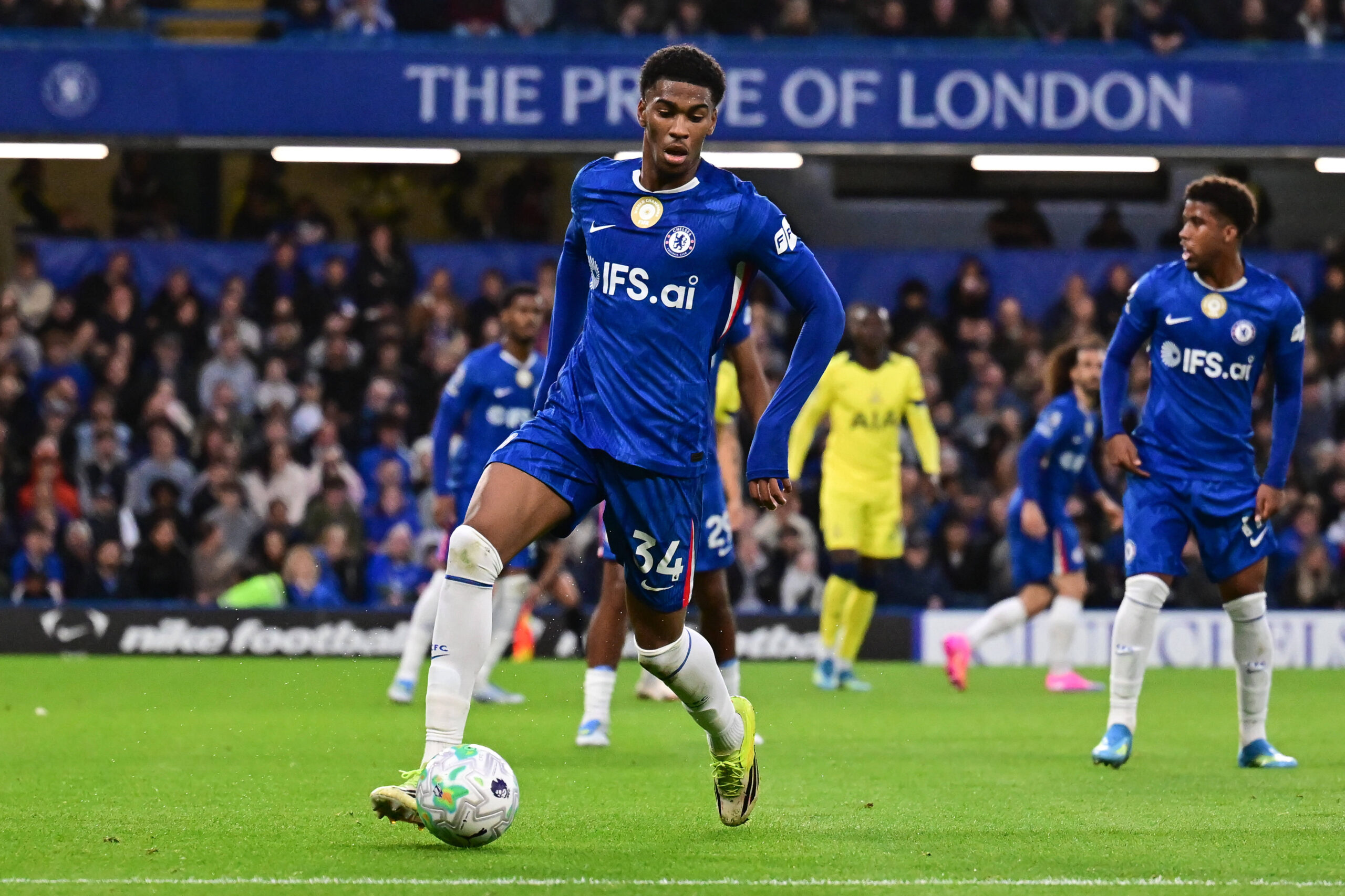

Chelsea Have Confused Volume With Vision
Chelsea's transfer strategy is not a blueprint. It is a slot machine with a PhD. The club has spent over £1.5bn in three years assembling a squad so large that players warm up in shifts and the academy resembles a warehouse for future profit. This is not a project. It is a hedge fund with a corner flag.
The Historical Alchemy of Youth and Titles
Compare Chelsea's current chaos with the great youth-integrated sides. Manchester United's Class of '92 supplemented a core of experienced winners. Barcelona's La Masia graduates were woven into a defined style. Chelsea's academy has produced Mason Mount, Reece James, and Tammy Abraham—players who understood the club—only for Mount and Abraham to be sold for pure profit, while James fights a lone battle against injury. The academy is now a production line for the balance sheet, not the first team.
The numbers are damning. Chelsea have more than 40 senior players on the books. The average age of the first-team squad hovers around 23. The club has cycled through six managers in four years. Each new coach inherits a different jigsaw. The result is a team that plays like strangers because, in many cases, they are.
The Case Against the Slot Machine
The argument for Chelsea's approach—youth, resale value, long contracts—collapses under scrutiny. Selling academy graduates to fund £100m signings of unproven teenagers is not a strategy; it's a gambling addiction dressed as accounting. Consider the evidence.
- Marc Guéhi, sold for £18m, is now one of the Premier League's most reliable centre-backs. Chelsea have spent over £200m on centre-backs since his departure.
- Romelu Lukaku, Tiémoué Bakayoko, and Ross Barkley were bought and discarded at a combined loss exceeding £150m. These are not anomalies; they are the pattern.
- The loan army—once a source of pride—now includes £100m worth of talent with no clear pathway to the first team. Andrey Santos and Lesley Ugochukwu are just the latest in a long line of loanees who will likely be sold for a fraction of their potential value.
Winning trophies requires more than stockpiling potential. It demands a coherent footballing identity, patience, and the courage to build around a spine. Chelsea have none of these. They have a revolving door and a spreadsheet.
The Counter-Argument: Youth as an Asset Class
The steel-man is seductive: Chelsea are ahead of the curve, exploiting inefficiencies in the market. They buy young players on long, incentivised contracts, amortise the cost over eight years, and sell academy products for pure profit, satisfying Profit and Sustainability Rules. The 2025 Club World Cup win—however fortuitous—proves the model can deliver silverware.
But this ignores the football. A squad of 40 players cannot train together effectively. Cohesion is impossible when half the team is on loan or on the bench. The Premier League is not a financial instrument. It is a physical, tactical, and psychological contest. Chelsea's recent league finishes—sixth, third, fourth—are a monument to inconsistency, not progress.
Moreover, the market is correcting. Rival clubs now demand premium prices for young talent. Chelsea's edge in identifying undervalued teenagers has been eroded by data analytics available to everyone. The strategy is no longer avant-garde; it is merely expensive.
The Verdict: A Reckoning Delayed, Not Avoided
Chelsea will not win the Premier League title within the next four seasons. Their current squad lacks the balance, experience, and tactical cohesion to challenge Manchester City, Arsenal, or Liverpool. The continued pursuit of £100m-rated Alex Scott, £55m Luka Vuskovic, and £55m Martin Zubimendi—while neglecting the striker and goalkeeper positions—will only deepen the imbalance. The club will finish outside the top four again in 2026-27, and by 2028, the ownership will be forced to abandon the hedge-fund model in favour of a conventional, manager-led rebuild. The slot machine will eventually pay out—but only after it has taken everything else.
Related Articles
Filed under: Opinion | LA Premier League Home