Brentford, Brighton and Bournemouth: The Premier League's Bermuda Triangle
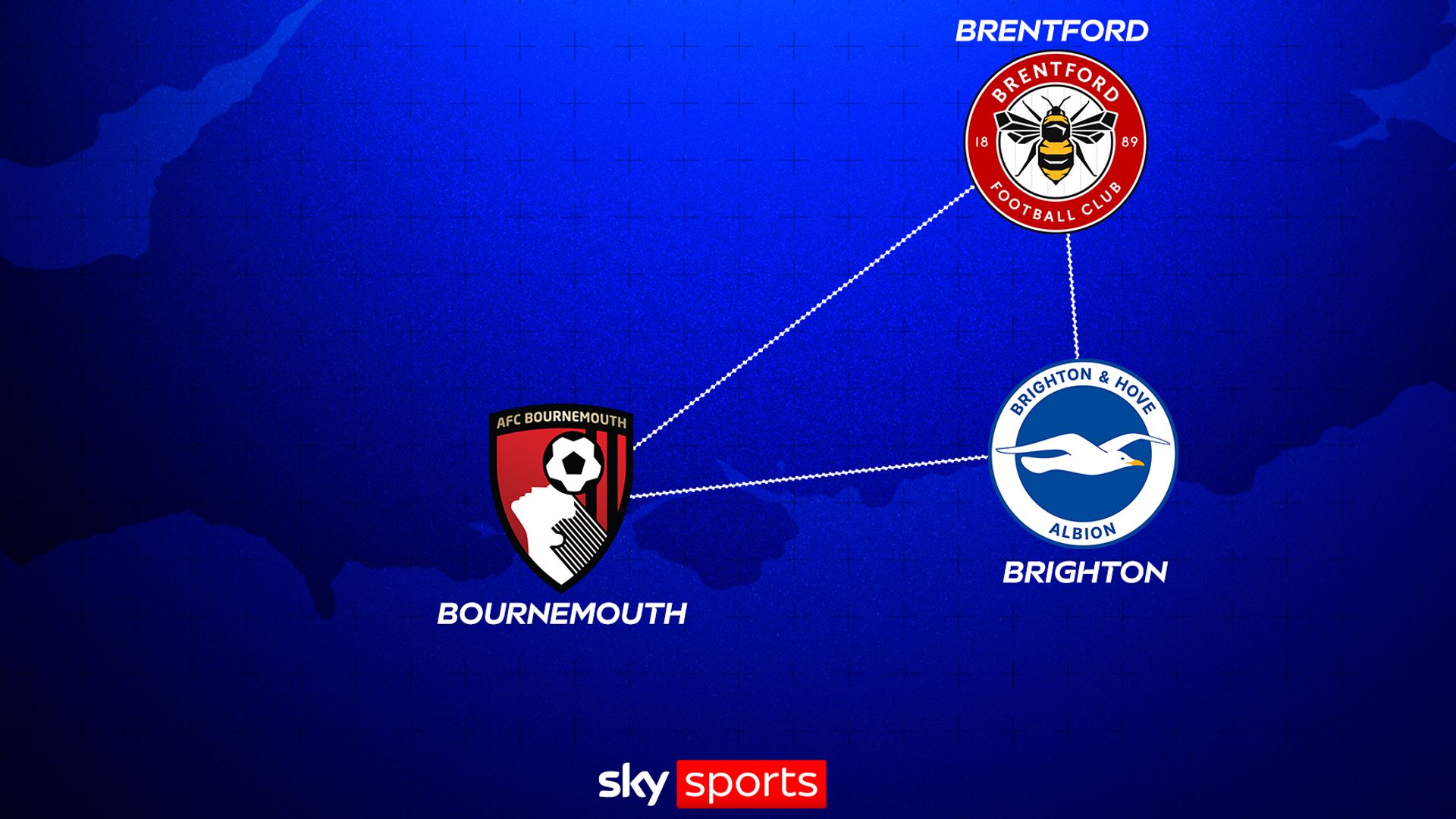
Brighton & Hove Albion, Brentford and AFC Bournemouth have formed the Premier League's 'Bermuda Triangle' by defying the odds. The trio have qualified for Europe, earned £485m from player sales ahead of 2025/26 and finished sixth, eighth and ninth despite far smaller budgets than the big clubs.
- Competition: Premier League
- Clubs: Brighton, Brentford, Bournemouth
- Combined sales: £485m ahead of 2025/26
- Recent finishes: Bournemouth sixth (Europa League), Brighton eighth, Brentford ninth
- Big 6 record: Brighton lead points taken from Big 6 since 2022/23; Brentford and Bournemouth next best after Aston Villa, Newcastle and Nottingham Forest
The numbers
- £485m – combined income from player sales by Brighton, Brentford and Bournemouth ahead of the 2025/26 season
- 6th, 8th, 9th – the three clubs' finishing positions in 2025/26
- 2022/23 – the season Bournemouth returned to the Premier League and the start of the Big 6 points data
- 2017 – Brighton's promotion to the Premier League, since when they have not been relegated and have qualified for Europe twice
- Four years later – Brentford followed Brighton into the top flight and have stayed up ever since
- Sixth place and Europa League qualification – Bournemouth's achievement last season
What was said
"Bryan Mbeumo was 19 years old when we spotted him, playing in the French second division. The model was 'meh' on him but the fact our scouts, and especially the technical director Lee Dykes, were so positive outweighed the data. If you have a player in their mid-20s who has played a couple of hundred games, the model better like him or we are not going to sign him."
Benham's quote cuts to the heart of how the 'Bermuda Triangle' works. Data is central, but at Brentford it is not absolute. Human judgement can override a model that is unenthusiastic, as happened with Bryan Mbeumo, but the same model holds a veto over older, proven players. That balance — analytics filtered through elite scouting — is why the three clubs keep unearthing talent the Big 6 overlook.
The quote also explains why the trio can sell their best players and not collapse. They are not buying finished articles; they are buying potential, and their scouts, technical directors and models are aligned on what that potential looks like. When the model says no but the scouts say yes, as with Mbeumo, the club backs its people. When the model says no and the scouts agree, the deal dies. That clarity is a competitive advantage.
How the Bermuda Triangle defies the odds
The common threads are outstanding recruitment and a strong culture. None of the three can sign the best available players, so they sign players whose potential they believe exceeds the price they pay. Losing a star is not treated as a crisis but as part of the business model: discover, develop, sell and reinvest in both the squad and infrastructure. All three have upgraded their training facilities.
Succession planning is relentless. When Antoine Semenyo left Bournemouth for Manchester City in January, 20-year-old winger Raya had already been identified as a replacement and joined in the same month from Vasco da Gama. Semenyo became Bournemouth's record sale, but the club were not scrambling. At Brentford, Jordan Henderson arrived last summer to replace Christian Norgaard's leadership and experience. Anticipation, not reaction, defines the model.
Culture is woven into recruitment. Brighton, owned by professional sports betting entrepreneur Tony Bloom, use custom analytics software to find players worldwide. Bournemouth owner Bill Foley has taken a different route since 2022, with a multi-club model designed to connect recruitment networks and player development. Yet the signings fit the same ethos: Brighton's control, Brentford's power, Bournemouth's technicality.
Managerial change has not broken the pattern. Graham Potter and Roberto De Zerbi left Brighton without collapse. Brentford promoted Keith Andrews from set-piece coach after 12 months under Thomas Frank, just as they promoted Frank when Dean Smith left in 2018 — continuation, not reset. Bournemouth appointed Marco Rose as Andoni Iraola's successor in April, before the season had finished, so planning for this campaign could begin. Iraola had told the club well in advance he wanted to leave when his contract expired.
Why the Big 6 cannot navigate the triangle
The Big 6 rarely sign unknown youngsters from Europe or South America because they need experienced talent to make an immediate impact. Brighton, Brentford and Bournemouth must think differently: they can nurture development and tolerate mistakes until potential becomes performance. That patience is a structural edge the giants cannot easily copy.
Brighton lead the way in points taken from the Big 6 — Arsenal, Chelsea, Liverpool, Manchester United, Manchester City and Tottenham — of any club since the start of 2022/23, when Bournemouth returned to the Premier League. Only Aston Villa, Newcastle and Nottingham Forest, all with greater spending power, have upset the top clubs more often than the next best Brentford and Bournemouth.
The question is no longer whether these clubs can survive in the Premier League. It is how far the model can take them and whether the established order can find a way through the 'Bermuda Triangle'.
Talking points
- Is the 'Bermuda Triangle' a compliment or a warning? These clubs sell their best players every year and still climb — but can that model ever win the title?
- Brighton lead the Big 6 points table since 2022/23. Should we stop calling them overachievers and start calling them a top-six club?
- Bournemouth's record sale of Antoine Semenyo to Manchester City shows the model works, but does it cap their ceiling?
- If Brentford and Bournemouth keep upsetting the top clubs, is the Big 6's financial advantage overrated?
What happens next
The 2026/27 season will show whether Bournemouth can juggle Europa League football with their recruitment-first model, whether Brighton's analytics pipeline keeps producing Big 6 scalps, and whether Brentford's continuation under Keith Andrews holds. The next transfer window is the real test: every sale must be followed by an immediate replacement, and every replacement must fit the culture. The stakes are simple — can the Premier League's 'Bermuda Triangle' keep growing, or will the big clubs finally find a way through?
Frequently asked questions
What is the Premier League's 'Bermuda Triangle'?
It is the nickname for Brighton, Brentford and Bournemouth — three clubs that stretch from west London to the south coast and keep defying the odds against the Big 6.
How much have Brighton, Brentford and Bournemouth made from player sales?
The three clubs earned a combined £485m from player sales ahead of the 2025/26 season, in which they finished sixth, eighth and ninth.
Which club has the best record against the Big 6 since 2022/23?
Brighton lead the way in points taken from the Big 6 since the start of 2022/23, with Brentford and Bournemouth next best after Aston Villa, Newcastle and Nottingham Forest.
Related Articles
Filed under: Latest News | LA Premier League Home