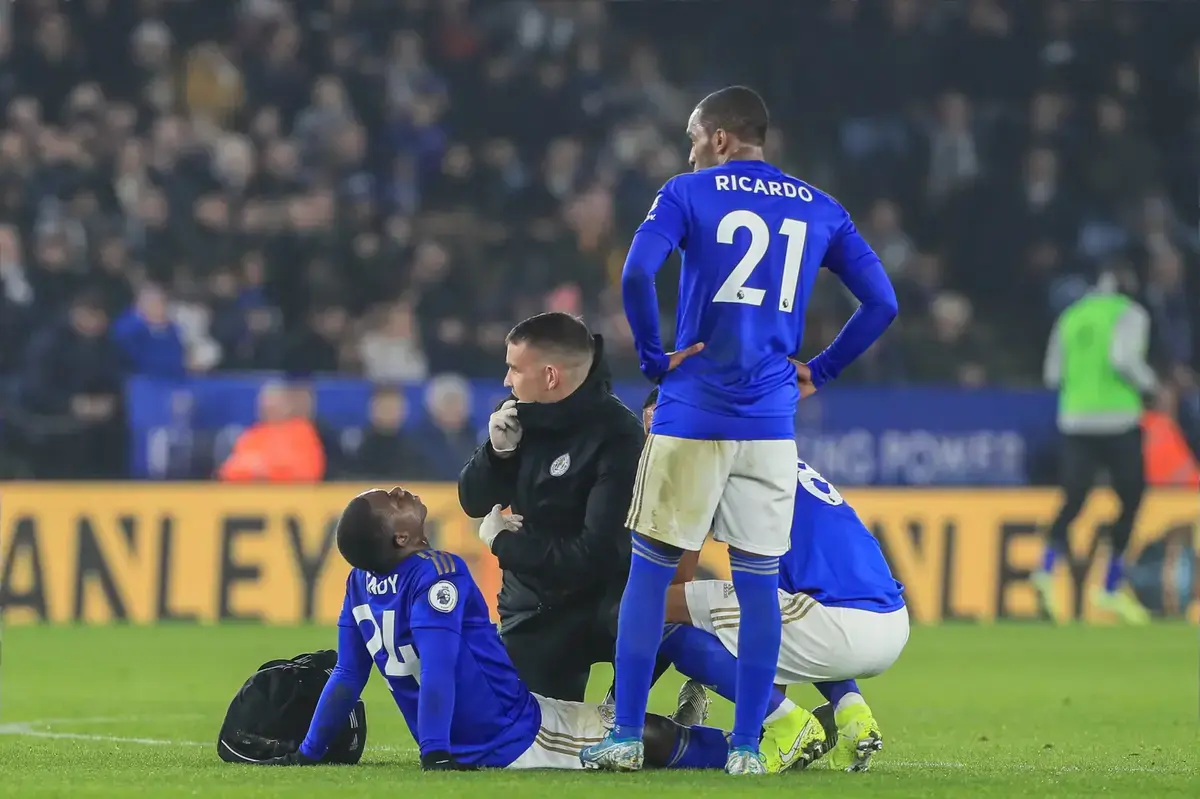
ACL injuries in the Premier League: the history of football's worst nightmare
An ACL rupture can remove a Premier League player from competition for most of a season, requiring surgery and months of rehabilitation. Alan Shearer, Roy Keane, Michael Owen and Zlatan Ibrahimović are among the high-profile names who have suffered this injury.
- Topic: ACL injuries and their impact on Premier League players
- Key players: Alan Shearer, Roy Keane, Michael Owen, Zlatan Ibrahimović
- First prominent case: Alan Shearer, December 1992, Blackburn Rovers vs Leeds United
- Recovery time: Can remove a player for most of a season, requiring surgery and months of rehabilitation
- Complexity: Surgery is only the beginning; players must rebuild strength, confidence, movement and trust
What is the ACL?
The anterior cruciate ligament (ACL) is one of the major ligaments inside the knee. It connects the thigh bone to the shin bone and helps stabilise the joint during movements involving rotation, acceleration and sudden changes of direction.
Those actions occur constantly in football. Players turn away from opponents, stop suddenly, land after headers and shift their body weight while controlling the ball. The ACL helps prevent the knee from moving or rotating beyond a safe range during those moments.
When the ligament is badly damaged or completely ruptured, the knee can become unstable. A player may be able to walk after the injury and might initially experience less pain than expected, but the joint may not be capable of supporting the explosive movements required in professional football.
For elite players, a full ACL rupture normally requires reconstructive surgery followed by a lengthy rehabilitation programme.
How do ACL injuries happen?
Some ACL injuries are caused by direct contact, but many occur without an opponent touching the player. A non-contact rupture can happen when a player plants one foot and changes direction sharply. The studs grip the surface, the foot remains fixed and the knee rotates under the force of the player's body.
Other common mechanisms include:
- Landing awkwardly after jumping
- Suddenly decelerating
- Twisting while the foot is planted
- Overextending the knee
- Being struck around the knee during a challenge
- Losing balance while changing direction
- Attempting to recover from an unstable position
The injury can look surprisingly harmless. A player may change direction during an ordinary passage of play, collapse and immediately hold their knee.
In other cases, the cause is obvious. A heavy challenge can force the knee into an unnatural position and damage several structures at once. The more serious incidents can involve the ACL alongside the meniscus, cartilage or other knee ligaments. These combined injuries complicate surgery and can make rehabilitation longer and less predictable.
Why is an ACL rupture so serious?
An ACL injury affects one of the most important joints in a footballer's body. Every sprint, tackle, jump and shot places force through the knee. Even when a player is moving in a straight line, the joint must absorb repeated impact and remain stable.
Reconstruction normally involves replacing the damaged ligament with a graft taken from another tendon. The operation repairs the structural problem, but surgery is only the beginning of the recovery.
The player must then rebuild:
- Knee movement
- Leg strength
- Muscle balance
- Stability
- Coordination
- Acceleration
- Deceleration
- Turning ability
- Jumping and landing technique
- Match fitness
- Confidence in physical contact
A footballer can appear healthy during straight-line running while remaining months away from playing. The greatest tests often arrive when changes of direction, tackling, contact and unpredictable movement are introduced. These are precisely the actions that cannot be recreated fully in controlled gym sessions.
Notable ACL cases in the Premier League
Alan Shearer's remarkable recovery
Alan Shearer suffered an ACL injury while playing for Blackburn Rovers against Leeds United in December 1992. The injury came during his first season at Blackburn, only months after the club had made him one of the most expensive players in English football.
Shearer initially continued playing despite the damage and even scored twice in the match. The full extent of the injury was not immediately recognised, reflecting how different ACL diagnosis and treatment were during the early Premier League era. He eventually underwent surgery and missed the remainder of the season.
At that stage, there was no guarantee that he would return with the same speed, power or goalscoring ability. Instead, Shearer produced one of the greatest recoveries in English football. He scored 31 league goals during the following campaign and later helped Blackburn win the Premier League title in 1994/95. He went on to become the competition's record goalscorer.
Shearer's recovery remains one of the most encouraging examples for any player beginning ACL rehabilitation. A serious knee injury interrupted his career, but it did not define it.
Roy Keane and the mental impact of rehabilitation
Roy Keane ruptured his ACL while playing for Manchester United against Leeds United in September 1997. The midfielder's studs caught in the turf as he attempted to challenge Alf-Inge Haaland, causing him to collapse with a serious knee injury.
Keane missed the remainder of the season. His absence removed leadership, aggression and control from Manchester United's midfield during a campaign in which the club failed to retain the Premier League title. He returned the following season and resumed his position as one of the most influential players in English football. Keane later captained United during their historic 1998/99 treble campaign.
His recovery demonstrated that an ACL injury does not necessarily remove a player's physical authority or competitive intensity. However, it also illustrated the emotional difficulty of spending months away from teammates while completing repetitive and often lonely rehabilitation work.
Michael Owen and the challenge for explosive players
Michael Owen ruptured his ACL while playing for England against Sweden at the 2006 World Cup. Although the injury did not occur in the Premier League, its consequences significantly affected the next stage of his club career with Newcastle United.
Owen's game had been built around acceleration, sharp movement and the ability to reach passes before defenders. An ACL injury can be particularly damaging for this type of player because the margins separating them from opponents are extremely small. He returned to football, but his career continued to be disrupted by physical problems.
It would be too simplistic to attribute every later injury or change in performance directly to the ACL rupture. However, his experience demonstrates why explosive attackers can find the recovery especially challenging. Returning to play is not the same as recovering the final percentage of acceleration that once made a player exceptional.
Zlatan Ibrahimović's rapid comeback
Zlatan Ibrahimović suffered a serious knee injury while playing for Manchester United against Anderlecht in the Europa League in April 2017. The injury included damage to the ACL and was initially feared to threaten the latter stages of his career.
Ibrahimović returned to action [source text incomplete].
The evolution of ACL treatment in the Premier League
When Alan Shearer suffered his ACL injury in 1992, diagnosis and treatment were markedly different. He played on and scored twice before the full extent was recognised. By the time Roy Keane ruptured his ACL in 1997, surgical techniques and rehabilitation protocols had advanced, but the injury still ruled him out for an entire season.
Modern treatment has enabled many Premier League players to return successfully. However, the physical demands of elite football mean that recovery is about more than repairing a ligament. Players must rebuild strength, confidence, movement and trust in their bodies before they can perform at the highest level again.
The cases of Shearer, Keane, Owen and Ibrahimović illustrate the spectrum of outcomes. Shearer returned to become the Premier League's record goalscorer; Keane captained a treble-winning side; Owen struggled with subsequent physical problems; Ibrahimović defied initial fears to return to action. Each recovery is unique, shaped by the player's position, style, age and the severity of the damage.
Talking points
- Should clubs invest more in ACL prevention programmes given the frequency of non-contact ruptures in the Premier League?
- Is the mental aspect of ACL rehabilitation given enough attention compared to the physical recovery?
- For explosive attackers like Michael Owen, can modern sports science help preserve acceleration after an ACL rupture?
- How much did the lack of immediate diagnosis in Alan Shearer's case affect his long-term recovery?
What happens next
As Premier League clubs continue to invest in sports science and rehabilitation, the management of ACL injuries will keep evolving. The focus remains on reducing non-contact ruptures through targeted training and improving return-to-play protocols to ensure players regain full confidence and performance levels.
Frequently asked questions
Who suffered an ACL injury while playing for Blackburn Rovers against Leeds United in 1992?
Alan Shearer suffered an ACL injury in that match in December 1992 and later underwent surgery, missing the remainder of the season.
How did Roy Keane injure his ACL in 1997?
Roy Keane ruptured his ACL when his studs caught in the turf as he attempted to challenge Alf-Inge Haaland during Manchester United's match against Leeds United in September 1997.
Which player ruptured their ACL at the 2006 World Cup?
Michael Owen ruptured his ACL while playing for England against Sweden at the 2006 World Cup.
Related Articles
Filed under: Injury News | LA Premier League Home