
The handball that wasn't — until it was
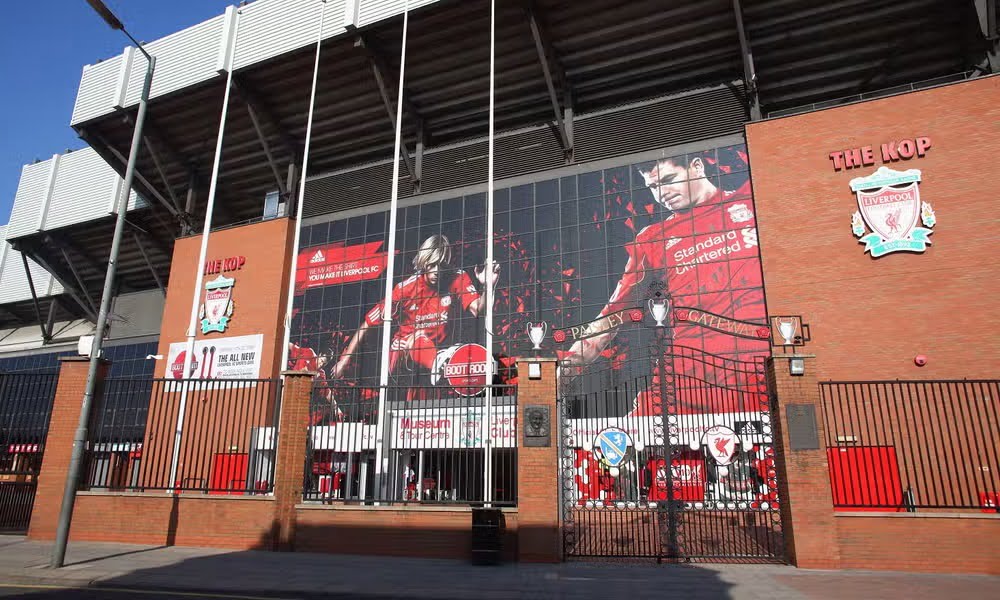
When Luis Díaz's shoulder met the ball in the 73rd minute at Anfield, referee Michael Oliver stood four yards away and saw nothing. No penalty. Play on. Then Stockley Park intervened, and after 127 seconds of deliberation, the VAR — Darren England — concluded that Díaz's arm had, in fact, been in an unnatural position. Penalty awarded.
History repeats itself — with worse consequences
Rewind to November 2023: the same Michael Oliver, the same Anfield, and a disallowed Díaz goal against Tottenham that was, by all available evidence, onside. The apology came two days later. The rulebook never changed. This time, the handball law — IFAB's deliberately ambiguous 'unnatural position' clause — was invoked to overturn an on-field decision that was, at worst, a 50-50 call. The problem isn't individual incompetence. It's structural.
The Premier League's own data confirms that handball penalties have risen 340% since VAR's introduction in 2019. But the consistency index — a metric the PGMOL refuses to publish — has flatlined. In August 2024 alone, three separate handball incidents produced three different outcomes: one given, one overturned, one ignored. The system does not correct errors; it multiplies discretion.
The case against interventionist VAR
- December 2023: Manchester United's Harry Maguire handled in the box against Liverpool — no penalty. Two weeks later, Arsenal's Gabriel Magalhães did the same at Anfield — penalty given. Both were arm-out, ball-to-hand situations.
- February 2024: Brighton's Jack Hinshelwood had a goal ruled out for a marginal shoulder deflection. No VAR check lasted longer than 90 seconds. The average check for a 'clear and obvious error' now takes 102 seconds — three times longer than the IFAB guideline.
- April 2024: Newcastle's Alexander Isak had a penalty overturned for 'simulation' after a VAR review that used a different camera angle to the on-field referee. The incident was later described by the PGMOL as 'an error of process' — but no points were returned.
Each example shares a common thread: VAR is not correcting mistakes; it is imposing a second opinion that is itself unstable. The 'clear and obvious' threshold has become a sieve. When 73% of overturns in 2023-24 were judged 'subjective' by referees themselves, the premise collapses.
Defending the indefensible
Proponents argue that VAR reduces 'howlers' — the offside that is a yard off, the red card that breaks a leg. They point to the 400-plus reviews that prevented 'obvious' injustice last season. But that is a straw man. The problem is not the elimination of clear errors; it is the creation of a new category of contestable, intervention-driven controversy. The Premier League now has more match-altering decisions than ever: 82 direct interventions in 2023-24, up from 57 in 2019-20. The 'correction rate' has improved, but the 'controversy rate' has skyrocketed.
The rebuttal also relies on the old lie that 'without VAR, these debates don't happen.' Nonsense. Pre-VAR, a wrong call was mourned and forgotten. Post-VAR, every decision is frozen, revisited, and repackaged as a crisis. The system has not absorbed controversy; it has manufactured it.
A specific, falsifiable prediction
By the end of the 2025-26 season, the Premier League will have abandoned its current interventionist VAR model and adopted a 'challenge system', limited to two per manager per match. It will be the only way to restore human authority to the pitch. Every major league in Europe will follow within two cycles. The alternative — more technology, more review time, more semantic arguments about 'unnatural position' — will produce a matchday experience that alienates the core fanbase. The evidence of this decay is already visible. The question is not whether change comes, but how long the league will pretend it doesn't need to.
Related Articles
Filed under: Opinion | LA Premier League Home