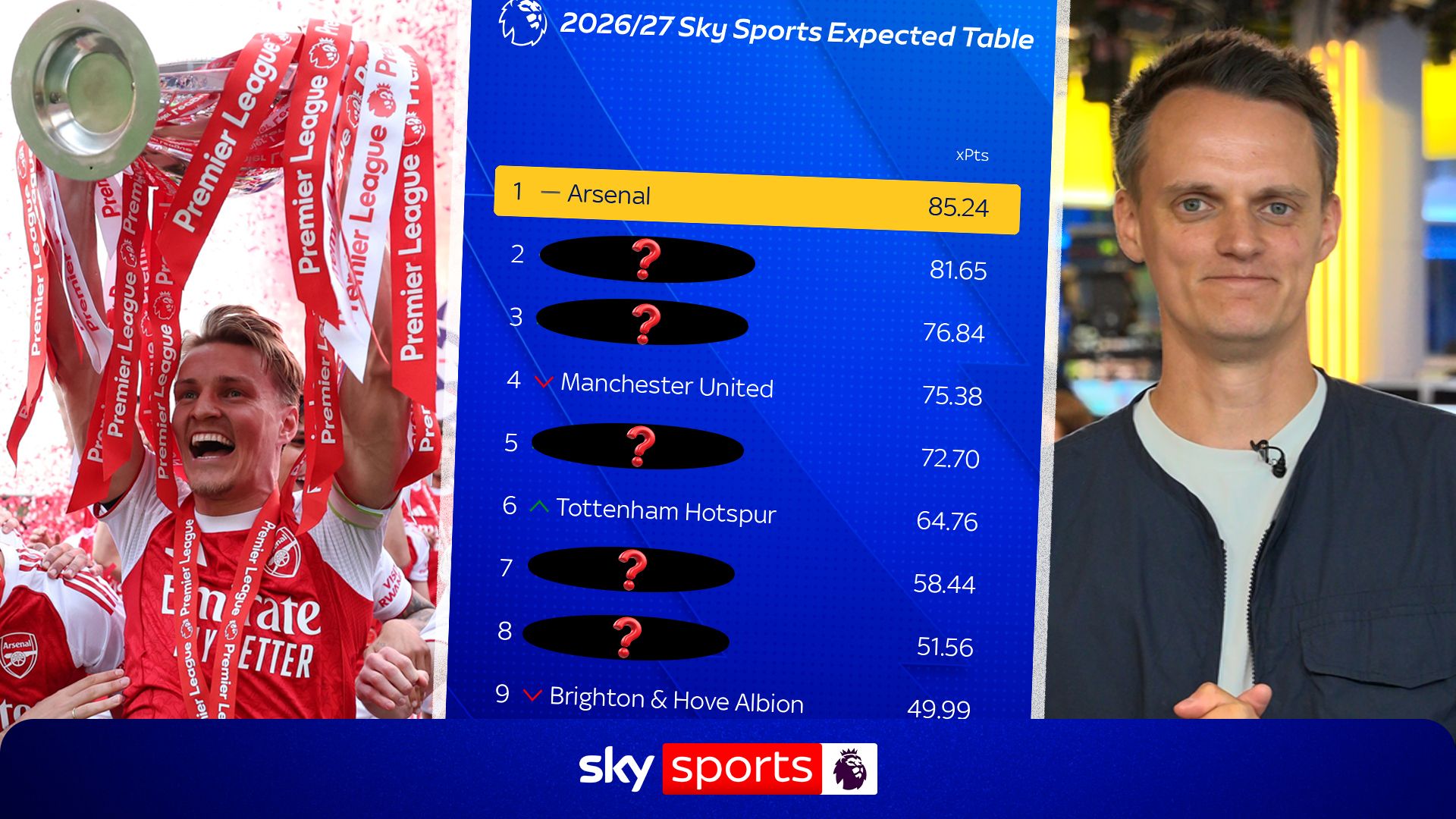
Supercomputer Unveils Premier League Projections for 2025-26
Sky Sports' predictive model has simulated the upcoming Premier League campaign, generating a projected final table based on squad strength, historical performance, and other key metrics. While not a crystal ball, the supercomputer offers a data-driven forecast that can shape expectations heading into the new season.
How the Supercomputer Works
The model, used extensively by Sky Sports for previous seasons, runs thousands of simulations using Opta-powered data. It factors in each club's transfer activity, player fitness, fixture difficulty, and xG (expected goals) performance from the last 12 months. The result is a probability distribution for each team's finishing position.
It is important to note that these predictions are pre-season estimates. The model does not account for unforseen injuries, January transfer business, or managerial changes that may occur during the campaign. However, they provide a statistical baseline for fans and pundits alike.
Projected Top Four and Title Race
The supercomputer's top four is dominated by the usual suspects, but the order holds some surprises. Manchester City are tipped to retain their title, with Arsenal their closest challengers. Liverpool and Chelsea fill the remaining Champions League spots, according to the model. These clubs have consistently ranked high in squad value and on-field performance metrics.
The title race is projected to be tight, with Manchester City and Arsenal separated by just a couple of points in the simulations. Liverpool, under new management, are expected to improve on last season's fifth-placed finish, while Chelsea's high-spending summer has boosted their top-four hopes.
Mid-Table Uncertainty
The battle for European places is expected to be fiercely contested. Manchester United, Newcastle United, and Aston Villa are all projected to finish between sixth and eighth, with Europa League and Conference League spots up for grabs. Tottenham Hotspur are also in the mix, although the supercomputer suggests they may fall short of the top six.
These mid-table clubs are closely matched on paper, and the simulations show a high degree of variance. A strong start could see any of them push for a top-six finish, while a poor run of form could drag them into the bottom half.
Relegation Battle and Newly Promoted Sides
At the other end of the table, the supercomputer predicts a three-way battle for survival. Newly promoted Leeds United and Southampton are the favourites for the drop, alongside current Premier League side Everton. Leeds's high-pressing style may not yield enough points, and Southampton's recruitment has been modest, while Everton's financial issues have hampered their squad depth.
Burnley and Luton Town, the other newly promoted sides, are given a better chance of staying up. The model suggests they have enough attacking quality and defensive organisation to grind out results, although they are still favourites for relegation behind the more established clubs.
Key Statistics and Data Insights
- Manchester City are projected to win the league in 62% of simulations, with Arsenal victorious in 24%.
- Liverpool are expected to secure a top-four finish in 85% of simulations, their strongest chance since Jurgen Klopp's departure.
- Everton are in the bottom three in 58% of simulations, facing the highest probability of relegation.
- The supercomputer gives newly promoted sides a combined 45% chance of at least one staying up.
What This Means for Your Club
Fans of Manchester City and Arsenal can look forward to another thrilling title race, with both teams boasting deep squads and world-class managers. Liverpool's projected resurgence should delight their supporters, who were disappointed by last season's fifth-place finish. Chelsea's top-four push will be closely watched, especially given their heavy investment in the summer transfer window.
For clubs like Tottenham and Manchester United, the predictions serve as a warning. They will need to be consistent from day one to avoid being left behind in the race for European qualification. Meanwhile, Everton supporters face a nervous season ahead, as the data suggests they will be battling relegation until the final weeks.
The Limitations of the Model
While the supercomputer's predictions are based on vast datasets, it is not immune to outliers. Last season, for example, the model under-rated Aston Villa, who finished fourth despite being projected for an eighth-placed finish. Conversely, Chelsea's poor campaign was not fully anticipated.
The model also struggles to account for squad morale, dressing room harmony, and the impact of mid-season injuries. It is a useful tool, but not a definitive answer.
Looking Ahead
The new season promises to be one of the most unpredictable in years. With several clubs undergoing significant transitions, the supercomputer's projections offer a baseline but are far from a certainty. As always, the real drama will unfold on the pitch, with twists and turns that no algorithm can predict.
For now, fans can pore over the data and debate their club's chances. But as the old adage goes, that is why the games are played. The supercomputer has had its say; the reality begins in August.
Related Articles
Filed under: Latest News | LA Premier League Home