
Forest’s new manager cannot fix what the board broke
Oliver Glasner is Nottingham Forest’s fifth manager in less than a year, and the hope is he will bring the stability that has eluded the club since promotion. But stability requires a coherent squad, and Forest’s recruitment has been a scattergun of mid-table desperation. Glasner’s reputation as a structural coach — built on his work at Wolfsburg and Eintracht Frankfurt — will be tested by a squad that lacks basic tactical symmetry.
The ghost of a midfield: why Forest lose the centre
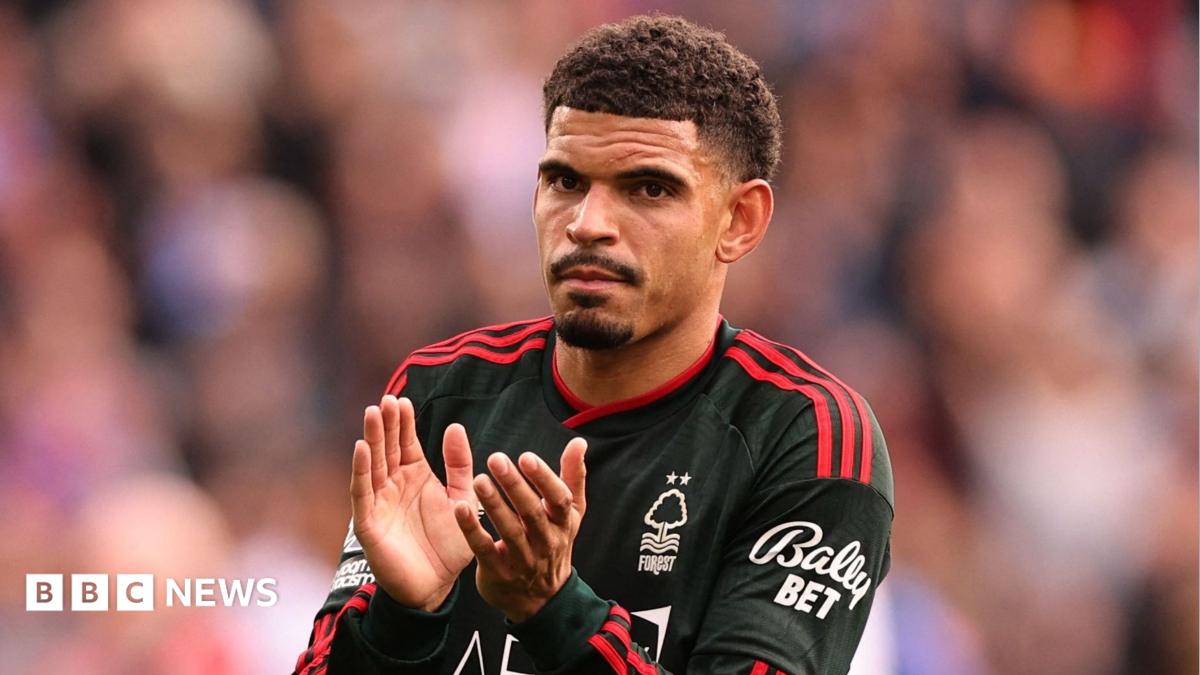
Forest’s central midfield is a void. Despite spending heavily on Morgan Gibbs-White and others, they have no natural holding midfielder who can dictate tempo and shield the defence. In their last five matches, opponents have completed an average of 82% of passes through the centre of the pitch — the worst record in the Premier League over that period. Compare this to Glasner’s Frankfurt side, which routinely pressed opponents into rushed passes and recovered the ball high up the pitch. The personnel simply do not fit.
Roy Hodgson once said that a team without a proper anchor is like a ship without a keel. Forest have tried Orel Mangala, Ibrahim Sangaré, and Danilo as deep-lying midfielders, but none offers the positional discipline or progressive passing that Glasner’s system demands. Sangaré arrived from PSV with a reputation as a destroyer, yet he averages just 4.3 ball recoveries per 90 and has been dribbled past 1.8 times per 90 — worse than any midfield partner.
The imbalance: why left and right do not match
Glasner’s preferred 3-4-2-1 relies on wing-backs who can attack and defend in equal measure. Forest have none. On the right, Neco Williams is energetic but poor defensively — he wins only 48% of duels. On the left, Ola Aina is solid defensively but offers little in the final third, with zero assists in 21 appearances. This asymmetry forces the entire team to shift, creating gaps.
- Forest’s expected goals against from counter-attacks ranks 5th worst in the league, largely because their wing-backs are caught high up the pitch.
- The team has conceded 12 goals from crosses this season — a direct consequence of full-backs who cannot track runners.
- Glasner’s Frankfurt had Filip Kostić on the left, a wing-back who created 11 assists in a single Bundesliga season. Forest have no equivalent.
But what if Glasner adapts? The counter-argument
Some will argue that Glasner’s tactical flexibility — he often switches between a back three and a back four during matches — can mask these weaknesses. They point to his success at Frankfurt, where he won the Europa League with a team that was not loaded with star names. But that Frankfurt side had a clear spine: goalkeeper Kevin Trapp, centre-back Evan Ndicka, midfielder Djibril Sow, and striker André Silva. Forest lack that spine. Their defence has changed partners constantly — 14 different centre-back combinations this season. No amount of coaching can build understanding if the personnel keep rotating.
Moreover, the Premier League is less forgiving than the Bundesliga. The pace and physicality mean that even small positional errors are punished ruthlessly. Glasner’s high defensive line — which worked in Germany — will be exploited by the likes of Erling Haaland and Mohamed Salah if Forest’s midfield cannot protect them.
Verdict: survival, but only just, and then a rebuild
Glasner will keep Forest up this season — but only just. Their underlying numbers suggest they are the 18th-best team in the league by expected points, but they have enough individual quality in Brennan Johnson and Taiwo Awoniyi to scrape safety. However, the structural flaws are deep: they will finish no higher than 16th, and in the summer the club must replace at least three of their starting XI — a left wing-back, a holding midfielder, and a centre-back — or risk relegation in 2025/26.
Related Articles
Filed under: Tactical Analysis | LA Premier League Home