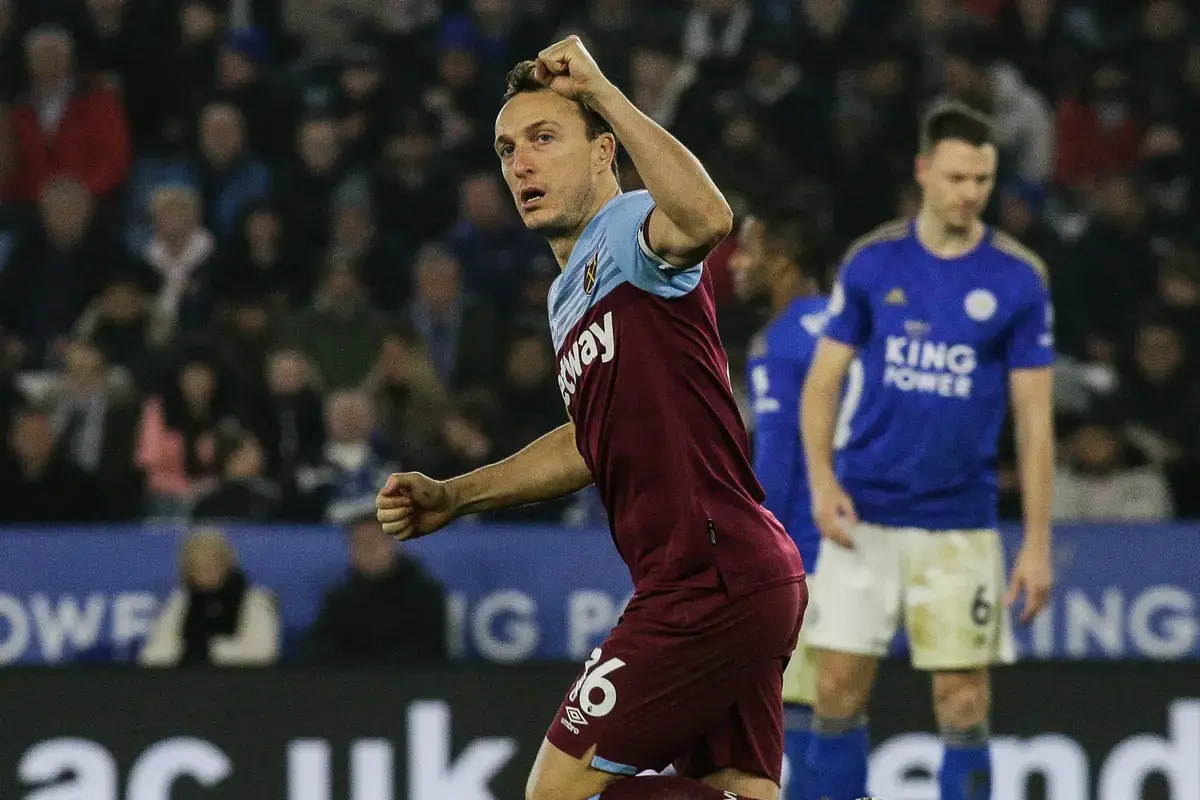
Mark Noble: The one-club West Ham legend who captained his boyhood club for 18 years
Mark Noble spent 18 years in West Ham United's first team after joining the academy in 2000. Born in Canning Town on 8 May 1987, he captained the Hammers from 2015 and won Hammer of the Year twice. Here is the full story of Mr West Ham.
- Born: 8 May 1987 in Canning Town, London
- West Ham debut: 24 August 2004 vs Southend United (League Cup), aged 17
- First-team span: 18 years at West Ham
- Captain: Appointed permanent club captain in 2015
- Honours: Hammer of the Year in 2012 and 2014; PFA Championship Team of the Year 2011/12
- Promotions: Play-off final wins in 2005 and 2012
From Canning Town to the West Ham Academy
Mark Noble was born on 8 May 1987 in Canning Town, only a short distance from West Ham's former home at the Boleyn Ground. He grew up supporting the club and joined the West Ham academy in 2000, having previously spent time within Arsenal's youth system.
His development was rapid. Noble became the youngest player to appear for West Ham's reserve team at the age of 15. That background gave him a special relationship with supporters. He was not a young player recruited from elsewhere — he came from the local area, understood the club's culture and had grown up sharing many of the same experiences as the people in the stands.
That connection would become increasingly important as his career developed.
Making His West Ham Debut
Noble made his senior debut on 24 August 2004, coming on as a substitute in a League Cup victory over Southend United. He was only 17 at the time.
His first start followed in January 2005, when he completed the full match in an FA Cup win over Norwich City. He then made his league debut against Wolverhampton Wanderers. West Ham were competing in the Championship during Noble's breakthrough season and trying to return to the Premier League.
The campaign ended successfully when the Hammers beat Preston North End in the 2005 play-off final. Noble appeared as a late substitute at the Millennium Stadium, gaining his first experience of a major promotion occasion while still a teenager.
Loans at Hull City and Ipswich Town
Noble's route into the West Ham midfield was not completely straightforward. During 2006, he spent short loan periods with Hull City and Ipswich Town. These moves gave him regular senior football and allowed him to develop outside the environment he had known throughout his youth career.
He made five appearances for Hull before playing 13 league matches for Ipswich and scoring once. The loans proved valuable. Noble returned to West Ham with greater experience, physical maturity and a clearer understanding of the demands of professional football. Aside from those two temporary moves, every senior club appearance of his career came in a West Ham shirt.
Establishing Himself in the First Team
Noble became a regular during the second half of the 2006/07 season. West Ham appeared destined for relegation but produced a remarkable late run to survive. Noble played an important role during that recovery and scored against Brighton in the FA Cup before finding the net in Premier League victories over Blackburn Rovers and Bolton Wanderers.
The midfielder brought energy, commitment and composure in possession. Although he was still young, he appeared comfortable accepting responsibility during an extremely pressured period. West Ham eventually survived on the final day after beating Manchester United at Old Trafford.
The controversy surrounding Carlos Tevez's registration dominated discussion of that season, but Noble's emergence provided the club with a homegrown midfielder who would remain central to its identity for the next decade and a half.
Becoming West Ham's Midfield Leader
Over the following seasons, Noble developed into one of West Ham's most dependable players. He was not a traditional attacking midfielder and rarely dominated matches through spectacular individual moments. His influence came from passing, positioning, work rate and an ability to take responsibility.
Noble could collect the ball from defenders, move possession through midfield and dictate the pace of West Ham's play. He was also willing to tackle, track runners and compete during difficult periods. His emotional investment in the club was always visible because he understood what results meant to supporters — he was one himself.
That passion occasionally produced disciplinary problems, particularly during the more combative stages of his career. However, it also made him a natural leader within a squad that frequently changed around him. Managers came and went. Players arrived, departed and sometimes returned. Noble remained.
Relegation and the 2011/12 Promotion Campaign
West Ham were relegated from the Premier League at the end of the 2010/11 season. For Noble, the following campaign became one of the defining periods of his career. Rather than seeking a move elsewhere, he remained with the club and helped lead the attempt to return immediately.
He made 45 Championship appearances during the regular season and scored eight league goals. His performances earned him a place in the PFA Championship Team of the Year. West Ham eventually reached the play-off final against Blackpool at Wembley. A late Ricardo Vaz Tê goal secured a 2-1 victory and returned the club to the Premier League.
Noble had now been involved in two successful play-off final campaigns, first as a teenager in 2005 and then as an established leader in 2012. The second promotion carried particular significance. He had stayed through relegation, accepted responsibility in the Championship and helped restore West Ham's top-flight status at the first attempt.
Hammer of the Year
Noble was named West Ham's Hammer of the Year twice, winning the award in 2012 and 2014. The award is voted for by supporters and recognises the club's outstanding player across the season. Winning it twice demonstrated how highly Noble was valued by the West Ham fan base.
His 2013/14 campaign was especially consistent. He appeared in every Premier League match, helping West Ham maintain their top-flight status during a challenging season. Noble's reliability became one of his defining qualities. He was regularly available, understood multiple midfield roles and maintained his commitment regardless of the team's position.
He was not always surrounded by players suited to his strengths, but he continued to take responsibility for moving the ball, protecting the defence and setting standards.
West Ham Captain
Noble became West Ham's permanent club captain in 2015. It was a natural appointment. By that stage, he had already spent more than a decade in the first-team environment and understood the club better than almost anyone.
Captaincy involved more than wearing the armband on matchdays. Noble became a link between the players, coaching staff, board and supporters. He was expected to explain the club's identity to new signings and help teammates understand the expectations attached to representing West Ham.
His leadership style was direct. Noble demanded effort, took responsibility during difficult periods and was willing to confront issues rather than avoid them. He was not captain because he was the loudest or most commercially prominent player. He was captain because he understood what West Ham meant.
The Final Season at the Boleyn Ground
The 2015/16 season was one of the most memorable of Noble's career. It was West Ham's final campaign at the Boleyn Ground, the stadium located close to where he had grown up. The team also produced some of its best football of the Premier League era under Slaven Bilić.
Dimitri Payet supplied creativity, Michail Antonio emerged as a major threat and Noble enjoyed one of his most productive seasons. He scored seven league goals as West Ham finished seventh and qualified for Europe.
The final match at the Boleyn Ground took place against Manchester United on 10 May 2016. West Ham won 3-2 after coming from behind, with Winston Reid scoring the final goal at the stadium. Noble captained the side on an emotional occasion that marked the end of an era for the club.
Why Noble's story matters in modern football
Mark Noble represents a rare case of a player whose value cannot be measured purely in goals or assists. His influence came from positioning, short passing and the ability to set the tempo. In the 2006/07 survival run, he provided the energy that a struggling side needed. In the Championship in 2011/12, he became the metronome that allowed West Ham to control matches and earn promotion.
Tactically, Noble was never a destroyer or a creator in the traditional sense. He was a connector. He would drop between the centre-backs to collect possession, then move it forward through midfield. That role requires discipline and intelligence, and it is why managers trusted him repeatedly even as the squad around him changed.
His leadership was built on understanding rather than volume. Dimitri Payet and Michail Antonio provided the flair in 2015/16, but Noble provided the structure. He knew what the Boleyn Ground crowd expected because he had stood among them. That relationship is almost impossible to replicate in an era of frequent transfers.
Talking points
- Should West Ham fans consider Mark Noble the club's greatest modern player, or does his lack of major trophies count against him?
- Noble never sought a move during relegation in 2011 — how rare is that loyalty in today's Premier League?
- His disciplinary record was occasionally poor, but did that passion ultimately help or hinder West Ham?
- Would a young Mark Noble break into the current West Ham midfield, given the modern emphasis on athleticism?
What happens next
Mark Noble's legacy is secure at West Ham. The club continues to honour his contribution, and his story remains a benchmark for academy players hoping to make the step up. The next chapter will be written by the current crop of homegrown talents at the London Stadium.
Frequently asked questions
When did Mark Noble make his West Ham debut?
He made his senior debut on 24 August 2004 as a substitute in a League Cup victory over Southend United, aged 17.
How many years did Mark Noble spend at West Ham?
Noble spent 18 years in the West Ham first team, from his debut in 2004 until his retirement from playing, aside from short loans at Hull City and Ipswich Town in 2006.
Was Mark Noble West Ham captain?
Yes. He became West Ham's permanent club captain in 2015, having already spent more than a decade at the club.
Related Articles
Filed under: Player News | LA Premier League Home