
Financial Fair Play Is Dead: Long Live Creative Accounting
The Premier League's financial rulebook is not a framework for fairness; it is a canvas for the most brazenly creative accounting this side of a Cayman Islands shell company. Points deductions and profit and sustainability sanctions are not the system working — they are the system convulsing, exposing the farce at its core.
The Great Stadium Shell Game
Every club with a shiny new or expanded stadium is suddenly printing money from hospitality and executive boxes, yet these revenues count as 'organic' growth, while a trophy-laden owner's investment is deemed suspect. Everton's new ground at Bramley-Moore Dock has been touted as their financial saviour, yet their recent points penalty for breaching profit and sustainability rules was a direct consequence of stadium-related cost overruns.
The Premier League's own rules encourage this: infrastructure spending is largely excluded from the calculations that catch clubs out. So clubs rush to build, borrow, and capitalise on bricks and mortar, all while they lobby for 'benefactor investment' exemptions that would let owners pump in billions without consequence — provided they don't win too quickly. The result is a league where the actual football is secondary to the balance sheet.
The Shifting Sands of 'Associated Party' Rules
Manchester City, who have famously turned 'associated party transactions' from a restriction into an art form, are now crying foul that the Premier League's tightened rules target them specifically. Their £458m midfield overhaul this summer was funded by a web of sponsorship deals with entities linked to the Abu Dhabi ownership. The league's response was to close the loophole — but only after City had reaped the benefit for a decade.
Arsenal, meanwhile, have mastered the 'stadium naming rights' gambit, selling the Emirates name to their own parent company's airline, a move that pushed their revenues beyond the break-even threshold just as they were about to breach. Borussia Dortmund and Juventus perfected the 'sale-and-leaseback' trick, selling training grounds to themselves and booking the profit immediately, only to buy them back later at a premium. The Premier League now resembles a casino where the house rules are rewritten after each roll of the dice — but the dice are loaded.
The Great Acceleration: How the League Encourages the Farce
The league's own governance has created this monster. Consider the 2026 summer window: record spending across the division, fuelled by television money and the promise of new global rights deals. Yet the league simultaneously tells clubs they must curb losses. The solution is not to spend less, but to spend more imaginatively — accounting imagination.
- The £65m Ndiaye swap between Manchester City and Sheffield United involves a loan note structure that defers the payment into future accounting periods, smoothing the FFP hit.
- Everton's sale of a minority stake to a US private equity firm is structured as a loan, not equity, to avoid triggering 'related party' scrutiny.
- Arsenal's 'sponsorship' of their own stadium via his own holding company uses a valuation that bears no relation to market norms, justifying an inflated income stream that keeps them under the cap.
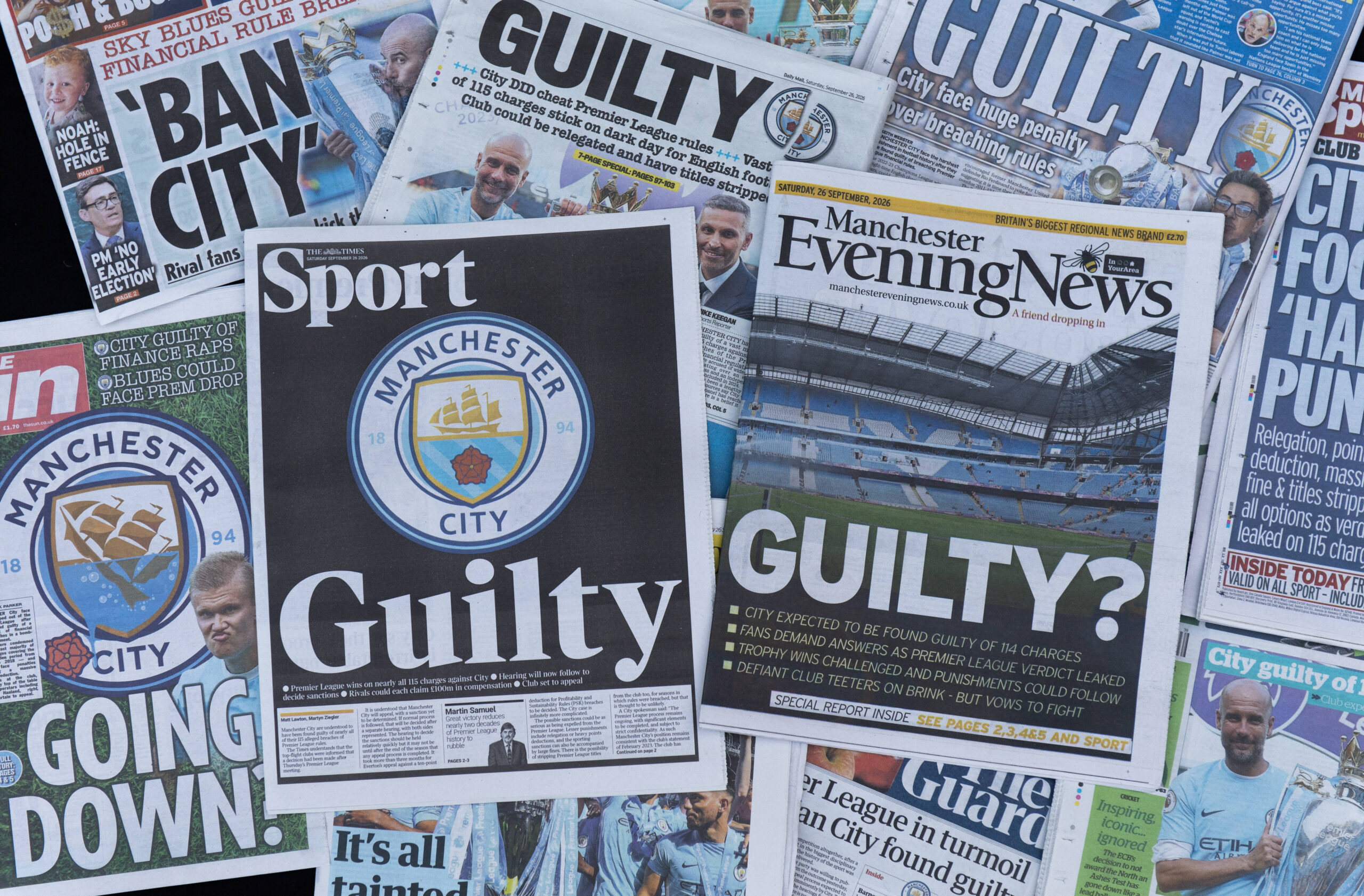
These are not loopholes; they are the system's skeletons, rattling loudly. The Premier League's punishment of Everton and Nottingham Forest last season for modest overspends while Manchester City's 115 charges remain unresolved is a study in misdirected fury, making the league's regulators look like traffic cops ticketing bicycles while letting limousines speed past.
But What About the 'Spirit'? A Rebuttal
Apologists will argue that the rules are necessary to prevent clubs from going bust, citing Portsmouth, Bolton, and the tragic case of Bury. They are right to worry about financial sustainability. Yet the Premier League's rules do not achieve this; they merely compel clubs to disguise their spending as investment through off-pitch ventures. A club is no more solvent because it leveraged future earnings to build a mega-store than a consumer is because they put their holiday on a credit card. The league's real failure is its refusal to address the root cause of instability: the inflationary spiral of transfer fees and wages, fuelled by state-owned clubs and private equity funds that see football clubs as assets to be flipped, not institutions to be stewarded.
The Verdict: A Crash Is Coming
The Premier League's financial governance is an elaborate fiction, designed to preserve the illusion of competitiveness while allowing the biggest clubs to spend freely. The only question is when the next club — perhaps one with a new stadium or a creative sponsor — will push the boundaries too far and face the mighty wrath of a points deduction, while the truly powerful are untouchable. My prediction: within three seasons, a 'Big Six' club will be caught in a scheme so blatant that the league will have no choice but to impose a significant points penalty, sending shockwaves through the sport. And when that happens, the entire edifice of Financial Fair Play will collapse, replaced by a new 'luxury tax' that resembles the US system — except it will be called something pretentious like 'Sustainable Football Regulation' and will achieve just as little.
Related Articles
Filed under: Opinion | LA Premier League Home