


The Fixture Farce: Why Man City’s Grueling Run Exposes the Premier League’s Scheduling Hypocrisy
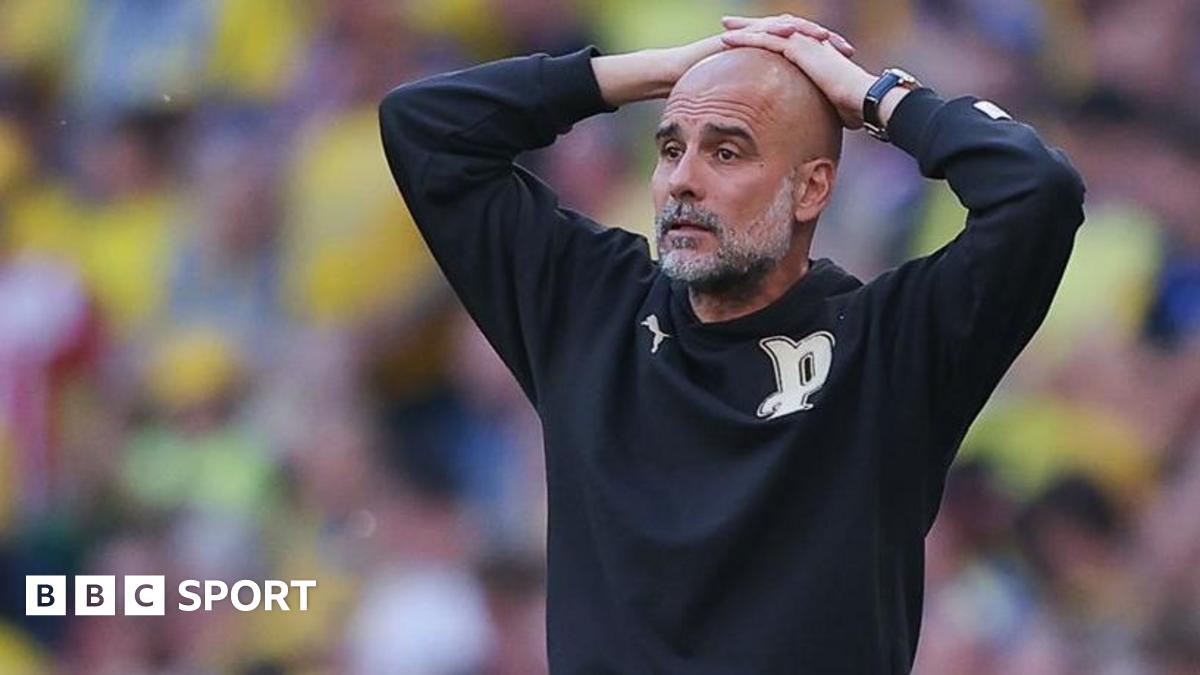
Manchester City face four matches in 11 days. Is this a title-deciding challenge or an unfair punishment? A closer look at the Premier League's scheduling logic.
A Four-Game Gauntlet That Feels Like a Punishment
Manchester City have been handed what can only be described as a footballing version of a marathon with hurdles — four matches in 11 days after the Premier League confirmed rescheduled dates for key fixtures. As if the title race needed more drama, the league’s schedule makers have decided to test Pep Guardiola’s squad depth like a barista testing the limits of an espresso machine. But here’s the rub: is this grueling run a fair test of champions or a scheduling farce that exposes the Premier League’s selective flexibility?
Let’s be clear: City are not victims. They have the deepest squad in the league, with players like Phil Foden and Bernardo Silva capable of turning a game on its head. Yet even Guardiola, a man known for his tactical wizardry and occasional overthinking, might need a slide rule to calculate his lineup rotations. The schedule: midweek league game, weekend, midweek, then another weekend — all within 11 days. That’s not just a fixture pile-up; it’s a logistical nightmare for recovery, especially with Champions League commitments hovering like a specter.
The Hypocrisy of ‘Competitive Integrity’
The Premier League loves to tout “competitive integrity” whenever it suits them. Need to reschedule a game due to TV demands? Sure. A cup final? Absolutely. But when it comes to clubs already stretched thin by European competitions, the response seems to be: “Figure it out.” Compare this to the league’s handling of postponements for other clubs — say, during COVID or when a team has an injury crisis. Suddenly, flexibility appears. For City, the message is clear: you’re rich, you’re deep, you can handle it. But that logic ignores the very real toll on player welfare and the potential impact on the title race’s fairness.
Consider the opposition: Liverpool, Arsenal, and a suddenly resurgent Spurs side are all waiting in the wings. Arsenal, currently locked in a tight title battle, might benefit from City’s fatigue. Is that the kind of advantage we want decided by a scheduling quirk? It feels less like a test of footballing merit and more like a bureaucratic chess move where the pawns are players running on empty.
What About the Fans?
Let’s not forget the supporters. Fans planning to attend four matches in 11 days face travel costs, time off work, and sheer exhaustion. The Premier League often trumpets its “fan-first” approach, but this schedule screams television executives. The real winners here are broadcasters, who get a glut of City games in a short span. For the match-going fan, it’s a logistical puzzle that might require a spreadsheet to solve. And for the neutral? Well, more football is usually good, but the quality might suffer when players are running on fumes.
What City Must Do
Guardiola has been here before. His teams are renowned for their ability to grind out results even when rotation is necessary. But this run could define the season. If City drop points due to fatigue, the narrative will be about squad management. If they sweep through unscathed, it’ll be another example of their machine-like efficiency. Either way, the fixture list is a subplot that shouldn’t be this influential.
- Prioritize the must-win league games — likely against relegation-threatened sides that will park the bus.
- Use the squad depth: Kalvin Phillips and Cole Palmer should get minutes, even if they’re not first-choice.
- Manage minutes for Kevin De Bruyne and Erling Haaland — two players who don’t seem to tire but are human nonetheless.
A Call for Common Sense
The Premier League needs to rethink its approach to scheduling. While TV money is the lifeblood of the competition, player welfare and competitive balance should not be afterthoughts. Perhaps a cap on games per month, or mandatory rest periods between fixtures, could prevent these pile-ups. Or, at the very least, some transparency about how rescheduling decisions are made. Right now, it feels arbitrary and potentially biased toward certain clubs.
As City prepare to run the gauntlet, we’re left with a simple question: is this fair? The answer, as with most things in modern football, is nuanced. But the Premier League’s silence on the matter speaks volumes. They’ll happily take the TV money while players hobble off with hamstring injuries. Until the league prioritizes the people who make the game — the players and fans — over the TV executives, we’ll keep having these conversations. And City, for all their riches, will just have to keep running.